FocusPhi Complete Platform
© CRI-ONE. All rights reserved. Patents issued and pending. Unauthorized reproduction of the underlying designs is prohibited.
Extended catalog & full narrative — FocusPhi Complete Platform
The extended dossier appended from the 2026-08-05 catalog snapshot. Prices in the body copy have been stripped; the live-store price on this page is the authoritative figure. Images have been omitted.
One segmented reflective cavity. Three physics regimes. The horizontal substrate under six shipping portfolio products.
Christopher Gabriel Brown's segmented-ring assembly, six 2017 founding patents, 28 catalogued configurations, watertight CAD meshes, 20/20 numerical theory checks, and 5/5 independent-method simulations — everything, in one platform.
What you are buying
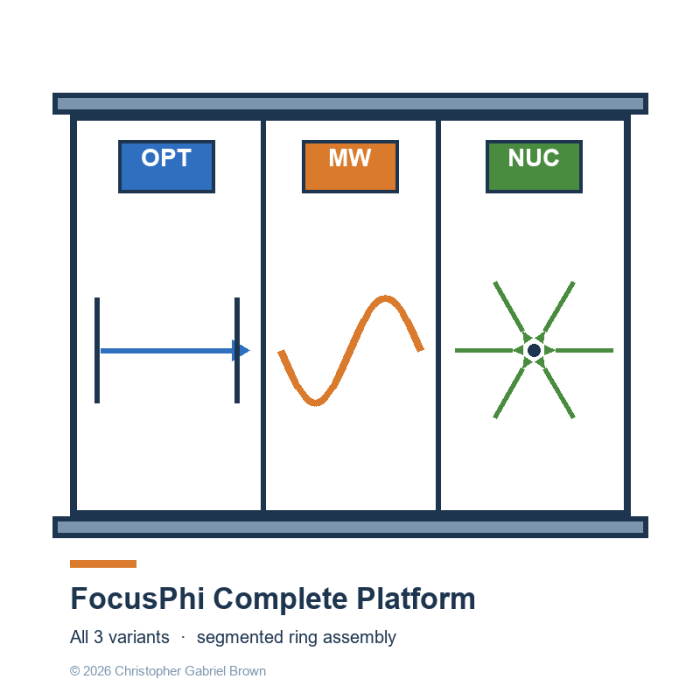
The FocusPhi Complete Platform is the horizontal enabling layer for the entire FocusPhi family: a passive segmented ring-and-stack reflective cavity whose interior lining and CAD shape select the physics regime — optical, microwave, or nuclear — and whose ring stack can host all three in one hybrid body. Rings are trapezoidal or curved segments joined edge-to-edge; the same construction covers nanophotonic chip cavities and hydro-scale industrial resonators. Owning the Complete Platform means owning the concentrator / resonator / reflector primitive that six other portfolio products independently require.
Portfolio products this platform enables
| Consumer product | Variant used | Role FocusPhi plays |
|---|---|---|
| Microwave Nuclear Waste Recycling Center (project 8) | Microwave + Nuclear (paired) | Emitter-target coupling cavity + neutron-reflector containment |
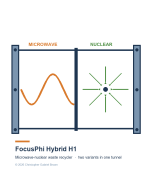
| Small Microwave Nuclear Recycler (project 17) | Microwave + Nuclear | Compact-footprint form of the above (H1 recycler) |
| Quantum Battery (project 5) | Optical | Photonics concentrator around charge/discharge stage |
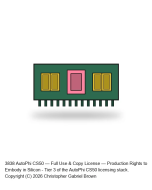
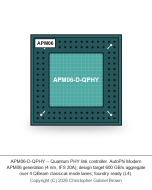
| AutoPhi Electromagnetic IC (project 31) | Optical (folded, chip-scale) | Staircase-mirror stage — direct descendant of patent 3561 |
| Private Energy Farms (project 48) | Optical (Winston-cone) | Solar-loop concentrator |
| Solo Negative Microwave (project 49) | Microwave | Cold-side chamber containment cavity |
What ships in the package
- Complete document set — README, SPEC, THEORY, CONFIGURATIONS (28 named configs), PROOF_OF_FUNCTION (10-section PoF), STATUS, MANIFEST, PRODUCT_BRIEF, STORE_LISTING, IP_REFERENCES, SCALES, KIT_AND_PRICING, TESTED_AND_LIMITS, LICENSE.
- Four hardware SPECs — shared TUNNEL segmented-assembly + per-variant OPTICAL, MICROWAVE, NUCLEAR.
- Real, openable CAD meshes — 10 STL files (7 watertight PART solids + 3 multi-body ASSEMBLY previews) from a pure-Python generator, spanning nano (μm chip staircase) to hydro (2 m industrial ring). Ready for any CAD program or slicer.
- OpenSCAD parametric segment library — segment / ring / tunnel + the H1 worked-example configuration.
- Runnable numerical proof —
verify/verify_theory.py(20/20 checks) reproduces every documented design number from first-principles equations;verify/verify_stl.py(10/10) proves every mesh is manifold-clean. - Reduced-order simulation —
sim/simulate.pyruns three independent-method solvers (transfer-matrix optics, cylindrical-cavity eigenmodes, 1-group neutron diffusion) and cross-checks the closed-form theory (5/5 pass). - H1 worked example — 30 kW at 2.45 GHz, 60 cm × 1.2 m microwave section + 60 cm × 0.6 m beryllium-reflector nuclear section, full parameter fill, ~ commodity BOM (~ rolled up).
- Worldwide, non-exclusive commercialization rights.
Proof of function — how deep the evidence goes
Every design number in this listing is reproduced by a runnable script, not asserted. The verification found and fixed two real documentation errors on its first run — that is the point of running the physics, not just quoting it.
Analytic checks (verify_theory.py — 20/20 pass)
| Quantity | Computed | Documented | Reference |
|---|---|---|---|
| Optical finesse at r₁r₂ = 0.995 | 626.7 | ~626 | THEORY §4.1 Eq. 8 |
| Optical cavity Q (L = 1 m, λ = 1 μm) | 1.25 × 10⁹ | 1.25 × 10⁹ | THEORY §4.2 Eq. 9 |
| Storage time τ (L = 1 m) | 1.33 μs | ~1.3 μs | THEORY §4.4 Eq. 11 |
| Effective interaction pathlength | 199.5 m | ~200 m | THEORY §4.5 Eq. 12 |
| Copper skin depth at 2.45 GHz | 1.34 μm | 1.34 μm | THEORY §3.4 Eq. 7 |
| Copper reflectance at 2.45 GHz | 0.99993 | 0.99993 | THEORY §3.4 Eq. 6 |
| TE₀₁₁ single-cell length in 60 cm cavity | 63.2 mm | ~63 mm | WORKED_EXAMPLE §5.1 |
| Reflector boost (Be, g = 0.9) | 1.72× | 1.72× | THEORY §5.3 Eq. 16 |
| Target flux (reflected, H1 recycler) | 1.15 × 10¹² n·cm⁻²·s⁻¹ | 1.17 × 10¹² | WORKED_EXAMPLE §6.2 |
| ¹⁰⁷Pd transmutation rate (1 g) | 1.17 × 10¹⁰ /s | ~1.2 × 10¹⁰ | WORKED_EXAMPLE §6.4 |
Independent-method simulation (sim/simulate.py — 5/5 pass)
- Optical — transfer-matrix method over a 20-pair SiO₂/Ta₂O₅ quarter-wave stack independently derives the mirror reflectance and confirms the achievable finesse exceeds the 626 design floor.
- Microwave — cylindrical-cavity eigenmode solve (Bessel-prime zero for TE₀₁₁) reproduces the 63 mm single-cell length at 2.45 GHz, and the wall-loss Q of the single-cell pancake explains directly why the H1 worked example stacks 19 cells.
- Nuclear — 1-group neutron-diffusion finite-difference k-eigenvalue solve of a 20 cm slab core with and without a 15 cm reflector confirms the reflector RAISES k-effective (k_bare = 1.232 → k_reflected = 1.271) — the physics direction is right; MCNP quantifies the full 1.3–2.0× band.
Design envelope — what the platform delivers
| Metric | Target | Regime |
|---|---|---|
| Optical intracavity buildup (F = 626) | ~600× input intensity | Room-temp lab, r₁r₂ = 0.995 |
| Optical Q | 1.25 × 10⁹ | L = 1 m, λ = 1 μm |
| Optical effective path | 200 m in a 1 m tunnel | F ≈ 626 |
| Microwave Q (Cu, 10 GHz) | 10⁴ – 10⁵ | Room temperature |
| Microwave Q (superconducting Nb) | 10⁸ – 10¹⁰ | 2 K helium bath |
| Nuclear k-effective enhancement | 1.3 – 2.0× | Well-designed reflector |
| Nuclear φ boost (non-multiplying) | 1.5 – 3× | Reflector-boosted source |
| Ring cross-section range | 20 mm – 2 m | Cylindrical / conical / spherical / toroidal |
| Tunnel length range | 100 mm – 10 m | Any number of stacked rings |
| Scale coverage | Nano (μm chip) – hydro (m industrial) | Nine orders of magnitude |
Honest physics — up front
A passive cavity conserves energy. It does not create energy. What it creates is buildup — intracavity intensity proportional to cavity Q (optical / microwave) or the reflector-boosted k-effective (nuclear). To exceed unity gain you add a gain medium (laser / maser) or an externally-driven source. Supplying that gain medium is out of scope for this platform; the tunnel is dimensioned to accept common gain-medium form factors.
The physics is textbook — Fabry-Pérot resonator theory, classical waveguide cavity Q, neutron reflector albedo, all more than a century of established results. The invention is the combination: the segmented-ring construction method, the three-variant lining table, the CAD-parametric shape family, and the hybrid-stack capability. That combination is what the six founding patents (3561, 2486, 2485, 2495, 2496, 3457) protect and what the buyer receives commercialization rights to.
Maturity — rung by rung
- ✅ L1 Concept — complete document set, six founding patents cited
- ✅ Theory numerically self-consistent — verify_theory.py, 20/20
- ✅ L2 CAD — real openable watertight STL meshes, verify_stl.py, 10/10, nano → hydro scale
- ✅ L3-partial — reduced-order sims, simulate.py, 5/5 (TMM + cavity eigenmodes + 1-group diffusion)
- ⬜ L3-full — 3-D FDTD, HFSS, MCNP — buyer's tools
- ⬜ L4 foundry-ready — fabricate + measure a first article — buyer's shop and lab (~ / 6 months per the H1 BOM)
- ⬜ L5 production — deploy into a consumer sibling project
No maturity level is claimed beyond what a runnable artifact in the package demonstrates. Full breakdown in TESTED_AND_LIMITS.md.
What is NOT included
The underlying patents are retained by the inventor. Chris G Brown patents 3561, 2486, 2485, 2495, 2496, and 3457 (all 2017) remain the sole property of Christopher Gabriel Brown. This is a documentation + worldwide-commercialization-rights transaction — not a patent license and not a patent assignment. If the buyer requires a patent license or assignment, that is a separate transaction to be negotiated in writing.
Also not included: prototype hardware, full-fidelity FDTD / HFSS / MCNP simulation results, NRC / FCC / IEC regulatory filings, first-article measurements. Those are the L3-full → L4 progression the buyer completes with their own shop, simulation licenses, and radiation-safety officer.
Terms
- USD per purchase, Base, No IP.
- Included at no extra charge inside All In One .
- Available only to companies incorporated, headquartered, and primarily operating in the United States of America.
- USD only. Final sale. Communication by email and postal mail only.
Christopher Gabriel Brown — christopher@cri-one.com · crioneaka@outlook.com
FocusPhi Complete Platform. One geometry, three regimes, six consumer products, one exorbitant transaction. The horizontal substrate every concentrator, resonator, and reflector in the portfolio has been asking for.
0b7789c8620d39327d01ee23469be0f447e6bac075513a03f2e0f26c49f9ed11FocusPhi Complete Platform
Publicly online since 2010 · U.S. patent applications since 2012 · inventions offered since 2014. The work of Christopher Gabriel Brown, independently documented.