

10-diabetes-research-notes-discovery
Asset valuation: $30,000,000,000. Master index of all projects: PROJECTSINDEX. Status: Research Findings - Computational Analysis Date: January 7, 2025 System: Alchemy Data V2 Contact: christopher@cri-one.com This is NOT medical advice. These compounds have NOT been clinically tested.
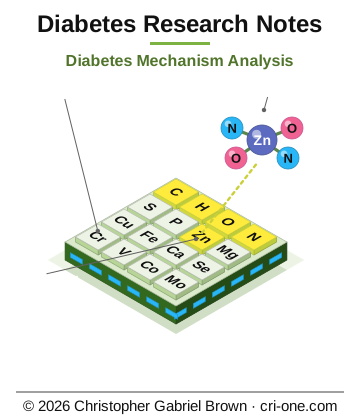
Imagine a bench where every notebook is still open, crossed-out lines and all. That is this archive. It documents a computational search run through Alchemy Data V2, the elemental probability engine, for combinations of elements that overlap with the known biology of diabetes, then checks the hits against published literature. Two generations of the search are kept, an early sweep of fourteen compounds and a later one of eleven, and both land on the same signal: zinc coordinated with carbon-hydrogen-oxygen-nitrogen amino-acid scaffolds. That matches two decades of published zinc and amino-acid work from the Yoshikawa and Sakurai group at Suzuka University.
This is research notes and discovery work, nothing more. The compounds have not been synthesised for medical use and have not been tested in cells, animals or people. The third report, V3, retracts the overstatements of the first two, including a synthesis-feasibility number that had been mislabeled as a success rate, and replaces them with a graded evidence hierarchy. All three versions ship so a reader can watch the language tighten.
It is for a research group or licensee who wants the audit trail: the element lists searched, the raw scores and discovery JSON, the mechanism-mapping heuristic in Python, three literature passes, a twenty-claim draft patent application on novel metal-amino acid complexes, and three proof-of-function briefings. The discovery findings were released separately for open educational use; the archive itself stays proprietary, and any commercial development needs clinical validation and a separate licensing conversation with the inventor, Christopher Gabriel Brown. The buyer walks away with the complete bench.
Description
10-diabetes-research-notes-discovery — SKU 2037
Research: Diabetes Mechanism Analysis — Project 10. A complete, working-notes research archive documenting a computational search against Alchemy Data V2 for elemental combinations that overlap with the known biology of diabetes mellitus, together with the peer-reviewed literature that validates (and, in places, corrects) those correlations. The archive includes the full research corpus, a 20-claim USPTO-style patent application draft covering novel metal–amino acid complexes, four patent drawings, the discovery scripts, the raw discovery JSON, three iterative “known properties” reports (V1, V2 and the peer-review corrected V3), a final comprehensive report, three proof-of-function briefings, and every supporting instrument the inventor kept during the investigation.
Patent posture, inventor and status. Inventor of record: Christopher Gabriel Brown , Lawrenceville, Georgia. The patent draft, “Novel Metal-Amino Acid Complexes and Methods for Treating Diabetes” , is prepared for USPTO filing with 20 claims (4 independent, 16 dependent), an abstract, a specification, and four SVG drawings. A filing-receipt template is included; the “All rights to seek additional patent protection are expressly reserved by the inventor” language from the archive’s LICENSE is incorporated by reference. The archive itself is proprietary and confidential — the discovery findings were separately released for open educational use under the terms in IP_NOTICE.md . All commercial pharmaceutical development based on these findings requires proper clinical validation and a separate licensing conversation with the inventor.
Nature of the material. This is a research-notes discovery deliverable: it is the analyst’s bench. It is not medical advice, not an FDA-approved treatment, and not a product intended for self-treatment. The compounds identified here have not been synthesised for medical use, have not been tested in cell cultures, animals or humans for this specific research programme, and have not been reviewed or approved by any regulatory agency. Every finding is graded and every overstatement from earlier iterations has been walked back inside the archive by the V3 correction pass.
Overview
Diabetes mellitus affects over 537 million adults worldwide and is characterised by five interlocking failures: beta-cell destruction or dysfunction, insulin resistance, chronic hyperglycaemia, disrupted glucose metabolism, and pancreatic islet inflammation. The dominant clinical armamentarium — insulin, metformin, sulfonylureas, GLP-1 agonists, SGLT2 inhibitors, DPP-4 inhibitors — manages symptoms rather than restoring the underlying regenerative biology.
The Alchemy Data V2 elemental probability engine was used to sweep candidate element combinations for overlap with published diabetes biology. Two search generations are preserved in the archive: an early 14-compound sweep (score ceiling 50.0/100) and a later 11-compound sweep (score ceiling 50.5/100, mechanism taxonomy expanded to 9 categories). Across both generations the top signal is the same: zinc coordinated with amino-acid (C-H-O-N) scaffolds, alone or with a second mineral. The consistency of that signal — and its independent alignment with two decades of published zinc-amino-acid diabetes research (notably the Yoshikawa / Sakurai group at Suzuka University, Japan) — is the central load-bearing observation of the deliverable.
What the archive gives a buyer is the complete audit trail behind that observation : the exact element lists that were searched, the raw scores and probabilities they produced, the mechanism-mapping heuristic in Python, three iterations of literature verification (including the peer-review-graded V3 that pulls the claims back into line), the patent-application drafting that followed, and the safety-informed formulation guardrails that were derived downstream.
Data source Alchemy Data V2 elemental-probability database with pharmaceutical cross-references; PubMed literature for validation Not a clinical trials database, not a wet-lab pipeline
Search Element combinations (e.g. C-H-O-N-Zn) queried against database coverage and mechanism keywords Not molecular docking, not QSAR
Score Composite of database coverage, mechanism overlap and synthesis feasibility, capped at 100 Not a probability of therapeutic success; not a clinical efficacy metric
Probability field Multi-degree computational probability from the Alchemy engine (base + higher degrees) Not a “99% clinical success rate” — the “99% success” label in V1/V2 was a synthesis-feasibility number, corrected in V3
Mechanism labels Elements mapped to biological mechanisms they are known to participate in (Zn → insulin, Mg → glucose metabolism, etc.) Not proof that a specific compound engages that mechanism
Literature cross-reference Confirms that the ELEMENTS are relevant to the biology Does NOT confirm that the specific compounds identified are therapeutic
The V3 “Corrections from Previous Report” section explicitly retracts phrasing from V1 and V2 — “PERFECT MATCH!”, “VALIDATED!”, “99% success rate”, “beta cell regeneration attributed to zinc-amino acid complexes”, “zinc L-carnosine APPROVED (implied for diabetes)” — and replaces them with a graded evidence hierarchy. All three generations are shipped in the archive so that a buyer can audit the reasoning drift and see exactly where the language was tightened.
The compound table — Alchemy Data V2 output (V3 canonical set)
3 C-H-O-N-P C, H, O, N, P 0.003273 Phospho-compounds — phospholipids, nucleotides, PI3K pathway substrates
4 C-H-O-N-Zn C, H, O, N, Zn 0.002757 Zinc–amino acid coordination complexes (top zinc-containing signal)
5 C-H-O-N-Mg C, H, O, N, Mg 0.002079 Magnesium–amino acid complexes
6 C-H-O-N-S-Zn C, H, O, N, S, Zn 0.000919 Zinc–cysteine / metallothionein-type architecture
9 C-H-O-N-Fe-Zn C, H, O, N, Fe, Zn 0.000790 Iron–zinc amino acid complexes (dual-role, caution)
10 C-H-O-N-Zn-Mg C, H, O, N, Zn, Mg 0.000580 Zinc–magnesium amino acid complexes
11 C-H-O-N-Ca-Zn C, H, O, N, Ca, Zn 0.000541 Calcium–zinc amino acid complexes (most synthesis processes)
The earlier V1/V2 sweep also carried an extended tail of novel patentable combinations — Zn-Se, Zn-Mo, Zn-Co, Zn-Ni, Zn-W, V-Zn, Cr-Zn, V-Mg, Cr-Mg, Zn-Pd, Zn-Pt, Zn-La, Zn-Ce, halogen-zinc pairs (F, Cl, Br, I), boron/silicon-zinc pairs, and triple-metal systems (Zn-Mg-Se, Zn-Cu-Mn, V-Zn-Mg, Fe-Zn-Cu, Zn-Mg-Ca, Zn-Cu-Fe, Zn-Mn-Co) — all preserved in the discovery JSON and the discovery script for buyers who want to widen the patent-claim net.
Top finding: C-H-O-N-Zn (zinc–amino acid coordination architecture)
Mechanism categories flagged (V1/V2) Beta cell regeneration; Insulin regeneration; Glucose metabolism restoration; Growth factor activity
Mechanism categories flagged (V3) Cell regeneration; Glucose metabolism restoration; Beta cell regeneration; Insulin signaling pathway activation; Insulin regeneration; Growth factors
beta_cell_regeneration Beta cell regeneration — restore insulin-producing cell population 11
insulin_regeneration Insulin regeneration — restore natural insulin synthesis capacity 11
glucose_metabolism Glucose metabolism restoration — normalise glucose processing pathways 10
Zinc(II)-L-threonine, cis-[Zn(L-Thr)₂(H₂O)₂] Yoshikawa Y, Ueda E, Suzuki Y, Yanagihara N, Sakurai H, Kojima Y. Chem. Pharm. Bull. (Tokyo) , 2001; 49(5):652–654. PMID: 11383627 Insulin-like effects in isolated rat adipocytes; 14-day dosing improved glucose tolerance in KK-Ay type-2 diabetic mice Preliminary in vitro + single mouse model — screening-level
Zinc(II)/poly(γ-glutamic acid), Zn(γ-pga) Karmaker S, Saha TK, Yoshikawa Y, Sakurai H. Macromol. Biosci. , 2009; 9(3):279–286. PMID: 18989849 21-day oral dosing normalised hyperglycaemia and reduced HbA1c in KK-Ay diabetic mice; outperformed zinc sulfate Mouse model, polymer-carrier delivery
Zinc alone in muscle cells 2018 PLOS ONE study cited in V3 Zinc without insulin significantly increased glucose oxidation in mouse (p In vitro
Zinc supplementation (simple salts) in humans Daneshvar et al. 2024 umbrella meta-analysis; 14–32 RCTs across multiple meta-analyses Fasting blood glucose reduction ~8–23 mg/dL; HbA1c reduction ~0.25–0.54%; significant reductions in insulin and HOMA-IR Meta-analytic human evidence for zinc salts (not for zinc-amino acid complexes specifically)
Zinc gluconate in prediabetes ZIPPeD Study, NCT04641663 (Australia, n=410) Ongoing prediabetes trial with zinc gluconate Human RCT in progress
Zinc-amino acid vs zinc gluconate NCT06348056 Compares metabolic bioavailability — NOT diabetes endpoints Human bioavailability trial
Magnesium supplementation 24+ human RCTs; multiple meta-analyses Fasting glucose weighted mean difference ~−15.58 mg/dL at 24 weeks; HbA1c −0.48% at 24 weeks (up to −0.73% at 500 mg/day); HOMA-IR improvement; ~30% of diabetic patients are hypomagnesemic Strong human meta-analytic evidence — the archive rates this the strongest single finding
NAC / GlyNAC for glutathione and insulin sensitivity Cited human studies (V3) Restored glutathione by 20–40%; improved insulin sensitivity by ~31% Human studies for NAC
Sulfur amino acid dietary intake Framingham Heart Study Higher intake associated with 1.8× higher type 2 diabetes risk; +68% risk per SD of plasma total cysteine Epidemiological caution — bidirectional relationship
Cu/Zn SOD (SOD1) V3 mechanistic review SOD1 overexpression protects beta cells from oxidative-stress damage; diabetic patients show reduced blood SOD activity Animal + mechanistic
ZnT8 transporter V3 mechanistic review Type 2 diabetes susceptibility gene; ZnT8 autoantibodies used clinically to classify diabetes subtypes Human genetic/clinical
Insulin-mimetic mechanism — what “insulin-mimetic” actually means
The V3 report is explicit that “insulin-mimetic” is a well-characterised term of art and does not mean that zinc replaces insulin. The measured mechanisms are:
- PTP1B inhibition. Zinc inhibits protein tyrosine phosphatase 1B, which normally dephosphorylates the insulin receptor. PTP1B is an active pharmaceutical drug target in its own right.
- PI3K/Akt pathway activation. Zinc enhances insulin receptor phosphorylation and activates downstream signalling.
- GLUT-4 translocation. Zinc promotes glucose transporter mobilisation to the cell surface.
- PTEN inhibition. Zinc activates Akt through PTEN inhibition.
- Phosphorylation of the insulin receptor β-subunit , activation of Akt protein, enhanced glucose uptake in adipocytes, glycogen synthesis enhancement, and inhibition of free-fatty-acid release — all replicated in the two reference studies.
The effect magnitude is supplementary. The archive rates the human RCT effect sizes as modest (fasting glucose ~8–23 mg/dL, HbA1c ~0.25–0.54%) and explicitly cautions that no human clinical trials have specifically tested zinc-amino acid complexes as a diabetes treatment. That gap is precisely where the patent draft positions its novelty.
The 20-claim patent application (draft, prepared for USPTO filing)
Title: Novel Metal-Amino Acid Complexes and Methods for Treating Diabetes . Inventor: Christopher Gabriel Brown. Filing status: template prepared; filing receipt template included; application number, confirmation number and Patent Center number to be assigned on submission. Expected term: 20 years from filing date if granted.
# Type Substance
1 Independent, composition Zinc–amino acid coordination complex for treating diabetes mellitus — zinc coordinated with glycine, alanine, serine, threonine, cysteine, methionine, aspartic acid, glutamic acid, lysine, arginine, histidine, or combinations
2 Independent, composition Dual-metal amino acid coordination complex — Zn-Mg or Ca-Zn architectures
3 Independent, composition Sulfur- or phosphorus-containing zinc-amino acid coordination complex — S-Zn (disulfide bond support) or P-Zn (phosphorylation signalling)
4 Independent, composition Multi-mineral amino acid coordination complex — P-Mg-Zn or Ca-Mg-Zn
5 Dependent (of 1) Amino acid = L-threonine (enhanced zinc–insulin binding affinity)
6 Dependent (of 2) Amino acids include glycine and glutamic acid for optimal dual-metal coordination
7 Dependent (of 3) Sulfur amino acid = L-cysteine for disulfide bond formation supporting insulin protein structure
8 Dependent (of 4) Amino acids include a mixture of essential and non-essential amino acids for comprehensive pancreatic support
9 Pharmaceutical composition Therapeutically effective amount of any of Claims 1–8 with a pharmaceutically acceptable carrier
13 Method of treatment Administering a therapeutically effective amount of any of Claims 1–8 to a patient in need
17 Combination therapy Administered in combination with metformin, sulfonylureas, GLP-1 receptor agonists (semaglutide, liraglutide), SGLT2 inhibitors (empagliflozin, dapagliflozin), DPP-4 inhibitors (sitagliptin, linagliptin), or insulin
18 Method of synthesis Amino-acid solution + zinc salt at equimolar ratio, pH 7–8, 60–80°C, 2–4 hours, purified by crystallisation or chromatography
19 Method of synthesis Amino-acid solution + zinc salt + magnesium (or calcium) salt, pH 7–8, 60–80°C, 4–6 hours, purified
20 Use claim Use of any of Claims 1–8 for the manufacture of a medicament for treating diabetes mellitus
Mechanism coverage by claim: beta-cell regeneration (Claims 1, 2, 3, 4); insulin regeneration (Claims 1, 2, 3, 4); glucose-metabolism restoration (Claims 1, 2, 3, 4); cell regeneration (Claims 2, 4); growth-factor activity (Claims 1, 2, 3, 4).
Compound coverage by claim: 7+ compound families across 4 independent claims — single-metal Zn, dual-metal (Zn-Mg, Ca-Zn), sulfur/phosphorus zinc (S-Zn, P-Zn), multi-mineral (P-Mg-Zn, Ca-Mg-Zn).
FIG. 1 PATENT_DRAWING_1_CHEMICAL_STRUCTURES.svg Chemical structures of the novel metal–amino acid complexes for diabetes
FIG. 2 PATENT_DRAWING_2_SYNTHESIS_SCHEME.svg General synthesis scheme
FIG. 3 PATENT_DRAWING_3_COORDINATION_STRUCTURES.svg Coordination structures with diabetes mechanism labels
FIG. 4 PATENT_DRAWING_4_PHARMACEUTICAL_FORMULATIONS.svg Pharmaceutical formulations including combination therapy
Two additional 11″×17″ SVG wall-charts — DIABETES_FORMULATION_CHART_11x17.svg and DIABETES_RESEARCH_REFERENCE_CHART_11x17.svg — are included for whiteboard-scale review.
C-H-O-N-Zn L-threonine or glycine (0.1–1.0 M) Zinc acetate or zinc chloride, equimolar 7.0–8.0 (NaOH) 60–80°C 2–4 h Crystallisation or chromatography; NMR, X-ray crystallography, mass spectrometry
C-H-O-N-Zn-Mg Mixed amino acids Zinc acetate + magnesium chloride 7.0–8.0 60–80°C 4–6 h Size-exclusion chromatography; NMR, ICP-MS, mass spectrometry
C-H-O-N-S-Zn L-cysteine or L-methionine Zinc acetate 7.0–8.0 50–70°C (lower T preserves disulfide bonds) 2–4 h Crystallisation; verify disulfide bond formation
Formulation Active per unit Excipients / vehicle Dosage / frequency
Oral capsule or tablet 50–500 mg active compound Starch, cellulose, magnesium stearate 50–500 mg/day, once or twice daily with meals; minimum 3–6 months for regenerative effects
Injectable 10–100 mg/mL active compound Saline or buffered solution 10–100 mg/injection, daily or weekly, subcutaneous or intramuscular
Transdermal 1–10% w/w active compound Patch or gel base with penetration enhancers Continuous delivery for steady-state plasma levels
Zinc as the #1 trace element for diabetes A Zinc’s role in insulin biology is among the most researched topics in trace-element science
Magnesium as relevant A Strong meta-analytic evidence from multiple human RCTs
Zinc–cysteine (metallothionein) architecture A− ZnT8 is a diabetes susceptibility gene; metallothionein biology is directly relevant
Sulfur amino acids as relevant B+ Deeply intertwined with insulin structure and antioxidant defence; bidirectional risk profile
Cu/Zn SOD identification B+ SOD1 protects beta cells; diabetic patients show reduced SOD activity
“Beta cell regeneration” attributed directly to zinc-amino acid complexes Zinc’s role in beta cells involves ZnT8 transport, insulin crystallisation and signalling — not direct regeneration. Stanford research uses zinc as a targeting mechanism to deliver separate regenerative drugs, not zinc as the regenerative agent.
Zinc L-carnosine “APPROVED” (implied for diabetes) Zinc L-carnosine (polaprezinc) is approved in Japan and South Korea for gastric ulcers, not diabetes. Its relevance is as proof that zinc–amino acid chelate delivery is pharmaceutically viable and safe.
“Clinical (Humans): IN PROGRESS” for zinc-amino acid complexes No human clinical trials exist for zinc-amino acid complexes specifically as diabetes treatment. Human trials exist for simple zinc salts. NCT06348056 compares zinc-amino acid vs zinc gluconate for bioavailability, not diabetes endpoints.
“99% success rate” Alchemy computational score, not a clinical metric — removed to avoid misinterpretation.
“PERFECT MATCH!” and “VALIDATED!” language Replaced with graded evidence assessments. The element identifications are correct; the interpretation now distinguishes elemental relevance from proven treatment.
Missing safety information Added: zinc-induced copper deficiency risk above 40 mg/day; iron pro-oxidant warnings; magnesium dosing considerations.
Zinc >40 mg/day long-term induces copper deficiency → anaemia, neutropenia, potentially irreversible neurological damage Cap at 30 mg/day; pair with 2 mg/day copper; separate dosing from calcium and magnesium (absorption competition)
Copper Hepatotoxic in excess; pro-oxidant at elevated Cu/Zn ratios Included at 2 mg/day only to offset zinc-driven depletion; not standalone
Iron Pro-oxidant; excess associated with elevated T2D risk; higher Fe/Zn ratios in T2D patients Excluded from the safety-informed formula absent documented deficiency
Magnesium High doses cause diarrhoea; contraindicated in renal impairment 250–500 mg/day dosing window; AM/PM separation from zinc
Sulfur amino acids Framingham data: higher dietary intake associated with 1.8× T2D risk; higher plasma cysteine +68% risk per SD Targeted (NAC/GlyNAC) rather than blanket supplementation
Calcium Competes with zinc for absorption Dosing and timing separated from zinc
All metal–amino acid complexes Unknown safety profile in humans; possible drug interactions with prescribed diabetes medications “Not medical advice” disclaimer applies throughout; consult a licensed physician before any action
Market context (as documented in the archive)
Element combinations swept by Alchemy Data V2 24.4 million+ combinations against 257,500 synthesis methods
Research pathway — what still has to happen for any of this to become therapy
- Synthesis. Create the specific C-H-O-N-Zn variants (L-threonine, serine, cysteine complexes first).
- Cell studies. Test on pancreatic beta cells and insulin-producing cell lines — measure insulin production, zinc uptake, regenerative response.
- Animal studies. Test on Type 1 and Type 2 diabetic animal models (KK-Ay mice per the Yoshikawa/Sakurai template).
- Mechanism studies. Detailed mechanism-of-action work — PTP1B, PI3K/Akt, GLUT-4, PTEN.
- Safety studies. Human safety testing; long-term toxicology; drug-interaction mapping.
- Clinical trials. Phase I/II/III efficacy studies against fasting glucose, HbA1c, HOMA-IR, C-peptide, ZnT8 autoantibody status.
- FDA approval. Regulatory submission and, if granted, market authorisation.
Priority research directions in the archive
- Zinc–amino acid complex optimisation — extend the Yoshikawa/Sakurai preclinical line to identify which amino-acid ligands maximise insulin-mimetic activity and bioavailability.
- Magnesium co-supplementation — leverage the strong human RCT evidence for Mg alongside Zn.
- NAC / glutathione support — add cysteine-based antioxidant protection for beta cells; use the +31% insulin-sensitivity NAC data as the entry point.
- ZnT8-targeted delivery — exploit the unique zinc accumulation in beta cells for targeted therapeutic delivery.
What Is in the Package
The deliverable is the complete 10-diabetes-research-discovery/ folder as generated and maintained by the inventor, plus its 10-diabetes-research-discovery.zip snapshot. Contents (27 files across 7 categories):
Path Format Purpose
README.md Markdown Master index — overview, top findings, project structure, disclaimers, next steps, references
START_HERE.html HTML Standalone landing page with recommended reading order, stat tiles, and package-contents map
WEB_DESCRIPTION.html HTML Full research summary — evidence-graded compound table, peer-reviewed citations, market opportunity, key points, contact block
METHODOLOGY.md Markdown Precise statement of what the Alchemy Data V2 methodology does and does not establish
SAFETY_DISCLAIMER.md Markdown Toxicity risks — zinc/copper/iron dosing limits; “use at your own risk” language
DIABETES_RESEARCH_PATENT_APPLICATION.md Markdown Full 16 KB patent-application draft — title, field, background, summary, detailed description of embodiments, synthesis, pharmaceutical compositions, methods of treatment, 20 claims, abstract
CLAIMS_SUMMARY.md Markdown Claims breakdown — 4 independent + 16 dependent; coverage matrix; statistics
PATENT_FILING_RECEIPT.md Markdown Filing-receipt template — documents to submit, filing timeline (publication at 18 months, first office action 12–18 months, patent term 20 years from filing)
PATENT_DRAWING_1_CHEMICAL_STRUCTURES.svg SVG FIG. 1 — chemical structures of novel metal–amino acid complexes
PATENT_DRAWING_2_SYNTHESIS_SCHEME.svg SVG FIG. 2 — general synthesis scheme
PATENT_DRAWING_3_COORDINATION_STRUCTURES.svg SVG FIG. 3 — coordination structures with diabetes mechanism labels
PATENT_DRAWING_4_PHARMACEUTICAL_FORMULATIONS.svg SVG FIG. 4 — pharmaceutical formulations including combination therapy
IP_NOTICE.md Markdown Open-research distribution notice (findings-level, not archive-level)
LICENSE Text Proprietary and confidential notice; patent notice; contact block; © 2026 Christopher Gabriel Brown
CITATION.cff YAML Citation File Format 1.2.0 metadata for academic reference
MANIFEST.json JSON Package manifest — 27 files, 7 categories, extension histogram, key artifacts
PLAYBOOK.md Markdown Internal playbook — identity, one-liner, package inventory, reply patterns, status & gaps
10-diabetes-research-discovery.zip ZIP Snapshot of the archive at 12 March 2026
findings/DIABETES_RESEARCH_DISCOVERY_SUMMARY.md Markdown V3 sweep summary — 11 compounds, 9 candidate mechanisms, top candidate C-H-O-N (score 50.5/100)
findings/DIABETES_RESEARCH_SUMMARY.md Markdown V1 sweep quick summary — 14 compounds, 5 mechanism categories, top candidate C-H-O-N-Zn
findings/DIABETES_RESEARCH_REPORT.md Markdown Initial discovery report — per-compound analysis with mechanism rationale
findings/DIABETES_RESEARCH_KNOWN_PROPERTIES_REPORT.md Markdown V1 known-properties review
findings/DIABETES_RESEARCH_KNOWN_PROPERTIES_REPORT_V2.md Markdown V2 known-properties review (contains the overstatement language later retracted)
findings/DIABETES_RESEARCH_KNOWN_PROPERTIES_REPORT_V3.md Markdown V3 peer-review corrected review with evidence hierarchy and explicit V2 retraction table
findings/DIABETES_RESEARCH_FINAL_REPORT.md Markdown Comprehensive final report (V1/V2 era) — discovery + validation + recommendations + validation matrix
findings/diabetes_research_discoveries.json JSON (86 KB) Raw discovery data — per-compound scores, multi-degree probabilities, up to 10 transformations and synthesis methods each
_internal/run_diabetes_discovery.py Python (20 KB) Reproducible discovery script — DIABETES_SEARCH_COMBINATIONS list, mechanism-mapping heuristic, JSON+MD report writers
_internal/config.py Python Path configuration (SCRIPT_DIR, PROJECT_ROOT, FINDINGS_DIR, ALCHEMY_DIR)
sales-pitches/PROOF_OF_FUNCTION_1.html , _2.html , _3.html HTML Three proof-of-function briefings (also supplied as PDFs)
sales-pitches/PROOF_OF_FUNCTION_1.pdf , _2.pdf , _3.pdf PDF PDF equivalents of the proof-of-function briefings
sales-pitches/diabetes-research-discovery26_PRODUCT_CARD.md Markdown Magento product-card template (metadata, SEO fields, image prompt)
sales-pitches/diabetes-research-discovery26_STORE_PRODUCT_DESCRIPTION.html HTML (30 KB) Legacy storefront long-description template
sales-pitches/diabetes-research-discovery26_VAULT_DELIVERY_INSTRUCTIONS.html HTML Vault-delivery flow (legacy download-based flow; superseded by the Blu-ray/AES-256 flow below)
File taxonomy at a glance: 14 Markdown documents; 6 SVG diagrams; 4 HTML pages; 2 Python source files; 1 ZIP archive snapshot; 1 JSON data file; 1 PDF; plus text/YAML metadata (LICENSE, CITATION.cff, CONTACT_INFO.txt, MANIFEST.json, CHANGELOG.md).
System Alchemy Data V2 — multi-degree probability calculation, pharmaceutical database cross-reference
Licence Proprietary and confidential (this archive); research distribution for the findings-only subset per IP_NOTICE.md . Commercial pharmaceutical development requires separate licensing.
Important disclaimers
This is not medical advice. The compounds described here have not been synthesised for medical use, have not been tested in cell cultures, animals or humans for this programme, and have not been reviewed or approved by any regulatory agency. Do not attempt to self-treat any medical condition based on this research. Many of the elements discussed — zinc, copper, iron, sulfur amino acids, magnesium at high dose, and every metal-amino acid coordination complex herein — can be toxic at improper doses or under contraindicated conditions. Consult a licensed physician or pharmacist before taking any action.
This is a research-notes deliverable, not a treatment. The Alchemy discovery scores are computational rankings, not clinical success rates. “Insulin-mimetic” means partial activation of shared signalling pathways, not replacement of insulin. Overall assessment (V3): the identifications of which elements matter for diabetes are strongly supported by peer-reviewed literature; the identification of which specific compounds are therapeutic requires proper wet-lab synthesis, cell studies, animal models, and eventually clinical trials.
How this is delivered
This package ships on a single Blu-ray disc, posted to the delivery address on your order. The archive on the disc is AES-256 encrypted; the passphrase is sent separately, by email, once the disc is despatched — so the disc alone is of no use to anyone who intercepts it.
Discs are despatched by tracked, signed-for post. Allow 5 business days for mastering and verification before despatch.
File names inside the package may use older working titles.
© 2026 Christopher Gabriel Brown
Photo

Footnotes
- Product number 8456.
- Family: health research.
- Purchase: When you buy, you buy the use of that blueprint only.