
46-fda-to-store
Asset valuation: $1,600,000,000. (Worked example: the diabetes "metabolic support" formula. Educational. This is a structure/function support supplement, NOT a drug and NOT a Research Notes.) Patent Pending. The underlying metal-amino-acid formulations and methods are the subject of pending U.S. pat
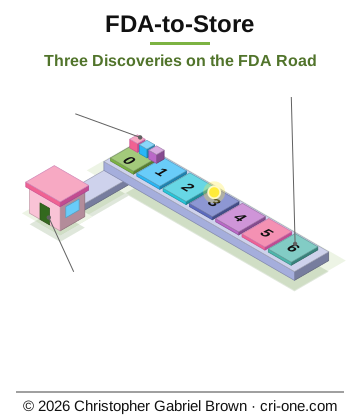
Think of a map where the destination is marked honestly: not where you wish it were. This package is three disease-mechanism discoveries placed on the real FDA road. The discoveries, for diabetes, Alzheimer's and Parkinson's, came out of Christopher Gabriel Brown's Alchemy Data V2 system, which scanned more than 24.4 million element combinations against 257,500 synthesis methods and checked every finding against PubMed-indexed literature. Alzheimer's and Parkinson's carry filed USPTO applications, with 14 and 29 compound candidates; the diabetes application is prepared and ready to file.
All three sit at Stage 0, discovery and preclinical, pre-IND. They are computational research findings, not approved drugs, not tested in human trials, and not proven for any condition. Patent-pending is not FDA-approved, and the package says so up front. What is unusual is the candor: every report ships with corrected V3 editions that state where earlier versions overstated, where the evidence is strong, where it is weak or negative, and where treatment-outcome wording should not be used. Five companion documents walk every step of the drug road, from the IND forms and thirty-day rule through Phases 1 to 3, NDA pathways and the Rx-to-OTC switch, plus the one lawful alternative if the drug road is never finished, a DSHEA supplement with its required disclaimers.
This is for licensees and research teams who want the discovery data, source code, patent drawings and the honest regulatory picture in one bundle of roughly 99 files. The buyer walks away with all of it; the inventor keeps his name on the discoveries.
Description
- Diabetes: Full patent application prepared and ready to file — “Novel Metal-Amino Acid Complexes and Methods for Treating Diabetes,” 20 claims (4 independent, 16 dependent).
- Alzheimer’s: US Patent Application No. 19/441,975 — filed 1 December 2025 — Patent Pending (14 compound candidates, 20 claims).
- Parkinson’s: US Patent Application No. 19/445,644 — filed 15 January 2026 — Patent Pending (29 compound candidates, 20 claims).
Regulatory status: All three discoveries sit at Stage 0 (Discovery & Preclinical) on the FDA approval road — pre-IND. These are computational research findings cross-checked against published peer-reviewed science. They are not FDA-approved drugs, have not been tested in human clinical trials for the indicated conditions, and are not proven to treat any disease. Patent-pending is not the same as FDA-approved. Do not self-treat any medical condition based on this research; consult a licensed physician.
Overview
This package is the complete “FDA-to-Store” bundle — everything needed to understand three original disease-mechanism discoveries, the real United States regulatory road each one must travel to become a medicine, and the one lawful alternative (DSHEA dietary supplement) available if the drug road is never completed. It brings together three full research deliverables, five companion educational documents, reference charts, patent drawings, formulation charts, source code, and raw discovery data under a single product.
The three discoveries were produced by Christopher Gabriel Brown’s Alchemy Data V2 system — a computational database of elemental combinations, transformation pathways, synthesis methods, and probability scores drawn from pharmaceutical databases and drug reference indices. The system scanned 24.4 million+ element combinations against 257,500 synthesis methods, then cross-referenced every finding against published peer-reviewed literature indexed in PubMed.
What makes this package unusual is its honesty: every report includes corrected V3 editions that openly state where previous versions contained overstatements, where evidence is strong, where it is weak or negative, and where treatment-outcome wording should not be used. The package is candid that holding intellectual property is the starting line, not the finish.
What Is in the Package
The deliverable contains three full sub-projects plus five companion Research documents, totalling approximately 99+ files across documentation, data, source code, images, patent filings, and reference charts.
Component Description Files
10-diabetes-research-discovery/ Complete Diabetes Mechanism Analysis — Project 10. Computational research findings, patent application (ready to file, 20 claims), peer-reviewed evidence reports (V1–V3), formulation chart, research reference chart, patent drawings, discovery data, analysis scripts, and safety documentation. 27
11-alzheimers-research-discovery/ Complete Alzheimer’s Mechanism Analysis. Patent application #19/441,975 (filed December 2025), 14 compound candidates, 20 claims, peer-reviewed evidence reports (V1–V3), formulation chart, research reference chart, patent drawings, discovery data, analysis scripts, START_HERE guide, and safety documentation. 27
12-parkinsons-research-discovery/ Complete Parkinson’s Mechanism Analysis. Patent application #19/445,644 (filed January 2026), 29 compound candidates (including 19+ novel patentable compounds), 20 claims, enhanced discovery summary, USPTO forms, patent drawings, formulation chart, research reference chart, discovery data, analysis scripts, DOCX patent application, START_HERE guide, and safety documentation. 45
Research — FDA Filing Method Plain-English walkthrough of every real step in the US drug-approval process: Stage 0 (Discovery & Preclinical) through Stage 6 (Post-Market / Phase 4). Covers Forms FDA 1571, 1572, 3674, and 356h; the IND 30-day rule; Phases 1–3; NDA/BLA pathways (505(b)(1), 505(b)(2), 505(j)); PDUFA fees; cGMP inspection; Advisory Committees; Fast Track, Breakthrough Therapy, Accelerated Approval, and Priority Review; OTC monographs; and the Rx-to-OTC switch. 1
Research — Three Discoveries on the FDA Road Companion overview placing all three giveaways honestly on the FDA road, with a styled HTML version for web display. Explains why “patent-pending” is not “FDA-approved” and what it would cost (10–15 years, hundreds of millions of dollars, ~1-in-10 success rate) to move any of them from giveaway to medicine. 2
Research — Diabetes on the FDA Road Per-disease companion: the diabetes discovery’s real compounds and evidence, its position on the FDA road, what happens if it is never accepted, and the one lawful DSHEA supplement route (with compliant structure/function claims and required disclaimers). 1
Research — Alzheimer’s on the FDA Road Per-disease companion for the Alzheimer’s discovery. Addresses the NAC enforcement-discretion special case, AD-specific clinical endpoints (ADAS-Cog, CDR-SB, ADCS-ADL), and the fact that Alzheimer’s is the hardest therapeutic area on the road. 1
Research — Parkinson’s on the FDA Road Per-disease companion for the Parkinson’s discovery. Covers the MDS-UPDRS endpoint, why DaTscan is not an accepted FDA stand-alone efficacy endpoint, the two sub-paths (NAC confirmatory trials vs. novel zinc-halogen class from scratch), and why the novel compounds almost certainly cannot go into a supplement. 1
Discovery 1: Diabetes Mechanism Analysis (Project 10)
Top finding C-H-O-N-Zn (zinc-amino acid complex) — Alchemy Score 50.0/100, 23 synthesis methods, 0.002757 probability
Top 5 findings C-H-O-N-Zn, C-H-O-N-Zn-Mg, C-H-O-N-Ca-Zn (27 processes), C-H-O-N-S-Zn, C-H-O-N-P-Zn
Mechanism categories Beta Cell Regeneration (5), Insulin Regeneration (7), Glucose Metabolism Restoration (8), Cell Regeneration (4), Growth Factors (7)
Patent application Prepared and ready to file — 4 independent claims (single-metal zinc, dual-metal Zn-Mg/Ca-Zn, sulfur/phosphorus-containing zinc, multi-mineral) + 16 dependent claims covering amino acid specificity, pharmaceutical compositions (oral, injectable, transdermal), methods of treatment, combination therapy (metformin, sulfonylureas, GLP-1 agonists, SGLT2 inhibitors, DPP-4 inhibitors, insulin), methods of synthesis, and use for manufacture of medicament
Compound Grade Role & Published Evidence
C-H-O-N-Zn (zinc-amino acid) B+ Insulin-mimetic: PTP1B inhibition, PI3K/Akt pathway activation, GLUT-4 translocation, PTEN inhibition. Preclinical: Yoshikawa et al. 2001 (PMID 11383627) — zinc-L-threonine complex improved glucose tolerance in KK-Ay diabetic mice over 14 days. Karmaker et al. 2009 (PMID 18989849) — zinc(II)/poly(gamma-glutamic acid) complex reduced blood glucose and HbA1c in KK-Ay mice over 21 days. Human evidence exists only for simple zinc salts (multiple meta-analyses: FBS reduction ~8–23 mg/dL, HbA1c reduction ~0.25–0.54%). No human trial has tested zinc-amino acid complexes specifically as a diabetes treatment.
C-H-O-N-Mg (magnesium) A− Strongest human evidence. Multiple meta-analyses of 24+ human RCTs (1,000+ participants). FBS reduction: weighted mean difference ~−15.58 mg/dL at 24 weeks. HbA1c reduction: −0.48% at 24 weeks, up to −0.73% at 500 mg/day. ~30% of diabetic patients are hypomagnesemic. Prospective cohort data shows inverse dose-response between magnesium intake and T2D incidence.
C-H-O-N-S (NAC/glutathione) B+ Insulin has 3 cysteine disulfide bonds — sulfur chemistry is structurally essential. GlyNAC supplementation raised insulin sensitivity ~31% in human studies, restored glutathione by 20–40%. Bidirectional risk: Framingham data shows higher dietary sulfur amino acid intake associated with 1.8x T2D risk.
C-H-O-N-S-Zn (zinc-cysteine / metallothionein) A− ZnT8 is a type 2 diabetes susceptibility gene. Metallothionein biology, zinc finger transcription factors for insulin gene expression. ZnT8 autoantibodies used clinically to classify diabetes subtypes.
C-H-O-N-P (phospho-compounds) B PI3K (phosphatidylinositol 3-kinase) — primary insulin signalling cascade. AMPK — target of metformin. Molecular-level relevance; does not translate to phosphorus supplementation as treatment.
C-H-O-N-Cu-Zn (Cu/Zn SOD) B+ SOD1 protects beta cells from oxidative stress. Diabetic patients show reduced SOD activity. SOD1-null mice show enhanced diabetic complications. Caution: copper excess is pro-oxidant; higher Cu/Zn ratios associated with worse outcomes in T2D.
C-H-O-N-Zn-Mg (zinc-magnesium) Conceptual Both individually evidence-supported; both frequently deficient in T2D. Co-supplementation rational but no direct clinical trial of Zn-Mg-amino acid complex for diabetes.
C-H-O-N-Fe-Zn (iron-zinc) Caution Iron excess is pro-oxidant and associated with increased T2D risk. Iron supplementation in diabetics without documented deficiency could be harmful.
Safety-informed 30-day formula parameters: zinc capped at 30 mg/day (below the 40 mg tolerable upper limit), copper 2 mg to prevent zinc-induced copper depletion, zinc and magnesium dosed separately (AM/PM), iron excluded (pro-oxidant risk to beta cells).
Discovery 2: Alzheimer’s Mechanism Analysis (Project 11)
Top 5 findings C-H-O-N (50.5), C-H-O-N-S (50.2), C-H-O-N-P (50.2), C-H-O-N-Zn (50.1), C-H-O-N-Cu (50.1)
Target mechanisms Amyloid Plaque Biology, Tau Protein Regulation, Neuroinflammation Reduction, Neuronal Regeneration, Synaptic Function (14/14 compounds), BDNF Enhancement (13/14), Calcium Homeostasis, Glutamate Regulation, Cholinergic Relevance, Antioxidant Pathways
Patent application US No. 19/441,975 (filed 1 Dec 2025) — Patent Pending. 4 independent claims: zinc-amino acid (amyloid + tau), copper-amino acid (amyloid clearance + antioxidant), multi-metal Fe-S/Fe/Fe-Cu (mitochondrial support), mineral-enhanced Mg/Ca (neuroprotective). 16 dependent claims including intranasal formulation (nose-to-brain delivery) and combination therapy with donepezil, memantine, rivastigmine, galantamine, lecanemab, and aducanumab.
The V3 corrected report is notable for its scientific honesty. V1 (January 2026) contained fundamentally inverted claims — stating that zinc prevents amyloid aggregation when published science (Bush et al. 1994, Science , 1,900+ citations) shows zinc promotes it. V3 corrects all such errors.
Direction Grade Evidence & Notes
C-H-O-N-S (NAC/glutathione) B+ GSH depleted in AD brain (may precede onset). NAC crosses the blood-brain barrier. Legitimate research direction. No powered AD trial of this approach exists.
C-H-O-N-Mg (magnesium L-threonate) B+ Natural NMDA antagonist — same mechanism as the approved drug memantine (Namenda). L-threonate form raises brain magnesium. No AD-specific RCT, but correcting deficiency is rational.
C-H-O-N-P (citicoline/choline) B Cholinergic support — the basis of every currently approved AD drug. Phosphorus for acetylcholine synthesis.
Cu / Fe / Zn Identification: A / Treatment: F Deliberately excluded from the practical formula. All three accumulate pathologically in AD. Zinc promotes amyloid-beta aggregation (Bush 1994) and tau hyperphosphorylation (Sun 2012). Copper catalyses amyloid-beta ROS production. Iron drives ferroptosis. Every clinical attempt to target these metals therapeutically has failed: PBT1 (clioquinol) abandoned; PBT2 no cognitive benefit (Lannfelt 2008, Lancet Neurol , n=78); deferiprone (3D Study, JAMA Neurology Nov 2024, n=81) successfully lowered brain iron but worsened cognitive decline on CDR-SB, ADAS-Cog-13, and ADCS-ADL. Cochrane review (Sampson 2014): “no evidence” that metal protein attenuating compounds benefit AD.
The discipline that makes this package credible: the Alzheimer’s formula deliberately excludes copper, iron, zinc, and aluminium supplementation. The package is candid that the most defensible directions are the non-metal ones: glutathione restoration (NAC/cysteine) and magnesium correction.
Discovery 3: Parkinson’s Mechanism Analysis (Project 12)
Compounds analysed 29 research candidates from 17 tested combinations (up from 14 in initial search)
Top finding C-H-O-N (basic amino acid / levodopa-like precursor) — Score 50.5/100
Top 5 findings C-H-O-N (50.5), C-H-O-N-S (50.2 — glutathione system), C-H-O-N-P (50.2 — ATP/mitochondrial), C-H-O-N-Fe (50.1 — TH cofactor), C-H-O-N-Zn (50.1 — DAT function)
Novel compound class Zinc-halogen amino acids (C-H-O-N-Zn-F, -Cl, -Br, -I) — zero prior published research; unique to PD output; excluded from practical formula pending laboratory work
Additional novel compounds Boron complexes (Zn-B, Fe-B), silicon complexes (Zn-Si), triple-metal complexes (Fe-Cu-Zn, Fe-S-Cu, P-Mg-Zn), complex organic-inorganic hybrids (S-P-Zn, P-Fe-S) — 19+ novel patentable compounds total
Mechanism categories (16) Dopamine Synthesis Support (29/29), Dopamine Neuron Regeneration (29/29), Neuroinflammation Reduction (29/29), Glutathione System Support (4), Dopamine Transporter Function (4), ATP Synthesis Support (4), Alpha-Synuclein Aggregation Prevention (3), Mitochondrial Complex Support (2), SOD Enzyme Support (1), Oxidative Stress Protection, BDNF Enhancement
Patent application US No. 19/445,644 (filed 15 Jan 2026) — Patent Pending. 4 independent claims: halogen-containing complexes (Zn-F, Zn-Cl, Zn-Br, Zn-I), boron/silicon-containing complexes, multi-metal coordination complexes, complex organic-inorganic hybrids. 16 dependent claims including combination therapy with levodopa, carbidopa, dopamine agonists, MAO-B inhibitors, and COMT inhibitors. Includes 4 patent drawings (chemical structures, synthesis scheme, coordination structures, pharmaceutical formulations).
USPTO forms included PTO-AIA-01, PTO-AIA-08, PTO-AIA-15, PTO-SB-17, sb0015a, N417parkinsons
The Parkinson’s package is the strongest of the three — the only one whose lead direction already has human PD trial data, and the only one with a genuinely novel compound class.
Direction Grade Evidence & Notes
C-H-O-N-S (NAC/glutathione) B+ (promising but preliminary) Strongest direction backed by actual human PD trial data. Monti et al. 2019 (PMID 31048906): open-label study, n=42 (21+21), combined IV NAC (50 mg/kg weekly) + oral NAC (600 mg 2x/day) for 3 months. DaTscan showed increased dopamine-transporter binding in caudate (~3.4%) and putamen (~8.3%). UPDRS symptom improvement. Coles 2018 (PMID 29304084): MR spectroscopy confirmed increased brain glutathione. Monti 2016 (PMID 27708942): improved blood GSH/GSSG ratio. Limitations: open-label (no placebo), small sample, single research group, IV component makes simple supplementation impractical, DaTscan measures DAT density not necessarily neuron survival. GSH depletion in the substantia nigra is one of the earliest detectable PD changes (Sian et al. 1994, PMID 8210224). GPX4 requires glutathione to prevent ferroptosis.
C-H-O-N-Mg (magnesium) B+ NMDA antagonism; rigidity support; PD risk association in epidemiological data.
C-H-O-N-Zn (low-dose zinc, 15 mg) B / C+ BDNF support at low dose; zinc modulates DAT through allosteric site. Required for Cu/Zn-SOD. Risk: above ~100 μM zinc promotes alpha-synuclein fibril formation (Uversky 2001, PMID 11279227). No PD-specific RCT.
C-H-O-N-S-Zn (zinc-cysteine) B+ Metallothionein neuroprotection (MT-I/II protect against MPTP in animal models).
C-H-O-N-Zn-F/I/Br/Cl (zinc-halogens) D (untested) Original Alchemy prediction — unique to PD output. Zero published research. May be genuine novel predictions or data artefacts from salt forms in pharmaceutical databases. Excluded from practical formula pending laboratory synthesis and testing. Would require 10–15 years minimum: computational chemistry modelling → synthesis → in vitro toxicity → cell culture → animal models → human trials. Fluoride is neurotoxic at elevated exposure; bromide has CNS depressant effects.
C-H-O-N-Fe (iron) F (contraindicated) Excluded. Iron accumulates pathologically in the PD substantia nigra (35–45% increase, confirmed since Dexter 1989). Drives ferroptosis — iron-dependent lipid peroxidation. UK Biobank (N > 300,000): genetically predicted higher iron = increased PD risk. Iron chelation (deferiprone, FAIR PARK-II, n=372): reduced SN iron on MRI but showed worse motor outcomes . Iron supplementation would add fuel to a fire.
L-DOPA interaction warning: Metal ions (iron, zinc, copper) chelate levodopa in the GI tract, reducing absorption by 30–70%. PD patients on levodopa/carbidopa must separate metal-containing supplements by at least 2 hours.
The FDA Road — Complete Walkthrough
The package includes a comprehensive plain-English guide to every real step in the US drug-approval process, governed by the Federal Food, Drug, and Cosmetic Act and enforced by the FDA’s CDER (or CBER for biologics):
Stage Phase Key Details
0 Discovery & Preclinical 3–6 years. In vitro and in vivo studies, GLP (21 CFR Part 58), CMC package. All three discoveries are here.
1 IND Application Form FDA 1571 (IND cover), FDA 1572 (investigator statement), FDA 3674 (ClinicalTrials.gov certification). 30-day safety review window; IRB approval; informed consent; GCP compliance.
2 Clinical Trials ~6–7 years total. Phase 1 (20–80 people, safety, ~70% pass). Phase 2 (up to 300 patients, efficacy, ~33% pass). Phase 3 (hundreds to 3,000, confirmation, ~25–30% pass).
3 NDA/BLA Filing Form FDA 356h. 100,000+ pages. PDUFA fee (~$4 million for FY 2025). Pathways: 505(b)(1) full NDA, 505(b)(2) partial reliance, 505(j) ANDA for generics.
4 FDA Review & Inspection 60-day filing decision. 10 months standard / 6 months priority review. Multidisciplinary team. Possible Advisory Committee. Pre-approval cGMP inspection (21 CFR Parts 210/211).
5 Decision Approval Letter or Complete Response Letter (CRL). Common for drugs to be approved only on a second cycle.
6 Post-Market / Phase 4 Ongoing monitoring, FAERS via MedWatch, REMS for high-risk drugs, supplements to the FDA for any manufacturing or labelling change.
Optional fast lanes: Fast Track (rolling submission), Breakthrough Therapy (intensive FDA guidance), Accelerated Approval (surrogate endpoint, confirmatory trials required), Priority Review (6-month goal).
Typical cost: ~$700 million to $2.6 billion. Typical timeline: 10–15 years. Success rate from first human dose: approximately 1 in 10.
The DSHEA Dietary Supplement Alternative
Each per-disease companion document explains the one lawful route that needs no FDA pre-approval — a dietary supplement under the Dietary Supplement Health and Education Act of 1994 (DSHEA). The trade: a supplement may never claim to diagnose, treat, cure, or prevent a disease. The package details:
Requirement Detail
Ingredients Must be legal dietary ingredients. Zinc, magnesium, copper are established (pre-15-Oct-1994). NAC is a special case: technically excluded (it was a drug first), but the FDA currently exercises enforcement discretion (2022 guidance) with a proposed rule (~2026) to formally permit it.
NDI notification Required 75 days before sale for any ingredient not marketed before 15 October 1994, with safety evidence. The novel zinc-halogen compounds almost certainly cannot go into a supplement.
Manufacturing Supplement cGMP (21 CFR Part 111), via a compliant contract manufacturer.
Labelling 21 CFR 101 — Supplement Facts panel, ingredient list, net quantity, name/address, directions, warnings.
Claims Structure/function claims only . Must include the FDA disclaimer. Notify the FDA within 30 days of first marketing. Hold substantiation on file.
Required disclaimer “This statement has not been evaluated by the Food and Drug Administration. This product is not intended to diagnose, treat, cure, or prevent any disease.”
What the system does Searches element combinations against a computational database of pharmaceutical data, maps elements to known biological mechanisms, calculates discovery scores based on mechanism coverage and synthesis feasibility, cross-references against published scientific literature.
Database scale 24.4 million+ element combinations scanned; 257,500 synthesis methods mapped.
Data sources Alchemy Data V2 elemental probability database, pharmaceutical databases, drug reference indices, PubMed published research (for cross-reference validation), known biochemistry of trace elements and metalloenzymes.
What scores represent Discovery scores reflect database coverage and mechanism overlap — not therapeutic probability or clinical success rates. “Probability” values are Alchemy system calculations, not clinical success rates.
What the methodology is not Not drug discovery or pharmaceutical development. Not clinical validation. Not a substitute for synthesis → in vitro → in vivo → clinical trials.
Key limitation The system cannot distinguish between “this element is involved in the disease” and “this element can treat the disease.” Pathological involvement does not imply therapeutic utility (analogy: calcium is central to heart attack pathology, but supplementing calcium does not treat heart attacks).
Patent Portfolio Summary
Disease Application Filed Independent Claims Dependent Claims Compound Types Formulations
Diabetes Ready to file — 4 (single-metal Zn, dual-metal Zn-Mg/Ca-Zn, S/P-Zn, multi-mineral) 16 7+ Oral, injectable, transdermal
Alzheimer’s 19/441,975 1 Dec 2025 4 (Zn-amino acid, Cu-amino acid, multi-metal Fe-S/Fe/Fe-Cu, mineral-enhanced Mg/Ca) 16 7+ Oral, injectable, intranasal (nose-to-brain)
Parkinson’s 19/445,644 15 Jan 2026 4 (halogen Zn-F/Cl/Br/I, boron/silicon, multi-metal Fe-Cu-Zn/Fe-S-Cu/P-Mg-Zn, complex hybrids S-P-Zn/P-Fe-S) 16 12 Oral, injectable, transdermal
All three applications cover: compound compositions, pharmaceutical formulations, methods of treatment, methods of synthesis (pH 7–8, 60–80°C), combination therapy with existing approved drugs, and use for manufacture of medicament. Amino acid specificity claims cover glycine, alanine, serine, threonine, cysteine, methionine, aspartic acid, glutamic acid, lysine, arginine, histidine, and combinations thereof.
Visual & Reference Materials Included
Item Format Description
Research Reference Charts (3) SVG (11×17) One per disease — comprehensive reference charts for each discovery.
Formulation Charts (3) SVG (11×17) One per disease — formulation details for each discovery.
Patent Drawings (12 total, 4 per disease) SVG Drawing 1: Chemical Structures. Drawing 2: Synthesis Scheme. Drawing 3: Coordination Structures. Drawing 4: Pharmaceutical Formulations.
Research Reference Chart Archives ZIP Alzheimer’s and Parkinson’s research reference charts in archive format.
Three Discoveries on the FDA Road HTML Styled web-ready companion page with hero banner, stage visualisation, comparison table, and callout sections.
START_HERE Guides HTML Entry-point guides for Alzheimer’s and Parkinson’s sub-projects.
Source Code & Data
Item Description
run_diabetes_discovery.py Python analysis script for the diabetes Alchemy Data V2 discovery process.
run_alzheimers_discovery.py Python analysis script for the Alzheimer’s discovery process.
run_parkinsons_discovery.py Python analysis script for the Parkinson’s discovery process.
config.py Configuration module for the Alchemy Data V2 system (diabetes sub-project).
diabetes_research_discoveries.json Complete raw discovery data — all 14 diabetes compounds with probabilities, scores, and mechanism mappings.
alzheimers_research_discoveries.json Complete raw discovery data — all 14 Alzheimer’s compounds.
parkinsons_research_discoveries.json Complete raw discovery data — all 29 Parkinson’s compounds.
discovery_report_H2O.json Alzheimer’s internal discovery report data.
Key Safety Warnings
- Zinc: Supplementation above 40 mg/day chronically can induce copper deficiency, causing anemia, neutropenia, and potentially irreversible neurological damage (Nations et al. 2008, Neurology ).
- Iron: Excess is pro-oxidant. Associated with increased T2D risk. Accumulates pathologically in PD substantia nigra and AD brain. Iron supplementation is specifically contraindicated in both PD and AD patients without documented iron deficiency.
- Copper: Excess is hepatotoxic and neurotoxic. Free (non-ceruloplasmin-bound) copper is already elevated in AD and PD patients. Supplementation would worsen the toxic fraction.
- Metal-amino acid complexes: Have unknown safety profiles in humans. Drug interactions with existing medications are possible and unstudied.
- NAC: FDA enforcement-discretion status — technically excluded from the supplement definition (it was a drug first) but currently permitted under 2022 guidance.
- L-DOPA interaction: Metal ions chelate levodopa in the GI tract; PD patients must separate dosing by 2+ hours.
Evidence Hierarchy at a Glance
Level Compounds / Directions
Strong (Human RCTs exist) Magnesium for glycaemic markers (multiple meta-analyses, 24+ trials). Zinc as simple salts for glycaemic markers (multiple meta-analyses). NAC for PD — human DaTscan data (Monti 2019, small open-label).
Moderate (Animal + Mechanistic) Zinc-amino acid complexes for insulin-mimetic activity (mouse models). NAC/cysteine for glutathione restoration and insulin sensitivity (human NAC studies). Cu/Zn SOD beta cell protection (animal models).
Conceptual / Mechanistic Zinc-cysteine metallothionein architecture (ZnT8 biology). Phosphorylation cascades (PI3K, AMPK). Mg L-threonate NMDA antagonism for AD. Zinc-magnesium co-supplementation rationale.
Untested / Novel Zinc-halogen amino acid compounds (Zn-F, Zn-Cl, Zn-Br, Zn-I). Boron and silicon complexes. Triple-metal complexes. Complex organic-inorganic hybrids.
Contraindicated Iron supplementation in PD or AD. Copper supplementation in AD or PD. High-dose zinc (>40 mg/day long-term). Manganese in PD.
Related work Chemical Cooker Laboratory — https://cri-one.com/store/chemical-cooker-laboratory.html
Disclaimer
This is NOT medical advice. These are computational research findings, not clinically validated treatments. The compounds described have not been synthesised for medical use, not been tested in cell cultures, animals, or humans for the indicated conditions (except where outside researchers’ published work is cited), not been reviewed or approved by any regulatory agency, and not been validated through clinical trials. Do not attempt to self-treat any medical condition based on this research. Consult a licensed physician. Many elements discussed (zinc, copper, iron) can be toxic at improper doses. This product is not affiliated with or endorsed by the FDA, USPTO, or any pharmaceutical company. The discoveries described are supplement-grade research, not FDA-approved drugs. Dietary-supplement rules (DSHEA, NDI, 21 CFR 101/111) and the NAC enforcement-discretion policy change over time — confirm current requirements with the FDA and qualified counsel before manufacturing or labelling anything. Confirm anything regulatory against current FDA guidance at fda.gov .
How this is delivered
This package ships on a single Blu-ray disc, posted to the delivery address on your order. The archive on the disc is AES-256 encrypted; the passphrase is sent separately, by email, once the disc is despatched — so the disc alone is of no use to anyone who intercepts it.
Discs are despatched by tracked, signed-for post. Allow 5 business days for mastering and verification before despatch.
File names inside the package may use older working titles.
© 2026 Christopher Gabriel Brown
Photo
Footnotes
- Product number 8496.
- Family: health research.
- Purchase: When you buy, you buy the use of that blueprint only.