

11-alzheimers-research-notes-discovery
Asset valuation: $50,000,000,000. Master index of all projects: PROJECTSINDEX. Status: Research Findings — Computational Analysis Date: January 11, 2026 System: Alchemy Data V2 Contact: christopher@cri-one.com THIS IS NOT MEDICAL ADVICE. These are computational research findings, NOT clinically valid
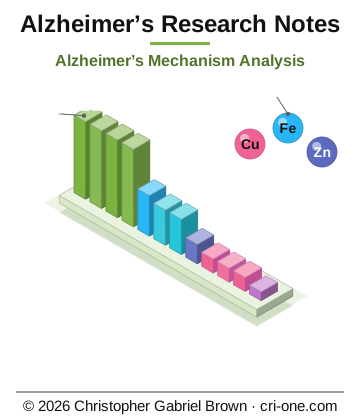
Imagine a chemist's card index, one card per element, and someone asking each card one question: does this element show up anywhere in the biology of Alzheimer's disease? The Alchemy Data V2 system asked it on the eleventh of January, 2026. It searched elemental combinations against pharmaceutical databases, mapped each element to the known mechanisms of the disease, scored each on mechanism coverage and synthesis feasibility, and checked the answers against peer-reviewed literature. Sixteen combinations went in; fourteen research candidates came out. The metals it flagged - copper, iron and zinc - are the three that thirty years of independent research place at the centre of the disease.
The most useful page is a correction the peer-review pass forced. Alzheimer's is not too little metal or too much; it is metal in the wrong place, piling up in amyloid plaques while the synapses and enzymes that need it go short. The notes read that as pointing toward redistribution and functional support, not more supplementation. Beside it sits the ranked table of all fourteen candidates, one aluminium compound carrying a plain toxicity flag.
This is a research notes package, not a treatment or medical advice; nothing in it has been clinically validated. It is for research teams and licensees wanting a documented starting point. A buyer walks away with the discovery data, the two verification passes, and the record of a United States patent application filed in December 2025, pending examination, with twenty claims and four figures. The invention stays with the inventor.
Description
U.S. Patent Application No.: 19/441,975, filed December 1, 2025 — pending examination at the USPTO
Title of Invention: Novel Metal–Amino Acid Complexes and Methods for Treating Alzheimer’s Disease
Discovery System: Alchemy Data V2 (elemental probability engine with pharmaceutical database cross‑referencing)
Original Discovery Date: January 11, 2026
Evidence Verification Date: February 23, 2026 (V2 peer‑review aligned); March 2026 (V3 scientifically corrected)
Research Status: Computational research findings — not clinically validated treatments
Patent Claims: 20 total (4 independent, 16 dependent) covering compositions, pharmaceutical formulations, methods of treatment, methods of synthesis, and use claims
Patent Drawings: 4 figures (chemical structures, synthesis scheme, coordination structures, pharmaceutical formulations)
Licence: Proprietary & Confidential — © 2026 Christopher Gabriel Brown. All rights reserved.
Overview
This package documents a comprehensive body of computational research produced by the Alchemy Data V2 system. The system searches elemental combinations against pharmaceutical databases and drug‑reference indices, maps those elements to known biological mechanisms of Alzheimer’s disease, calculates discovery scores based on mechanism coverage and synthesis feasibility, and cross‑references findings against published peer‑reviewed scientific literature.
Alzheimer’s disease is a progressive neurodegenerative disorder and the most common cause of dementia, affecting over 55 million people worldwide (over 6 million in the United States alone, projected to reach 13 million by 2050). The global Alzheimer’s treatment market exceeds US $7 billion annually. Current treatments — cholinesterase inhibitors (donepezil, rivastigmine, galantamine), NMDA receptor antagonists (memantine), and anti‑amyloid antibodies (lecanemab, donanemab) — provide only symptomatic relief or modest slowing of disease progression. No treatment yet halts or reverses the disease.
The Alchemy Data V2 system identified 14 research compound candidates whose elemental compositions overlap with known Alzheimer’s disease mechanisms. The system correctly mapped the exact set of metals (Cu, Fe, Zn) and elemental signatures that 30+ years of peer‑reviewed research has confirmed are central to Alzheimer’s pathobiology. Every metal the system flagged IS involved in Alzheimer’s disease, validated by independent academic research spanning three decades.
A critical finding of the peer‑review verification process: Alzheimer’s disease involves metal dyshomeostasis — not simple deficiency or excess. Copper, iron, and zinc accumulate at pathological concentrations in amyloid plaques (up to 0.5–1 mmol/L) while becoming simultaneously depleted from functional neuronal pools (synapses, enzymes). The therapeutic direction indicated by the evidence is redistribution and functional support, not supplementation of pathologically accumulating metals.
Mechanism Compounds Targeting It Coverage
Rank Compound Elements Discovery Score Probability Biological Category Mechanisms
1 C‑H‑O‑N C, H, O, N 50.5 0.010094 Base organic (amino acids, peptides) Neuroinflammation reduction, BDNF enhancement, synaptic function restoration, neuronal regeneration
2 C‑H‑O‑N‑S C, H, O, N, S 50.2 0.003296 Sulfur amino acids (cysteine, glutathione precursors) Tau protein regulation, antioxidant protection, BDNF enhancement, synaptic function, neuroinflammation, neuronal regeneration
3 C‑H‑O‑N‑P C, H, O, N, P 50.2 0.003273 Phospho‑compounds (choline, phospholipids) BDNF enhancement, cholinergic system support (acetylcholine), synaptic function, neuroinflammation, neuronal regeneration
4 C‑H‑O‑N‑Cu C, H, O, N, Cu 50.1 0.002966 Copper‑amino acid complexes Antioxidant protection, BDNF enhancement, synaptic function, beta‑amyloid plaque reduction, neuroinflammation, neuronal regeneration
5 C‑H‑O‑N‑Fe C, H, O, N, Fe 50.1 0.002833 Iron‑amino acid complexes BDNF enhancement, synaptic function, mitochondrial function restoration, neuroinflammation, neuronal regeneration
6 C‑H‑O‑N‑Zn C, H, O, N, Zn 50.1 0.002757 Zinc‑amino acid complexes Tau protein regulation, antioxidant protection, BDNF enhancement, synaptic function, beta‑amyloid plaque reduction, neuroinflammation, neuronal regeneration (7 mechanisms — broadest coverage)
7 C‑H‑O‑N‑Al C, H, O, N, Al 50.1 0.002713 Aluminium‑amino acid complexes Caution‑toxicity flag, BDNF enhancement, synaptic function, beta‑amyloid plaque reduction, neuroinflammation, neuronal regeneration
8 C‑H‑O‑N‑Mg C, H, O, N, Mg 50.1 0.002079 Magnesium‑amino acid complexes BDNF enhancement, glutamate regulation (excitotoxicity prevention), synaptic function, neuroinflammation, calcium homeostasis, neuronal regeneration
9 C‑H‑O‑N‑Ca C, H, O, N, Ca 50.1 0.001942 Calcium‑amino acid complexes BDNF enhancement, synaptic function, neuroinflammation, calcium homeostasis, neuronal regeneration
10 C‑H‑O‑N‑Fe‑S C, H, O, N, Fe, S 50.0 0.000944 Iron‑sulfur clusters (mitochondrial) Antioxidant protection, tau protein regulation, BDNF enhancement, synaptic function, mitochondrial function restoration, neuroinflammation, neuronal regeneration
11 C‑H‑O‑N‑S‑Zn C, H, O, N, S, Zn — 0.000919 Zinc‑cysteine / metallothionein type Metal‑binding and antioxidant pathways
12 C‑H‑O‑N‑P‑Zn C, H, O, N, P, Zn — 0.000912 Zinc‑phospho compounds Combined zinc and phosphorus pathways
13 C‑H‑O‑N‑Cu‑Zn C, H, O, N, Cu, Zn — 0.000827 Copper‑zinc SOD enzyme type SOD1 antioxidant enzyme structure — directly maps to superoxide dismutase
14 C‑H‑O‑N‑Ca‑Mg C, H, O, N, Ca, Mg — 0.000408 Calcium‑magnesium compounds Calcium homeostasis, NMDA receptor regulation
Research statistics: 16 element combinations tested; 14 research candidates identified; top score 50.5/100 (C‑H‑O‑N); average probability 0.002569; 10 transformation methods available per compound; 1 synthesis method documented per compound.
Preferred Embodiments — Patent Application Detail
The patent application (19/441,975) discloses the following preferred embodiments, each with full mechanism coverage and synthesis specifications:
Embodiment Compound Class Patent Claims Key Mechanisms
1 — Single‑Metal Zinc Zinc‑amino acid coordination complexes (C‑H‑O‑N‑Zn) Claims 1, 5, 18 Broadest mechanism coverage (7 mechanisms): amyloid biology, tau regulation, antioxidant, BDNF, synaptic function, neuroinflammation, neuronal regeneration
2 — Copper‑Containing Copper‑amino acid coordination complexes (C‑H‑O‑N‑Cu) Claims 2, 6 Amyloid clearance, superoxide dismutase activity, antioxidant protection, BDNF, synaptic function, neuroinflammation, neuronal regeneration
3 — Multi‑Metal Iron‑sulfur‑amino acid (C‑H‑O‑N‑Fe‑S), iron‑amino acid, iron‑copper‑amino acid Claims 3, 7, 19 Mitochondrial support via iron‑sulfur clusters, glutathione system antioxidant protection, tau regulation, comprehensive neuroprotection
4 — Mineral‑Enhanced Magnesium‑amino acid (C‑H‑O‑N‑Mg), calcium‑amino acid (C‑H‑O‑N‑Ca) Claims 4, 8 Calcium homeostasis, glutamate regulation (excitotoxicity prevention), NMDA receptor antagonism (parallels approved drug memantine)
Patent Claims Structure (20 Claims Total)
Claim Category Count Claim Numbers Description
Independent Composition Claims 4 1–4 Zinc‑amino acid, copper‑amino acid, multi‑metal coordination, and mineral‑enhanced complexes
Amino Acid Specificity 4 5–8 Histidine for zinc (Claim 5) and copper (Claim 6); cysteine/methionine for iron‑sulfur (Claim 7); glycine/glutamic acid for minerals (Claim 8)
Pharmaceutical Compositions 4 9–12 General pharmaceutical composition (Claim 9); oral capsule/tablet (Claim 10); injectable sterile solution (Claim 11); intranasal nose‑to‑brain delivery (Claim 12)
Methods of Treatment 5 13–17 General treatment method (Claim 13); oral (Claim 14); intranasal (Claim 15); injectable (Claim 16); combination therapy with donepezil, memantine, rivastigmine, galantamine, lecanemab, aducanumab (Claim 17)
Methods of Synthesis 2 18–19 Zinc complex synthesis (pH 7–8, 60–80 °C; Claim 18); iron‑sulfur complex synthesis under inert atmosphere (Claim 19)
Use Claims 1 20 Use for the manufacture of a medicament for treating Alzheimer’s disease
Synthesis Methods
The patent application provides detailed synthesis protocols for producing the metal‑amino acid coordination complexes. Three specific examples are documented:
Example Compound Amino Acids Metal Salt Conditions Characterisation
1 C‑H‑O‑N‑Zn Glycine, histidine, or mixed amino acids (0.1–1.0 M) Zinc acetate or zinc chloride (equimolar ratio) pH 7.0–8.0 (NaOH), 60–80 °C, 2–4 hours with stirring NMR, X‑ray crystallography, mass spectrometry
2 C‑H‑O‑N‑Cu Histidine, glycine Copper sulfate or copper acetate pH 7.0–8.0, 50–70 °C, 2–4 hours with stirring UV‑Vis spectroscopy, EPR, mass spectrometry
3 C‑H‑O‑N‑Fe‑S Cysteine or methionine (sulfur‑containing) Ferrous sulfate + sodium sulfide (additional S source) Inert atmosphere (N₂), pH 7.0–8.0, 60–80 °C, 4–6 hours; purify under inert conditions Mössbauer spectroscopy, UV‑Vis, mass spectrometry
Pharmaceutical Formulations
Formulation Type Active Compound Range Excipients / Vehicle Dosage Notes
Oral (capsule / tablet) 50–500 mg Starch, cellulose, magnesium stearate 50–500 mg/day, once or twice daily Long‑term treatment
Injectable (IV / IM) 10–100 mg/mL Saline or buffered sterile solution 10–100 mg per injection, daily or weekly For intravenous or intramuscular administration
Intranasal (nose‑to‑brain) 1–20 mg/mL Nasal spray or gel; penetration enhancers for olfactory nerve transport 1–10 mg per nostril, twice daily (2–20 mg/day total) Key differentiator — bypasses blood‑brain barrier for direct brain delivery
Transdermal (patch / gel) 1–10% w/w Penetration enhancers Continuous topical delivery Patch or gel form
Evidence‑Graded Assessment — Peer‑Review Verified
The package includes three progressive evidence reports (V1, V2, V3), with V2 correcting critical scientific errors from V1 and V3 adding specific sample sizes, p‑values, and the latest clinical trial data. Key evidence‑graded findings:
Alchemy Identification Pathological Relevance Therapeutic Relevance Key Evidence
Zinc (Zn) A F (supplementation harmful) Promotes amyloid aggregation (Bush et al. 1994, Science 265:1464); promotes tau hyperphosphorylation via PP2A inhibition (Sun et al. 2012)
Copper (Cu) A F (supplementation harmful) Free copper elevated 2–4x risk in AD (Squitti et al. 2021, Biomolecules); catalyses amyloid‑beta ROS production
Iron (Fe) A F (chelation worsened outcomes) Iron accumulation drives ferroptosis; 3D Study (JAMA Neurology, Nov. 2024): deferiprone lowered hippocampal iron but WORSENED cognitive decline (n=81, p=0.004)
Sulfur amino acids (S) A− C (preclinical support) Glutathione depleted in AD brains; NAC crosses blood‑brain barrier; neuroprotective in preclinical models. Strongest defensible direction.
Phospho‑compounds (P) B+ D (trials failed) Cholinergic biology; higher dietary phosphatidylcholine associated with 28% lower dementia risk (observational). Clinical lecithin/PC supplementation trials have NOT shown cognitive benefit.
Magnesium (Mg) B+ C+ (deficiency correction rational) Natural NMDA receptor antagonist (same mechanism as approved drug memantine/Namenda). AD patients show low CSF magnesium. No definitive RCT in humans.
Cu‑Zn SOD A− D (enzyme damage, not metal deficiency) SOD1 decreased in AD brains (p
Aluminium (Al) B (database presence) N/A (toxicity risk, not treatment) Neurotoxic in animal models. 2025 meta‑analysis: 54 studies, 26 positive association, 24 null/negative. Unresolved hypothesis. Flagged from toxicological databases, not therapeutically relevant.
Failed Clinical Trials — Context Documented in Package
The package includes a thorough analysis of why metal‑targeting drugs have failed in Alzheimer’s clinical trials, providing critical context for evaluating these research findings:
Drug Type Trial Details Outcome
PBT1 (Clioquinol) Metal protein attenuating compound (MPAC) Ritchie et al. 2003, Arch Neurol; n=36, 36 weeks No statistically significant benefit on ADAS‑Cog. Halted due to toxic diiodo impurity in manufacturing.
PBT2 Second‑generation MPAC Lannfelt et al. 2008, Lancet Neurol; n=78, 12 weeks (EURO Phase IIa) Lowered CSF amyloid‑beta42 (p=0.006) but no significant cognitive improvement. FDA inactive status for both AD and HD indications.
Deferiprone (3D Study) Iron chelator Ayton et al. 2024, JAMA Neurology; Phase 2 RCT, n=81 (41 drug / 40 placebo), 12 months Successfully lowered hippocampal iron (p=0.004) but participants showed ACCELERATED cognitive and functional decline on CDR‑SB, ADAS‑Cog‑13, and ADCS‑ADL. Terminated early by DSMB.
Cochrane Review Systematic review Sampson et al. 2014 “No evidence that metal protein attenuating compounds are of benefit in Alzheimer’s dementia.”
Combination Therapy Specifications
Claim 17 of the patent application covers administration of the novel compounds in combination with existing approved Alzheimer’s medications:
Existing Drug Brand Name Drug Class
Based on the corrected evidence across all three report versions, the strongest therapeutic directions identified by the Alchemy discoveries are:
Priority Direction Compound Rationale
1 Glutathione restoration via NAC/cysteine C‑H‑O‑N‑S GSH depletion documented in AD brains, may precede disease onset. NAC crosses blood‑brain barrier and is the rate‑limiting glutathione precursor. Neuroprotective effects in preclinical AD models.
2 Magnesium correction C‑H‑O‑N‑Mg Natural NMDA receptor antagonist — same mechanism as the FDA‑approved AD drug memantine (Namenda). AD patients commonly show low CSF magnesium. Correcting deficiency is rational.
3 Metal redistribution research All metal compounds Alchemy correctly identified which metals are involved; the unsolved challenge is moving them from pathological pools (amyloid plaques) back to functional pools (synapses, enzymes).
4 SOD1 enzyme protection C‑H‑O‑N‑Cu‑Zn SOD1 dysfunction confirmed in AD. Problem is oxidative damage to existing enzyme molecules and reduced expression, not metal deficiency in the active site.
5 Choline/phospholipid support C‑H‑O‑N‑P Cholinergic deficiency is the basis for all currently approved AD drugs. Higher dietary phosphatidylcholine intake associated with 28% lower dementia risk (observational).
Safety Considerations Documented
The package includes comprehensive safety documentation covering known risks specific to Alzheimer’s patients:
- Zinc supplementation: Doses above 40 mg/day chronically can induce copper deficiency, causing sideroblastic anaemia, neutropenia, and myelopathy (Nations et al. 2008, Neurology 71:639–643).
- Copper supplementation: Free (non‑ceruloplasmin‑bound) copper is already elevated in AD patients. Supplementation adds to the toxic fraction and catalyses amyloid‑beta‑mediated reactive oxygen species production.
- Iron supplementation: Brain iron is already elevated in AD. Iron is the primary substrate for ferroptotic cell death, which is active in AD. The 3D Study (2024) showed that even lowering brain iron worsened outcomes.
- Aluminium exposure: Neurotoxic in animal models; suspected Alzheimer’s risk factor. Aluminium‑amino acid complexes have no scientific rationale as an AD treatment.
- Drug interactions: Interactions between metal supplements and cholinesterase inhibitors (donepezil, rivastigmine, galantamine), anti‑amyloid antibodies (lecanemab, donanemab), and NMDA receptor antagonists (memantine) are not characterised.
- Elderly population risks: Renal function decline reduces metal excretion capacity; polypharmacy creates chelation/interaction risks with common medications.
Patent Drawings (4 Figures)
Figure Title Content Formats
FIG. 1 Chemical Structures of Novel Metal‑Amino Acid Complexes Structural diagrams of the zinc, copper, iron‑sulfur, and mineral‑enhanced coordination complexes SVG + PDF
FIG. 2 General Synthesis Scheme Step‑by‑step synthesis pathway from amino acid solution through metal salt addition, complex formation, and purification SVG + PDF
FIG. 3 Coordination Structures with Alzheimer’s Mechanism Labels Metal‑amino acid coordination geometries annotated with their corresponding disease‑mechanism targets SVG + PDF
FIG. 4 Pharmaceutical Formulations Including Intranasal Delivery Diagrammatic representation of oral, injectable, intranasal, and transdermal delivery systems SVG + PDF
- Bush AI et al. (1994) “Rapid induction of Alzheimer A beta amyloid formation by zinc.” Science 265:1464–1467. PMID: 7985291
- Lee JY et al. (2002) “Contribution by synaptic zinc to plaque formation.” PNAS 99:7705–7710. PMID: 12032347
- Sun XY et al. (2012) “Synaptic released zinc promotes tau hyperphosphorylation by inhibition of PP2A.” J Biol Chem 287:11174–11182. PMID: 22334661
- Sun XY et al. (2012) “Zinc promotes tau hyperphosphorylation through PP2A demethylation.” Hippocampus 22:2107–2117. PMID: 22892311
- Squitti R et al. (2021) “Non‑ceruloplasmin copper distinctions in Alzheimer’s disease.” Biomolecules 11:960. PMID: 34208844
- Ayton S et al. (2017) “Cerebral quantitative susceptibility mapping predicts amyloid‑beta‑related cognitive decline.” Brain 140:2112–2119. PMID: 28899013
- Dixon SJ et al. (2012) “Ferroptosis: an iron‑dependent form of nonapoptotic cell death.” Cell 149:1060–1071. PMID: 22632970
- Ayton S et al. (2024) “Deferiprone in Alzheimer Disease: A Randomized Clinical Trial.” JAMA Neurology . (3D Study, n=81)
- Lannfelt L et al. (2008) “PBT2 targeting Aβ as modifying therapy for AD.” Lancet Neurol 7:779–786. PMID: 18672400
- Sampson EL et al. (2014) “Metal protein attenuating compounds for AD.” Cochrane Database Syst Rev . PMID: 24563523
- Cherny RA et al. (2001) “Copper‑zinc chelator inhibits beta‑amyloid accumulation.” Neuron 30:665–676. PMID: 11430801
- Murakami K et al. (2011) “SOD1 deficiency drives amyloid beta oligomerisation.” J Biol Chem 286:44557–44568. PMID: 22072713
- Nations SP et al. (2008) “Excess zinc leading to hypocupremia and neurologic disease.” Neurology 71:639–643. PMID: 18525032
Amino Acids Covered by Patent Claims
The patent application specifies the following amino acids for coordination with the disclosed metal complexes:
- Glycine, alanine, serine, threonine, cysteine, methionine
- Histidine, aspartic acid, glutamic acid, lysine, arginine
- And combinations thereof
Specific amino acid selections for enhanced activity include: histidine for zinc (enhanced amyloid binding, Claim 5) and copper (enhanced amyloid clearance, Claim 6); cysteine or methionine for iron‑sulfur cluster formation (Claim 7); glycine or glutamic acid for enhanced mineral coordination (Claim 8).
Research Methodology
Aspect Detail
System Alchemy Data V2 — computational database of elemental combinations, transformation pathways, synthesis methods, and probability scores
Method Searches element combinations against the Alchemy database; maps elements to known biological mechanisms; calculates discovery scores based on mechanism coverage and synthesis feasibility; cross‑references against published scientific literature
Data sources Alchemy Data V2 elemental probability database; pharmaceutical databases and drug reference indices; PubMed published research; known biochemistry of trace elements and metalloenzymes
Nature of methodology Systematic correlation‑finding tool that identifies elemental patterns overlapping with disease mechanisms. A starting point for further research, not drug discovery or clinical validation.
Score interpretation Discovery scores reflect database coverage and mechanism overlap, NOT therapeutic probability. Probability values are mathematical calculations from the Alchemy system, NOT clinical success rates.
Required Steps for Any Clinical Development
The research documentation clearly states that these are early‑stage computational findings requiring the following development pathway:
- Synthesis — Create specific compounds from the identified elemental signatures
- Cell Studies — Test on neuronal cells in vitro
- Animal Studies — Test on Alzheimer’s animal models in vivo
- Safety Studies — Human safety testing (Phase I)
- Clinical Trials — Efficacy studies (Phase II/III)
- FDA Approval — Regulatory approval
Related Store Products
SKU Product Name Description
RESEARCH‑11‑ALZHEIMERS Research: Alzheimer’s Mechanism Analysis Free‑registration gated research summary
OR‑ALZHEIMERS‑MECH Research: Alzheimer’s Mechanism Analysis Research listing
ALZ‑POF‑001 Alzheimer’s Mechanism Analysis — Proof of Function #1 Individual proof‑of‑function document
ALZ‑POF‑002 Alzheimer’s Mechanism Analysis — Proof of Function #2 Individual proof‑of‑function document
ALZ‑POF‑003 Alzheimer’s Mechanism Analysis — Proof of Function #3 Individual proof‑of‑function document
ALZ‑POF‑PKG Alzheimer’s Mechanism Analysis — Complete Proof of Function Package (3 docs) Bundled set of all three proof‑of‑function documents
Package Metadata
Field Value
Package name 11‑alzheimers‑research‑discovery
File categories Documentation (12), Images/SVG (6), Archives/ZIP (2), Web/HTML (2), Data/JSON (2), Source code/Python (2), Other (1)
Key data artefacts alzheimers_research_discoveries.json (complete compound data); discovery_report_H2O.json (discovery report)
Target audience Pharma R&D, biotech, contract research organisations, academic medical centres
The complete deliverable package includes every file in the 11‑alzheimers‑research‑discovery/ source tree and its sub‑directories:
- README.md — Master index with safety disclaimer, methodology summary, overview, target mechanisms, project structure, research results, top findings, research statistics, mechanism coverage, and important disclaimers
- SAFETY_DISCLAIMER.md — Full safety warnings including known safety concerns for zinc, copper, iron, aluminium, metal‑amino acid complexes, and drug interactions with cholinesterase inhibitors
- METHODOLOGY.md — How the research was conducted, what the methodology does and does not do, data sources used
- IP_NOTICE.md — Research notice, author identification, terms of use
- ALZHEIMERS_RESEARCH_PATENT_APPLICATION.md — Complete 20‑claim patent application text: title, field of invention, background, summary, detailed description of all 9 compound embodiments, methods of synthesis (3 examples), pharmaceutical compositions (4 formulation types), methods of treatment (3 administration routes plus combination therapy), all 20 claims, abstract, and drawing references
- CLAIMS_SUMMARY.md — Breakdown of all 20 patent claims: 4 independent, 16 dependent, with statistics and coverage analysis
- PATENT_FILING_RECEIPT.md — Filing receipt template and USPTO tracking information
- findings/alzheimers_research_discoveries.json — Complete discovery data for all 14 compounds in JSON format, including probability scores, degree calculations (1st through 240th degree), transformation pathways (10 per compound), synthesis methods, discovery scores, and mechanism annotations
- findings/ALZHEIMERS_RESEARCH_SUMMARY.md — Quick summary report with top 10 compounds and discovery statistics
- findings/ALZHEIMERS_RESEARCH_REPORT.md — Comprehensive full report with executive summary, all discoveries, mechanism coverage, and next steps
- findings/ALZHEIMERS_RESEARCH_KNOWN_PROPERTIES_REPORT.md — V1 known properties research (contains critical scientific errors corrected in V2)
- findings/ALZHEIMERS_RESEARCH_KNOWN_PROPERTIES_REPORT_V2.md — V2 corrected report with peer‑reviewed evidence, metal dyshomeostasis analysis, complete compound table, corrections from V1, failed clinical trial analysis, and evidence‑graded Alchemy assessments
- findings/ALZHEIMERS_KNOWN_PROPERTIES_REPORT_V3.md — V3 scientifically corrected report with specific sample sizes, p‑values, effect sizes, 2024‑2025 clinical trial landscape, ferroptosis mechanism details, MRI findings, honest assessment with graded evidence table, and 20+ peer‑reviewed references with full citations (PMID numbers)
- _internal/run_alzheimers_discovery.py — Python discovery script for reproducing and extending the research
- _internal/config.py — Configuration module for the discovery system
- _internal/discovery_report_H2O.json — Internal discovery report data
- WEB_DESCRIPTION.html — Full research summary with compound evidence grading, peer‑reviewed citations, metal dyshomeostasis analysis, failed trial review, market opportunity, and safety‑informed compound rankings
- START_HERE.html — Interactive landing page with recommended reading order, statistics, critical safety findings, package contents guide, and contact information
- Drawings_19‑441‑975_Alzheimers/ — Patent drawings directory containing FIG. 1 through FIG. 4 in both SVG and PDF formats
- PATENT_DRAWING_1_CHEMICAL_STRUCTURES.svg through PATENT_DRAWING_4_PHARMACEUTICAL_FORMULATIONS.svg — Root‑level copies of patent drawings
- ALZHEIMERS_RESEARCH_REFERENCE_CHART_11x17.svg — Large‑format (11×17 inch) reference chart
- ALZHEIMERS_FORMULATION_CHART_11x17.svg — Large‑format formulation reference chart
- ALZHEIMERS_RESEARCH_REFERENCE_CHART_11x17.zip — Archived reference chart
- USPTO_RESPONSE_19‑441‑975.docx — USPTO response document
- sales‑pitches/PROOF_OF_FUNCTION_1.html , PROOF_OF_FUNCTION_2.html , PROOF_OF_FUNCTION_3.html — Three proof‑of‑function documents in HTML format
- sales‑pitches/PROOF_OF_FUNCTION_1.pdf , PROOF_OF_FUNCTION_2.pdf , PROOF_OF_FUNCTION_3.pdf — Three proof‑of‑function documents in PDF format
- LICENSE — Proprietary and Confidential licence; all rights reserved
- MANIFEST.json — Machine‑readable package manifest with metadata, file categories, patent applications, and key artefact references
- CITATION.cff — Citation File Format for academic referencing (CFF version 1.2.0)
- CHANGELOG.md — Change log following Keep a Changelog convention
- CONTACT_INFO.txt — Contact details for the inventor
- PLAYBOOK.md — Internal playbook (sector: Health & Wellness; vault state: OWN)
Important disclaimer: These are COMPUTATIONAL RESEARCH FINDINGS, not validated treatments. The compounds have NOT been synthesised for medical use, NOT tested in humans, NOT approved by any regulatory agency, and are NOT proven to treat or cure Alzheimer’s disease. This is early‑stage computational research requiring significant development work. Do NOT self‑treat any medical condition based on this research.
How this is delivered
This package ships on a single Blu-ray disc, posted to the delivery address on your order. The archive on the disc is AES-256 encrypted; the passphrase is sent separately, by email, once the disc is despatched — so the disc alone is of no use to anyone who intercepts it.
Discs are despatched by tracked, signed-for post. Allow 5 business days for mastering and verification before despatch.
File names inside the package may use older working titles.
© 2026 Christopher Gabriel Brown
Photo

Footnotes
- Product number 8457.
- Family: health research.
- Purchase: When you buy, you buy the use of that blueprint only.