
09-smart-shoe-platform
Asset valuation: $300,000,000. Master index of all projects: PROJECTSINDEX. Status: Complete Platform - Ready for Deployment The Smart Shoe Platform is a comprehensive IoT platform featuring smart footwear with embedded sensors, WiFi connectivity, and a complete data platform for applications incl
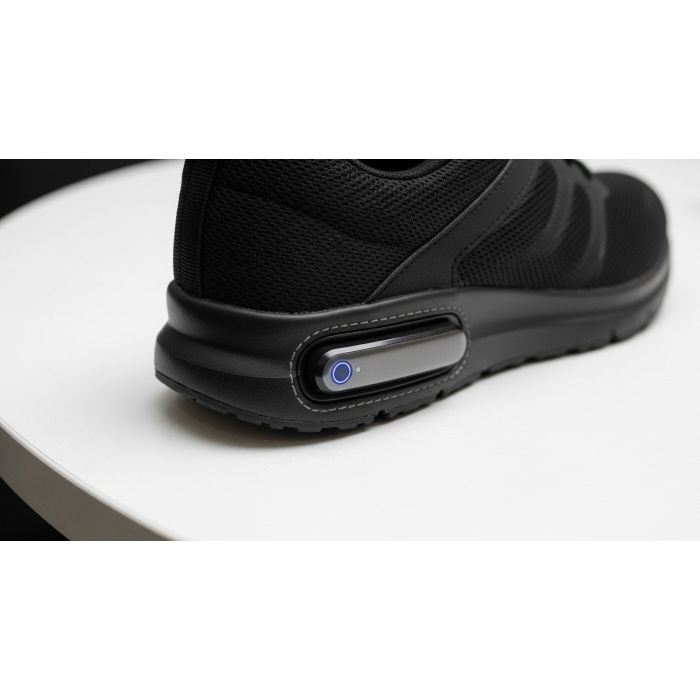
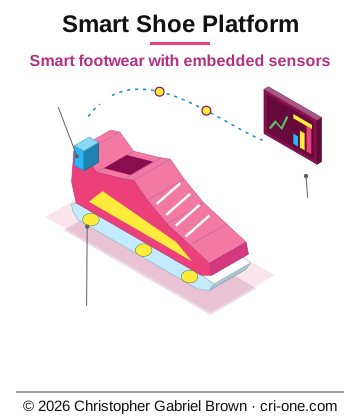
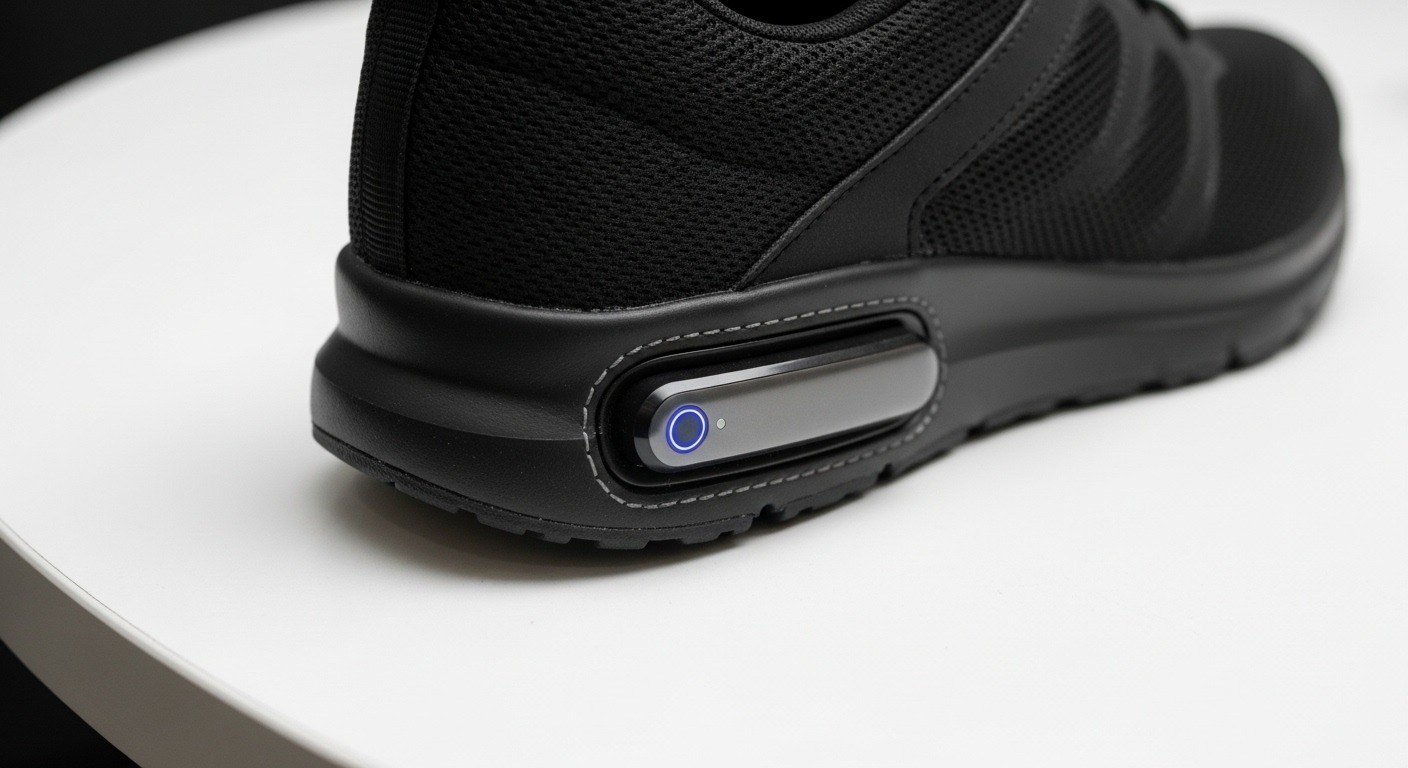
Think of a running shoe that knows where it has been. Sensors in the shoe, a small WiFi chip, a GPS fix, and a card you can pull out and replace. What it sends is plain: how far you went, how hard you landed, whether the battery and radio are healthy, whether the shoe got wet. That is the Smart Shoe Platform, and most of it already exists as code.
The deliverable is a Python package in ten sub-packages: a core state machine, a WiFi manager with encrypted credential storage, a data transmitter with priority queuing and automatic retry, hardware interfaces for the ESP32 and ESP8266 chips, token-based authentication with AES encryption, a GPS tracker with geofencing and GPX export, workout routines, and an analytics engine. On top sit two device implementations, a Smart Sport Shoe and a Smart Ball, and five sector modules for military, police, incarceration, student and government use. In all, a hundred and eight files, thirty-four of them Python source running to about seven thousand lines.
This is for an engineering buyer or licensee who wants to build connected footwear on a platform whose data layer, security and application logic are already worked out. Hardware driver integration is still pending, and the package says so: Level 1, research. A USPTO utility application is on file, with the smart-device claim covering WiFi transmission, GPS tracking, sensor integration, replaceable components and the analysis software. The buyer walks away with the full platform code and documentation; the patent rights stay reserved by the inventor, Christopher Gabriel Brown.
Description
Patent status: USPTO utility patent application filed — “Integrated Multi-Technology System Comprising Quantum Battery, Electromagnetic Propulsion, Energy Recycling, Data Transformation, Blockchain, Smart Devices, Satellite Systems, and Integrated Circuit Design” (Part 6 — Smart Device Platform). Claim 6 covers WiFi data transmission capabilities, GPS tracking, sensor integration, replaceable and customizable components, and software for data analysis and activity tracking. Entity status: Micro Entity. All patent rights expressly reserved by the inventor.
Maturity level: Level 1 — Research (complete platform code; hardware driver integration pending).
Filed forms: PTO/AIA/34, PTO/SB/16, PTO/SB/01, Fee Transmittal (micro-entity rate: US $425.00).
Copyright: © 2026 Christopher Gabriel Brown. All rights reserved. Proprietary and confidential.
Overview
The Smart Shoe Platform is a comprehensive Internet-of-Things platform comprising smart footwear with embedded sensors, WiFi connectivity via ESP32 and ESP8266 chip interfaces, real-time GPS tracking, and a full-stack data platform. The system encompasses 108 files across six top-level directories, including 34 Python source files totalling 7,034 lines of production code, 29 Markdown documentation files, 18 HTML pages (product pages, executive summaries, e-commerce templates, formula classifiers, and CD-ROM navigation), 7 concept images generated via Adobe Firefly, 4 ODF formula blueprint documents ( reallight.odf , commons.odf , unique.odf , abnormal.odf ), 4 USPTO PDF filings, and assorted text, configuration, and metadata files.
The platform ships with five specialised sector-specific application modules — Military, Police, Incarceration, Student, and Government — plus two smart-device implementations (Smart Sport Shoe and Smart Ball) and an integrated formula-classification test suite with 300+ test formulas achieving a 93.5% success rate (279 tests: 43 high-confidence, 218 medium-confidence, 18 failures).
Registered IP Portfolio — 9 Entries
The platform integrates with nine registered intellectual-property entries spanning smart-shoe hardware, software, and accessories:
IP Entry Title Integration Method
IP 702 Smart shoe media comm center USB & impact data exchange transmit_impact_data_exchange() — energy use, activity use, mile use tracking, productive lifestyle scoring
IP 703 Extractable intelligent card for shoe media comm center USB Replaceable module interface via chip HAL
IP 705 Analysing software to complement the smart shoe transmit_game_analysis() — game experience analysis, sequenced sport analysis, video and movement software data
IP 740 Practice and sport smart training database transmit_training_data() — comparison software, smart-ball/smart-shoe/smart-practice languages
IP 1118 Compact battery and WiFi translator transmit_battery_status() — battery monitoring, WiFi translator status, transmission quality metrics
IP 1136 Playing field embedded WiFi transmit_field_data() — training and real-play modes, field sensor data
IP 1137 Replaceable and customisable parts transmit_component_status() — chips, sensors, connectors status, component health checking
IP 1674 Waterproof smart shoe transmit_waterproof_data() — water resistance levels, moisture detection
IP 1675 WiFi gaming smart shoe transmit_gaming_data() — gaming metrics and calculations, practice session data
IP 1676 Sport smart shoe transmit_sport_data() — sport-specific metrics, calculative software data
WiFi Data Platform — Software Architecture
The core software deliverable is wifi-data-platform/ , a Python 3.8+ package (version 1.0.0) structured across ten sub-packages with enterprise-grade design patterns: dependency injection, event-driven architecture, state machine (seven states: INITIALIZING, READY, CONNECTING, CONNECTED, TRANSMITTING, ERROR, SLEEP), hardware abstraction layer, and strategy pattern for protocol dispatch.
Package Key Module(s) Classes & Functions Capability
core/ platform.py DataPlatform , PlatformState (7 states) Main orchestration, lifecycle management, component registration, event system, configuration loading, status monitoring
wifi/ wifi_manager.py WiFiManager Encrypted credential storage (Fernet / AES-128), multiple-network support with priority-based selection, auto-connect, network scanning, connection statistics
data/ transmitter.py DataTransmitter , DataPacket , DataType (8 types), TransmissionProtocol (6 protocols) Priority-based queuing (PriorityQueue, max 1,000), thread-safe worker, automatic retry (configurable, default 3), statistics (sent/failed/queued/dropped), flush for graceful shutdown
chip/ chip_interface.py , esp32_interface.py , esp8266_interface.py ChipInterface , ESP32Interface , ESP8266Interface , ChipState (7 states) Hardware abstraction layer; ESP32 (WiFi + Bluetooth, 4 MB flash, SPI/UART/USB, deep sleep, internal temperature sensor); ESP8266 (WiFi only, 1 MB flash, SPI/UART); generic extensible interface; AT command simulation
security/ auth.py AuthenticationManager , DataEncryption , SecureDataTransmitter Token-based authentication (HMAC-SHA-256, configurable 1-hour expiry), AES encryption (Fernet), PBKDF2 key derivation (SHA-256, 100,000 iterations), role-based permissions, token revocation, encrypted transmission wrapper
config/ config_manager.py ConfigManager JSON-based hierarchical configuration, default merging, runtime updates, file persistence, validation
features/ gps_tracker.py , routines.py , analytics.py GPSTracker , GPSPoint , GPSStatus (5 states); RoutineManager , Routine , RoutineStep , RoutineType (7 types), RoutineStatus (5 states); AnalyticsEngine , AnalyticsMetric GPS: Haversine distance, speed/heading tracking, elevation gain/loss, route history (10,000-point cap), geofencing (circular), GPX/JSON export. Routines: step-by-step workout tracking, templates, pause/resume, event callbacks. Analytics: metric recording, session management, statistical analysis (min/max/mean/median/stdev/percentiles), period comparison, daily/weekly summaries, insight generation
devices/ smart_sport_shoe.py , smart_ball.py SmartSportShoe , SmartBall Complete device implementations with integrated GPS, routines, analytics, sensors, and secure data transmission. See dedicated sections below
applications/ military_platform.py , police_platform.py , incarceration_platform.py , student_platform.py , government_platform.py 5 specialised platform classes Domain-specific data structures, 39 specialised transmission methods total, role-based authentication, security levels, complete shift/mission workflows. See dedicated sections below
examples/ basic_usage.py , smart_shoe_integration.py , security_example.py , ip_integration.py , all_applications_demo.py , smart_devices_demo.py 6 runnable example scripts Comprehensive demonstrations of every platform capability; all runnable in simulation mode without hardware
Supported Transmission Protocols
Protocol Handler Notes
WebSocket _send_websocket() Real-time bidirectional; optional dependency websocket-client ≥ 1.6.0
Supported Data Types
Data Type Enum Value Usage
The SmartSportShoe class ( devices/smart_sport_shoe.py , 390 lines) provides a complete smart-footwear implementation supporting shoe types: running, basketball, soccer, and custom.
Sensor / Feature Data Points Processing
Accelerometer x, y, z axes Step detection via magnitude threshold (> 12.0 m/s²); step counting; distance estimation (0.7 m average step length)
Gyroscope x, y, z axes Orientation tracking
Pressure sensors Heel, forefoot, midfoot (kPa) Gait pattern analysis: heel striker (> 1.5× forefoot), forefoot striker (> 1.5× heel), midfoot striker
Impact force Force (N), frequency (Hz) Impact history (1,000-event rolling buffer); force analytics
GPS integration Lat, lon, altitude, speed, heading, accuracy, satellites Real-time location (1.0 s update interval); route recording; Haversine distance; elevation gain/loss; geofencing
Calorie estimation Cumulative 0.04 calories per step (configurable)
Routines Multi-step workouts Create, start, pause, resume, complete; step-by-step progress tracking; event callbacks
Analytics All metrics Session-based recording; performance analysis (min/max/mean/median/stdev); percentile calculation (p25, p75, p90); weekly/daily summaries; trend insights
Smart Ball — Device Implementation
The SmartBall class ( devices/smart_ball.py , 547 lines) supports multiple sports: baseball, basketball, soccer, football, and tennis. GPS updates at 0.1-second intervals for high-frequency trajectory tracking.
Capability Details
Motion sensors Accelerometer (x/y/z), gyroscope (rotation/spin), magnetometer (orientation), velocity vector, angular velocity
Spin rate Calculated from gyroscope magnitude; converted rad/s → RPM via (angular_velocity × 60) / (2π); spin axis normalisation
Impact detection Force measurement (N); impact type classification: THROW, CATCH, BOUNCE, HIT; velocity at impact; spin at impact; GPS location at impact
Trajectory analysis Flight-path tracking; start/end location; distance (Haversine); maximum height; apex point detection; duration
Baseball analysis Pitch type classification: CURVEBALL (> 2,000 RPM spin), SLIDER (> 1,500 RPM), FASTBALL (> 18 m distance), CHANGEUP (default); velocity in MPH (m/s × 2.237)
Basketball analysis Shot type: LAYUP (
Soccer analysis Kick type: CHIP (> 5 m height), LONG_PASS (> 30 m), SHOT (> 15 m), SHORT_PASS (default); power = velocity × 10
Sector-Specific Application Modules — 5 Platforms, 39 Specialised Methods
Platform Module Methods Security Level Key Capabilities
Military military_platform.py 6 CONFIDENTIAL, SECRET, TOP_SECRET Mission tracking, tactical data transmission, situational awareness (friendly/enemy forces, terrain, weather), equipment status, medical/casualty data, intelligence data
Police police_platform.py 7 Law enforcement grade Patrol shift management, incident reporting, traffic stop recording, evidence tracking (chain of custody), officer safety alerts, arrest data
Incarceration incarceration_platform.py 8 Corrections grade; roles: GUARD, ADMIN, MEDICAL, SUPERVISOR Inmate location tracking, facility security (doors, gates, cameras, alarms), incident reporting, health monitoring, visitation management, programme attendance, inmate count operations
Student student_platform.py 9 Educational grade (FERPA-compliant) Assignment submission, attendance tracking, learning analytics, exam/test data, campus location, library services, cafeteria/meal plan, health services, transportation tracking
Government government_platform.py 9 PUBLIC, CONFIDENTIAL, SECRET Citizen service transactions, public safety alerts, infrastructure monitoring, environmental monitoring, traffic management, emergency response, budget/financial data, public health, voting/election data
Security Architecture
Layer Implementation Specification
Credential storage Fernet symmetric encryption (AES-128-CBC) Encryption keys stored in separate key files; JSON-based encrypted credential persistence
Authentication Token-based (HMAC-SHA-256) Configurable expiry (default: 1 hour); device ID binding; permission arrays; token revocation
Key derivation PBKDF2HMAC SHA-256 algorithm; 100,000 iterations; configurable salt; 32-byte derived key length
Data encryption Fernet (AES-128) String and binary encryption; base64 encoding; automatic encryption in SecureDataTransmitter wrapper
Transport HTTPS / TLS Default protocol for all secure transmissions
Access control Role-based permissions Per-application security levels; clearance hierarchies; domain-specific roles
GPS Tracker — Geospatial Capabilities
Feature Detail
Fix statuses NO_FIX, SEARCHING, FIX_2D, FIX_3D, DIFFERENTIAL
Data points per fix Latitude, longitude, altitude, timestamp, accuracy (m), speed (m/s), heading (0–360°), satellite count
Distance formula Haversine: R = 6,371,000 m; a = sin²(Δlat/2) + cos(lat1) · cos(lat2) · sin²(Δlon/2); c = 2 · atan2(√a, √(1−a)); d = R · c
History Rolling buffer of 10,000 points; time-range filtering
Statistics Total distance, max speed, average speed, elevation gain, elevation loss, points recorded
Capability Detail
Metric storage 10,000 metrics per type (rolling); timestamped; unit-tagged; optional metadata
Session management Start/end sessions; automatic duration calculation; session history
Performance analysis Count, min, max, mean, median, standard deviation, total, first/last value, trend (improving/declining/stable), percentiles (p25, p75, p90)
Period comparison Mean change (absolute and percentage), total change (absolute and percentage) between any two time ranges
Summaries Daily summaries (by date); weekly summaries (by week start); per-metric aggregation
Insights Automatic improvement/decline detection: > 10% mean increase = improvement; > 10% mean decrease = decline; compared week-over-week
Feature Detail
Step structure Name, duration (seconds), target metric (distance, reps, etc.), actual metric, start/end times, completion flag
Lifecycle Create → Start → Pause/Resume → Complete Step → Auto-advance → Complete/Cancel
Templates Create reusable routine templates; instantiate from template with deep-copied steps
Progress tracking Current step, total steps, completed steps, progress %, elapsed time, total duration, remaining time
Metric Value
Categories tested Known Formulas (50), Variations (50), Edge Cases (50), Advanced Physics (50), Chemistry (30), Engineering (30), Mathematical (40)
Filename Subject
Component Readiness Score
Chip interface layer Framework ready; _hw_* placeholder methods need hardware implementation 3/5
Estimated time to full production deployment: 7–12 weeks (hardware integration: 2–4 weeks; network protocols: 1–2 weeks; back-end APIs: 2–3 weeks; testing & QA: 2–3 weeks).
Software Dependencies
Dependency Version Purpose
The package includes a Developer SDK Documentation guide supporting three integration methods:
Method Languages Capabilities
Python SDK Python 3.8+ Device management, data streaming, application integration, event handling
JavaScript SDK Node.js / browser Device access, event-driven data streaming, real-time updates
REST API Any (HTTP) Bearer-token authentication; endpoints for devices, data, location, analytics, applications
REST API endpoints: GET/POST /api/v1/devices , GET /api/v1/devices/{id}/data , GET /api/v1/devices/{id}/location , GET /api/v1/devices/{id}/analytics , GET /api/v1/applications , GET /api/v1/applications/{id}/devices .
Complete File Inventory
Category Count Extensions
- handoffs/wifi-data-platform/ — Complete Python IoT platform: 10 sub-packages, 34 Python source files (7,034 lines), 7 documentation files, setup.py , requirements.txt , and .gitignore . Includes all five sector-specific application modules, two smart-device implementations, GPS tracker, routines manager, analytics engine, security module, chip interfaces (ESP32/ESP8266/generic), data transmitter with six protocol handlers, WiFi credential manager, configuration manager, and six runnable example scripts.
- blueprints/ — 38 files: four ODF formula documents ( reallight.odf , commons.odf , unique.odf , abnormal.odf ), seven Adobe Firefly concept images, formula classifier with 300+ test suite ( formula_classifier.html , run_tests.html , test_formula_classifier.html ), Magento e-commerce templates (product pages, alternating-div layouts), executive summary, entity valuation report, CD-ROM navigation interface, smart products category view, developer SDK documentation, installation guide, and platform integration guide.
- patent-receipts/ — 8 files: USPTO patent application text (full specification with 8 claims covering all eight integrated inventions), abstract page, fee transmittal form (micro-entity, US $425.00), oath/declaration, and four filled essential-form PDFs (PTO/AIA/34, PTO/SB/16, PTO/SB/01, Fee Transmittal).
- sales-pitches/ — 11 files: investor pitch deck, licensing proposal, sales package, complete package sale guide, individual sales guide, outreach emails, sales summary, sales pitch, product card (Magento metadata), store product description HTML, and vault delivery instructions HTML.
- product-images/ — Smart-Shoe.png hero product image.
- Root files: MANIFEST.json (project metadata), LICENSE (proprietary, all rights reserved), CHANGELOG.md , CITATION.cff (CFF v1.2.0), README.md , PLAYBOOK.md (internal playbook), HANDOFF_BLURB.md (foundry handoff package), WEB_DESCRIPTION.html , and CONTACT_INFO.txt .
How this is delivered
This package ships on a single Blu-ray disc, posted to the delivery address on your order. The archive on the disc is AES-256 encrypted; the passphrase is sent separately, by email, once the disc is despatched — so the disc alone is of no use to anyone who intercepts it.
Discs are despatched by tracked, signed-for post. Allow 5 business days for mastering and verification before despatch.
© 2026 Christopher Gabriel Brown. All rights reserved. “Cri-One” and “Smart Shoe Platform” are trademarks of the licensor. Patent pending.
Photo
Footnotes
- Product number 8455.
- Family: smart shoe.
- Purchase: When you buy, you buy the use of that blueprint only.