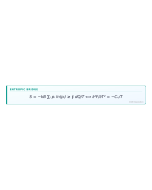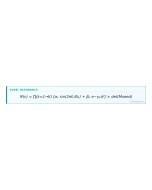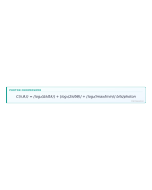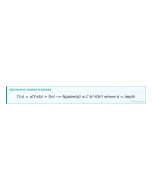
UniPhi Base Controller - Blueprint Pack
Make a whole workbench wireless from one box. A Raspberry Pi CM5 carrier with four hot-swap Adapter Sockets and four plug-in cards (Serial, CNC, GPIO/Power, Video) — each turns a wired device into a Wi-Fi node. Patent pending — U.S. Patent Application No. 19/717,706 (utility; filed June 24, 2026, 6:58:31 a.m. ET).
© CRI-ONE. All rights reserved. Patents issued and pending. Unauthorized reproduction of the underlying designs is prohibited.
Extended catalog & full narrative — UniPhi Base Controller - Blueprint Pack
The extended dossier appended from the 2026-08-05 catalog snapshot. Prices in the body copy have been stripped; the live-store price on this page is the authoritative figure. Images have been omitted.
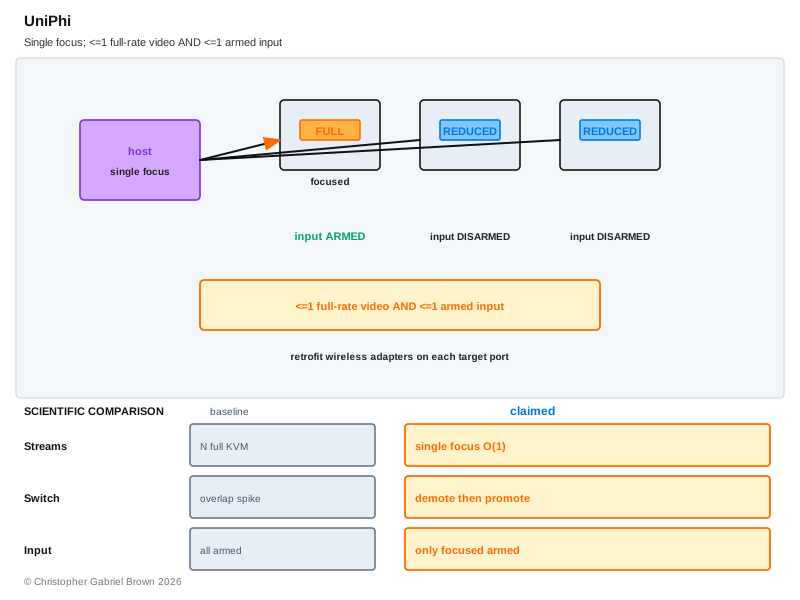
UniPhi makes wired things wireless. Bolt a thumb-sized adapter onto anything that has a cord — a keyboard, a monitor, a bench instrument, a CNC mill, a whole PC — and it joins your Wi-Fi. The device itself never changes and needs no drivers; the wire stays, the cord goes. Once a device is wireless, one console can drive a roomful from a single pointer — but that’s the bonus. Turning the wired thing wireless is the product.
The spine of UniPhi: one box, four hot-swap adapter sockets, and four ready-to-build adapter cards.
In plain English
The dongles are perfect for scattered PCs across a building. The Base Controller is the other half of the family — for the bench in your shop where everything is in one place. It is a small computer (the Raspberry Pi CM5) wired to four sockets. You snap adapter cards into the sockets the way you would snap a memory stick into a slot, and that machine is ready to talk to the world — whether the “world” is a serial instrument, a CNC mill, a relay panel, or a video signal.
Better yet, the very same adapter cards can also be used without the base — you can leave them in the dock when the bench is the right place, or set one in the field with its own power. The card does not care.
In technical terms
A Raspberry Pi Compute Module 5 carrier exposing four keyed 2×8 Adapter Sockets on a shared backplane bus. Each socket carries 5 V, 3.3 V, GND, a host UART pair, RESET#, BOOT#, IRQ#, PRESENT#, and a dedicated I²C lane brought out through a TCA9548A 8-channel multiplexer so each card’s ID EEPROM is independently addressable. Hot-plug presence is signalled per-socket.
- Carrier: CM5 socket, 5 V buck (TPS54331), 3.3 V LDO (AP2112K), TCA9548A I²C mux, four Adapter Sockets, status LEDs.
- Adapter card 1 — Serial/UART: level shifter and target-side header.
- Adapter card 2 — CNC STEP/DIR: 74HCT245 3.3 V-to-5 V buffer, endstop and probe inputs.
- Adapter card 3 — GPIO/Relay/Power: ULN2003 four-channel relay driver, two opto-isolated inputs, open-drain PC power-button FET.
- Adapter card 4 — HDMI/USB Video: MS2130 capture bridge.
- Every card carries a 24AA02E48 ID EEPROM and operates dual-mode (docked in the Base or standalone over Wi-Fi).
What is included (deliverables)
- Base Controller carrier KiCad schematic.
- Four adapter-card KiCad schematics.
- Adapter Socket bus specification: 2×8 pinout, signal directions, EEPROM record format, hot-plug rules.
- Bill of materials per board.
Ease of use
Seat a card in any socket. The Base reads its EUI-48 and card-type record from the EEPROM over the per-socket I²C lane, and the UniPhi software lights up the matching adapter in its console automatically. No DIP switches, no slot maps, no per-card configuration.
How to order
Email- and postal-order only — no phone, no brokers. USA-based buyers, USD only. Delivery is by encrypted email link upon payment confirmation.
- Email: crioneaka@outlook.com · crioneaka@outlook.com
- Postal: Christopher Gabriel Brown · 1341 Wellington Cove · Lawrenceville, GA 30043-5255 · United States
UniPhi is patent pending (U.S. Utility Application No. 19/717,706, filed 06/24/2026, 6:58:31 a.m. ET, inventor: Christopher Gabriel Brown). Purchase grants use of the software and design files included in this listing for the buyer’s own build — it does not transfer, assign, or license the underlying patent-pending invention. The patent and all derived rights are retained by the inventor.
38f443f11187d01976508ac346de375fea8e9ea4f525e79757c0efe4c92b8877
UniPhi Base Controller - Blueprint Pack
Publicly online since 2010 · U.S. patent applications since 2012 · inventions offered since 2014. The work of Christopher Gabriel Brown, independently documented.