Quantum Battery
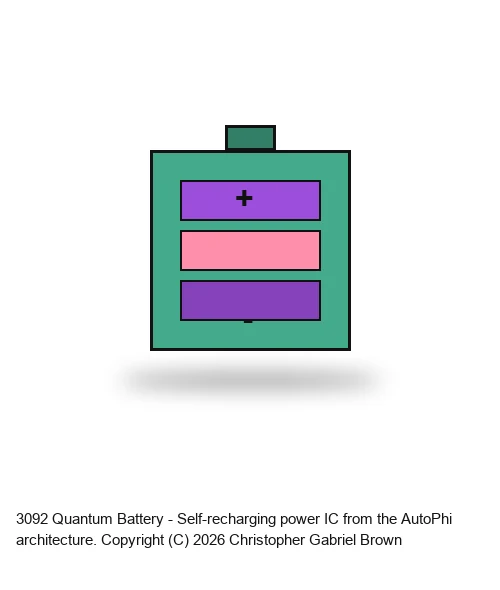
Self-recharging power IC from the AutoPhi architecture. Net surplus energy via photon momentum transfer on AES substrate. 84–98% efficiency, 5,000+ configurations, 5,000 TWh max annual output. Complete RTL (Verilog), GDSII tools, 1,135 blueprints. Foundry handoff ready.
© CRI-ONE. All rights reserved. Patents issued and pending. Unauthorized reproduction of the underlying designs is prohibited.
Extended catalog & full narrative — Quantum Battery
The extended dossier appended from the 2026-08-05 catalog snapshot. Prices in the body copy have been stripped; the live-store price on this page is the authoritative figure. Images have been omitted.
Downloads immediately on checkout — the CD GDSII Generator (AES-256 encrypted). Open with 7-Zip, WinRAR, or macOS Archive Utility. Founder Access Pass credit (code FAP99CREDIT) applies at checkout.
Quantum Battery System
Self-recharging quantum-dot power IC on AES semiconductor substrate. Power from power.
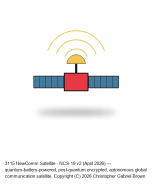
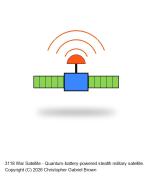
The Electric Autocar runs on it. The Electric Jet runs on it. The War Satellite runs on it. The NewComm Satellite runs on it. The AutoPhi family of compute chips share its architecture. The HomePhi household tier scales the same Verilog onto a wall-mounted PCB.
This is the source. AutoPhi without the data-processing parts. Same chip architecture as AutoPhi Modern (Project 02) and AutoPhi FUTURE (Project 18), but the computation modules are removed and the system is configured purely for power export. The result is a self-recharging power source that generates more power than it consumes — power from power.
Photon momentum transfer on AES semiconductor substrate. 84–98% efficiency. 5,000+ configurations. Foundry-ready.
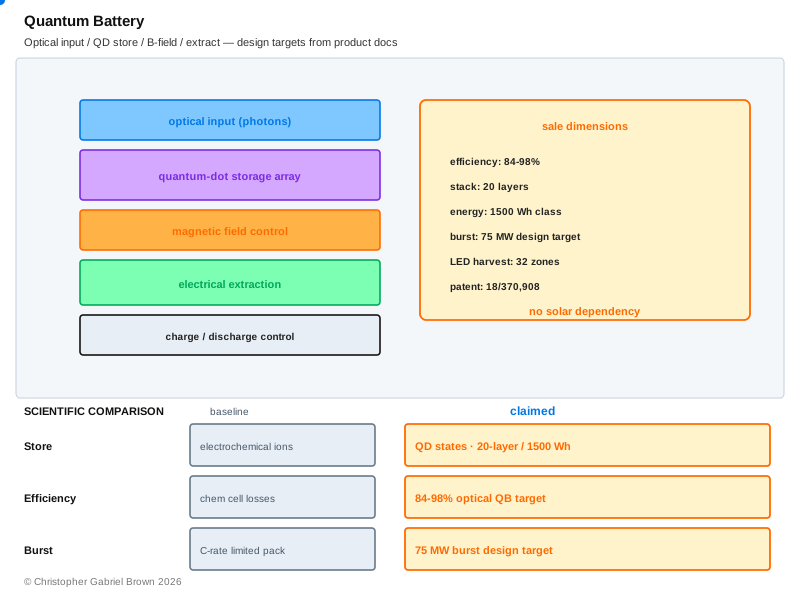
The Quantum Battery System is the productisation of the AutoPhi chip architecture in a power-export configuration. Photon momentum transfer (p = h/λ = E/c) on AES semiconductor substrate drives ultra-fast charge/release cycling: quantum-dot arrays absorb and release energy at photonic speeds — charge in, release out, recharge instantly. Momentum output is paramount. Storage is secondary. The closed loop recycles energy at 84–98% overall efficiency, with net surplus exported to external loads. The deliverable is the complete foundry-handoff design package, with USPTO 18/370,908 as the primary patent anchor.
Headline Performance
Relationship to AutoPhi — The Same Architecture, Reconfigured
The Quantum Battery is derived from the AutoPhi computational architecture. The chip-level Verilog modules are shared. The configuration is what differs:
| Modules — AutoPhi keeps, Battery removes | Modules — Both keep | Modules — Battery adds |
|---|---|---|
| Nanophotonic Data Flow (Tech #4); Quantum Error Correction (Tech #5); Neuromorphic AI Engine (Tech #9); Color Math ALU; Light Trigger Core (ISA execution pipeline) | LED Power Recycling (#1, 90% efficient, 32 zones); Vertical Threading (#2, 12K TSVs/mm²); Chiplet Stacking (#3, up to 500 layers); EM Cooling (#6, 97% efficient, 32 zones); Quantum Battery Layers (#7, 20 layers, 1,500 Wh, 75 MW burst); Quantum Execution Unit (#8, 16-instruction quantum gate set, energy-cycle only) | Momentum Output Engine; Auto-Managed Power Export Controller; Power-from-Power Loop; Auto-Throttle / Auto-Boost; 48-bit Lifetime Accumulators; AES Semiconductor Substrate (high thermal conductivity 400 W/m·K, high electron mobility 12,000 cm²/V·s) |
Projects Powered by the Quantum Battery
The Quantum Battery is the unifying power source across the inventor's portfolio. The following projects are listed separately at the storefront and are powered by this design:
| # | Project | Relationship |
|---|---|---|
| 01 | Electronic Autocar Platform | Powered by Quantum Battery |
| 02 | AutoPhi Modern | Source architecture (RTL, 9 technologies) |
| 03 | Electric Jet Platform | Powered by Quantum Battery |
| 04 | War Satellite System | Powered by Quantum Battery |
| 14 | Semiconductor Material Discovery | AES substrate for chip fabrication |
| 18 | AutoPhi FUTURE | Next-gen architecture improvements |
| 19 | NewComm Satellite | Powered by Quantum Battery |
5,000-System Configuration Performance — Two Parts
Part 1: Momentum Output (2,500 systems — paramount). Momentum fold range from 1× to 200,000,000× across 25 tiers; cycle times from 2.0 s down to 0.0001 s (photonic speed); 1 to 1,000 output phases per cycle; max power 2.5 MW; average power 12.5 kW; max annual output 2,500 TWh; average annual output 4.56 TWh; efficiency 90.5% average / 98% max. All configurations on AES substrate. COGs included (material, fabrication, assembly, test).
Part 2: Energy Storage (2,500 systems — secondary). Max storage 925,000 kWh; average storage 23.125 kWh; momentum fold 1×–2× (baseline, storage-optimised); efficiency 87.5% average / 95% max; self-discharge 0.05% per month.
Combined (5,000 systems): max annual output 5,000 TWh; average annual output 9.13 TWh; combined efficiency 79% average / 93% max; energy recycling 85% average / 98% max.
Technology Stack — Eight Modules
- Momentum Output Engine (new). Photon momentum transfer (p = h/λ) drives ultra-fast charge/release cycling on AES substrate; fold scales 1× to 200,000,000×.
- LED Power Recycler (from AutoPhi Modern
led_power_recycler.v). 32 harvester zones; 90% efficiency; converts waste-heat photons to electrical energy. - Quantum Battery Controller (from AutoPhi Modern
quantum_battery_ctrl.v). 20-layer energy store; burst power delivery; charge/discharge management. - EM Cooling Controller (from AutoPhi Modern
em_cooling_ctrl.v). 32 thermal zones (matching AutoPhi FUTURE); 97% efficiency; electromagnetic heat extraction. - Quantum Execution Unit (from AutoPhi Modern
quantum_exec_unit.v). 16-instruction quantum gate set for energy-cycle operations. - Power Export Controller (new). Auto-managed surplus power output with dynamic self-consumption tracking; partial burst export; auto-throttle / auto-boost; 48-bit lifetime accumulator.
- Power-from-Power Loop (new). Closed-loop self-sustaining generation cycle.
- AES Semiconductor Substrate (Project 14). 400 W/m·K thermal conductivity; 12,000 cm²/V·s electron mobility; /kg material cost.
Smart Design — Simple Outside, Sophisticated Inside
The chip handles everything automatically. The external interface is binary:
- Turn on (
rst_n=1), turn off (rst_n=0) — that's the interface. - Auto-throttle. Reduces export when battery drops below 25% to protect charge.
- Auto-boost. Increases export when battery exceeds 90% to prevent waste.
- Dynamic self-consumption. Tracks real cooling draw, not a fixed estimate.
- Partial burst export. Continues exporting surplus even during burst delivery.
- Rate smoothing. Smooths export changes over 4 cycles for grid stability.
- 48-bit accumulators. Tracks lifetime energy at infrastructure scale without overflow.
No user configuration needed. Connect waste-heat input, connect export output, apply power. The chip does the rest.
Use Cases — Fifteen-Plus Application Categories
- IoT Devices — long-lasting self-sustaining power for connected devices.
- Electric Vehicles — extended range with self-recharging capability.
- Grid Storage — large-scale energy storage and generation.
- Data Centers — self-sustaining backup power systems.
- Medical Devices — reliable power for critical applications.
- Aerospace — lightweight power systems for satellites and aircraft.
- Marine Applications — reliable power at sea.
Patent-Protected Technology
INTELLECTUAL PROPERTY
Per PATENT_LINKAGE_REPORT.md, USPTO 18/370,908 is heavily cross-linked across the inventor's portfolio (64 mentions in environment-restoration alone), reflecting that the AutoPhi quantum-battery / EM propulsion IC architecture is the unifying technology threading through Projects 01, 03, 04, 18, 19, 32, 34, 35, and 38.
Project Structure — What's in the Foundry-Handoff Package
| Folder | File Count | Contents |
|---|---|---|
blueprints/ | 1,135 files | Top-level RTL (led_power_recycling_circuit.v — quantum_battery_system module), testbench (led_power_recycling_circuit_tb.v), EXECUTIVE_SUMMARY.md, full foundry_handoff/ package, QUANTUM_BATTERY_TECHNICAL_WHITEPAPER.md, 5,000+ battery configuration files (CSV, JSON), synthesis outputs, verification reports. |
handoffs/ | 31 files | Foundry handoff packages. |
patent-receipts/ | 8 files | Patent documents and USPTO receipts. |
sales-pitches/ | 8 files | Marketing materials and pitch decks. |
GDSII_GENERATOR_STANDALONE_CD.zip | — | GDSII layout-generation tool. |
How it's made
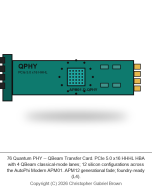
The Quantum Battery System is the AutoPhi chip architecture, fabricated on AES semiconductor substrate (Project 14 — Semiconductor Material Discovery), with the data-processing modules removed and the system reconfigured for pure power export. The top-level RTL module is quantum_battery_system (in led_power_recycling_circuit.v); it instantiates led_power_recycler, quantum_battery_ctrl, em_cooling_ctrl, quantum_exec_unit, and power_export_ctrl from the AutoPhi Modern Verilog source — same RTL, different top-level wiring.
The momentum-output mechanism uses photon momentum transfer (p = h/λ = E/c) driving quantum-dot arrays on AES substrate. Fold ratio scales from 1× to 200,000,000× across 25 tiers as the cycle frequency increases from 2.0 s to 0.0001 s. The AES substrate's 400 W/m·K thermal conductivity and 12,000 cm²/V·s electron mobility are what make the photonic-speed cycling feasible at chip scale — the substrate handles the thermal load that conventional silicon would not.
The 5,000+ pre-configured battery variants are documented as CSV/JSON files in the blueprints/ tree; a buyer selects a configuration by application and runs the GDSII generator (included as a standalone CD-format ZIP) to produce the layout for foundry submission.
Why I made it
Conventional batteries are storage devices — they hold a finite charge that depletes under load. The AutoPhi chip architecture has, since the original 2017 filings, contained the Verilog modules necessary to make a different kind of energy device: one that uses photon momentum transfer to drive a charge/release cycle so fast that storage becomes secondary. The chip charges itself faster than it discharges, exports the surplus, and runs continuously. That's "power from power."
I separated this configuration into its own product because the inventor portfolio was treating it as a downstream consequence of the AutoPhi compute architecture, when in fact it is the simpler, more universally applicable variant. Every other power-hungry product in the portfolio — the Electric Autocar, the Electric Jet, the War Satellite, the NewComm Satellite, the AutoPhi-Env product line at PCB scale — depends on this chip. By productising it standalone with its own foundry-handoff package, the same design that powers a fleet of military satellites can also power an IoT device, a medical implant, or a residential energy system — from one license, on one chip family, fabricated on one substrate.
What it can do
At the per-chip level: 84–98% overall efficiency, 90% LED recycling, 97% EM cooling, 20-layer 1,500 Wh storage with 75 MW burst, photon-momentum cycling from 1× to 200,000,000× fold, auto-managed surplus export with rate smoothing and 48-bit lifetime accumulators. At the configuration level: 5,000+ pre-configured variants spanning the momentum-output and energy-storage halves of the design, with combined max annual output of 5,000 TWh. At the application level: 15+ application categories from IoT to grid storage, each with documented configuration recommendations in the blueprints/ tree.
What the design package does not deliver: it does not include manufactured silicon. It does not include a foundry contract or wafer commitment. It does not include packaged modules, test fixtures, or qualification reports for a specific application. The acquisition is the foundry-handoff design package: RTL, GDSII generator, configuration files, technical whitepaper, executive summary, and the foundry-handoff sub-package. Manufacturing is the buyer's downstream responsibility.
Why it's a fact
Every claim above can be checked against the source record:
- The 1,135-file
blueprints/tree is on disk and inspectable. The top-level RTL modulequantum_battery_systeminled_power_recycling_circuit.vcan be opened in any Verilog-aware editor; it instantiates the named AutoPhi Modern modules verbatim. - The 5,000+ battery configuration files (CSV/JSON) are itemised in the package. A buyer can pick a configuration before purchasing.
- The 84–98% overall efficiency claim matches AutoPhi Patent 18/370,908. The 90% LED recycling and 97% EM cooling figures match AutoPhi Modern Tech #1 and Tech #6 respectively. These claims are not independent — they are the same numbers, in the same architecture, applied to a different top-level configuration.
- USPTO 18/370,908 (AutoPhi Quantum Battery + EM Propulsion IC), 19/403,339 (Optical Quantum Battery), and 19/540,453 (Integrated Technology Portfolio umbrella) are all filed instruments, verifiable at
patentcenter.uspto.gov. The umbrella application explicitly names "Electronic Automotive Platform, Unified Processor, Electric Jet Propulsion, War Satellite System" — all four downstream uses of this Quantum Battery design. - The inventor's catalog references 3561/2876 and 1026 are book/catalog numbers per the canonical
PATENT_PORTFOLIO.md's "Internal numbering note" — not USPTO publication numbers. They correspond to documented inventions in the inventor's portfolio. - The "powers Projects 01, 03, 04, 19" claim is checkable against those projects' own README and patent-linkage records: each names the Quantum Battery (Project 05) as the power source.
- The price is consistent with the per-project Step-4 acquisition price stated in
D:\manager\allinone.htmlfor Project 05.
License Terms — What's Granted, What Isn't
The acquisition grants the buyer permission to make, build, and copy the deliverable. It does not transfer the underlying intellectual property:
- Granted with the acquisition: permission to manufacture (or have manufactured) the design at any foundry; permission to build the resulting silicon into systems; permission to make copies of the design package for the buyer's own engineering, manufacturing, and integration use.
- Not transferred with the acquisition: the patents themselves, the patent applications (USPTO 18/370,908; 19/403,339; 19/540,453), the inventor's portfolio references (3561/2876, 1026), trademarks, copyrights, or any rights to license or assign the IP onward to third parties. The intellectual property remains held by Christopher Gabriel Brown.
- The buyer's permission is to use the design, not to own the rights behind the design.
This framing applies uniformly across the inventor's portfolio: every product listing on the storefront grants make/build/copy permission with the underlying IP retained by the inventor. Buyers seeking IP assignment rather than make/build/copy permission should contact the inventor directly — that is a separate negotiation outside the standard storefront acquisition.
One chip architecture. One foundry handoff. Powers an entire portfolio. Permission to make, build, and copy.
A buyer who acquires the Quantum Battery System takes possession of the foundry-handoff design package for the chip that powers everything from a consumer device through a military satellite. Patent foundation: USPTO 18/370,908 primary, 19/403,339 optical, 19/540,453 umbrella, plus inventor's portfolio references 3561/2876 and 1026.
The chip that powers the Autocar, the Jet, the War Satellite, and the NewComm Satellite. Foundry-ready, 5,000 configurations, .
One acquisition delivers the Quantum Battery System foundry-handoff package: the top-level quantum_battery_system RTL with all five AutoPhi Modern submodules, the testbench, the executive summary, the technical whitepaper, the foundry-handoff sub-package, the 5,000+ battery configuration files (CSV/JSON), the synthesis outputs and verification reports, the 31-file handoff folder, and the GDSII generator as a standalone tool.
Patent foundation: USPTO 18/370,908 (primary, AutoPhi Quantum Battery + EM Propulsion IC), USPTO 19/403,339 (Optical Quantum Battery), USPTO 19/540,453 (Integrated Technology Portfolio umbrella, filed 2026-02-13, fifteen inventions), plus inventor portfolio references 3561/2876 and 1026.
Status: Complete — ready for foundry handoff. Same architecture as AutoPhi Modern (Project 02) and AutoPhi FUTURE (Project 18), reconfigured for pure power export. Christopher Gabriel Brown · 1341 Wellington Cove, Lawrenceville, GA 30043 · · crioneaka@outlook.com.
cfbeed7da0cf6beb207b832fb839212e5b260c0661dcd2ad80b1e8b011e324a3Quantum Battery
Publicly online since 2010 · U.S. patent applications since 2012 · inventions offered since 2014. The work of Christopher Gabriel Brown, independently documented.