
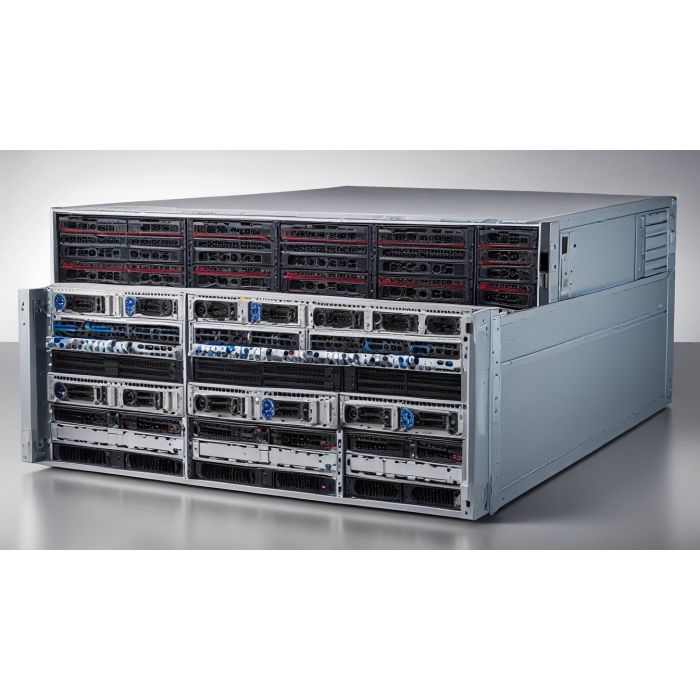
79-writephi-2
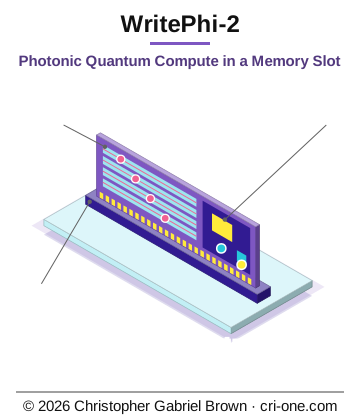
Asset valuation: $3,200,000,000. Project 79 · cri-one.com portfolio · 2026-08-04 The ordered how-to for standing up the platform. This document is the buyer-facing operating manual for WritePhi-2. It answers "we bought the design package — what do we do first, second, third?" It is deliberately ord
A chip should be something you can write. That is WritePhi-2, the Blu-ray Foundry: a developer describes what a chip does in the WritePhi-Q language, and the WritePhi Writer etches those functions, layer by layer, voxel by voxel, into a multilayer substrate in a Blu-ray envelope. The finished part is a standard tall DDR5 DIMM that speaks CXL 3.0 and slots into any CXL memory-expansion port with no custom carrier hardware. It is not memory and stores no customer bits as bits. Every host write starts a compute operation and every read pulls back a result, because the written disc is a photonic quantum chip: waveguides, resonators, phase shifters, single-photon sources and detectors, computing as photons move through the written layer. It needs neither a cold plant nor an optical bench.
The language has three tiers: photonic primitives, quantum gates, and compute-in-memory tiles that a Python- or CUDA-class developer calls as ordinary memory-region operations without ever seeing a photon or a gate. All three lower to one readable intermediate representation, then to a layout, then to the same write program the existing Writer already consumes. WritePhi-2 extends the WritePhi-1 platform recorded in 2017, has its own first written record from August 2026, and is concept plus designed: every performance number is a design target. The package reads as an operating manual: what the buyer does first, second and third. A United States company walks away with a design and product license and worldwide commercialization rights for the manufactured DIMMs; the platform IP stays with the inventor.
Description
WritePhi‑2 — Photonic Quantum Compute in a Memory Slot — Project 79 Design + Product License Package (SKU 2110)
Inventor: Christopher Gabriel Brown — Inventor · Author · Visionary. Portfolio: cri‑one.com · Project 79 · category writephi‑2.html (Magento category ID 3416). Priority date: 2026‑08‑04 — the first written record of the WritePhi‑2 concept, extending the WritePhi‑1 platform per inventions 1443‑1462 recorded 2017‑11‑24. Patent anchors: USPTO 18/370,908 filed 2023‑09‑21 (AutoPhi — Quantum Battery Integration & Electromagnetic Propulsion IC, real RTL across nine technologies, pending examination) and USPTO 19/540,453 (umbrella utility application, filed 2026‑02‑13, consolidating fifteen inventions). Founding concepts anchor to the 2017 inventor depositions (ISBN 978‑1‑979767‑89‑7 — a single‑author printed publication under 35 U.S.C. § 102(a)(1)): “1 light trigger + color mathematics,” “plasma chip etching / layered chip printing,” “layered blanks for writing chip functions with software,” and “embedded software language per part.” Status: concept + designed. All performance numbers herein are engineering design targets, not measured guarantees. All underlying platform IP (inventions 1443‑1462 and Project 79 entries 79‑A through 79‑H) is retained by the inventor — no IP transfer. What the buyer receives is a design + product license that includes worldwide commercialization rights for the manufactured WPQ‑DIMMs. Available exclusively to companies incorporated, headquartered, and primarily operating in the United States. USD only. Email and postal mail only. Copyright © 2026 Christopher Gabriel Brown — all rights reserved.
Overview
WritePhi‑2 is the Blu‑ray Foundry : a software‑defined chip foundry that lets a developer write a chip’s functions as I/O in the WritePhi‑Q chip‑writing language, and then etch those functions — layer by layer, voxel by voxel — into a Blu‑ray‑envelope multilayer substrate, delivered inside a JEDEC DDR5 UDIMM package that speaks CXL 3.0 memory‑semantic protocol to the host. The extension over Project 57 (WritePhi‑1, the Writer / Dicer / Blank platform) and Project 58 (WritePhi Devices, the PCIe accelerator‑card form) commits three specific additions: a photonic‑quantum recording chemistry (Q‑Blank), a memory‑slot form factor with CXL 3.0 Type‑2 semantics, and WritePhi‑Q — a three‑tier host‑facing language whose Tier 1 exposes photonic primitives (waveguides, resonators, phase shifters, single‑photon sources, detectors), Tier 2 exposes quantum gates (H, X, Y, Z, CNOT, CZ, SWAP, T, S, rotations, measurement), and Tier 3 exposes compute‑in‑memory tiles that a Python‑/CUDA‑class developer can call as memory‑region operations without ever seeing a photon or a gate. All three tiers lower to a shared human‑readable Photonic‑Quantum Intermediate Representation (PQIR), then to a .wplayout , then to a .wpprog write program consumed unchanged by the existing WritePhi Writer.
The DIMM is not memory . It occupies a memory slot because CXL 3.0 gives it a clean host protocol; it stores zero customer bits as bits. Every host write triggers a compute operation, every host read pulls a compute result — the disc is a photonic quantum chip. The load‑bearing firewall from WritePhi‑1 (“the disc is a circuit, not a disc”) carries forward one form factor, and joins three new firewalls: WritePhi‑2 is not AutoPhi Future, not PsiQuantum / Xanadu / ORCA (no cryostat, no optical bench, no custom carrier), and not a language patent (the language grammar + reference compiler are engineering; the underlying WritePhi optical‑processing patents 1443‑1447 remain WritePhi‑1 IP, licensed forward). The used vs written distinction still applies: the written disc is the fabrication master (photon‑chromosome image / etch pattern on the substrate); the used AutoPhi silicon is the finished part that runs. The chip does the computing; the disc is the foundry step.
Photonic‑quantum compute model The written disc holds a nanophotonic quantum photonic integrated circuit (PIC): waveguides, resonators, single‑photon sources, phase shifters, measurement operators. Compute happens as photons propagate through the written layer. WritePhi‑1 (architecture‑agnostic; the same disc could compile to a classical AutoPhi ISA).
Memory‑slot form factor JEDEC DDR5 UDIMM, 288‑pin edge, standard tall‑DIMM height, standard heat‑spreader footprint. Slots into any CXL 3.0 memory‑expansion‑capable port. Zero custom carrier hardware on the host side. WritePhi Devices (PCIe accelerator card form).
Host‑facing language WritePhi‑Q — a three‑tier public language for photonic‑quantum designs that lowers to the existing WritePhi optical‑processing SDK (inventions 1443‑1447) and its .wpprog file. Two‑layer compiler stack. Any prior WritePhi/AutoPhi surface (which stopped at the SDK layer).
What WritePhi‑2 Is Not (Firewalls)
- NOT a memory / storage product. The DIMM presents memory semantics because CXL 3.0 gives us a clean host protocol, not because it stores host data. Zero customer bits sit on the disc as bits. The disc IS a photonic quantum chip. The firewall against 1980s optical‑memory prior art (US 4740266, US 4781789, US 4783236, US 4795528, US 4855950, US 4900691, US 5228001, US 5513168) holds unchanged.
- NOT AutoPhi Future. WritePhi‑2 targets a photonic quantum architecture, not the AutoPhi classical/quantum‑hybrid ISA. Separate architecture family, separate contracts, separate IP.
- NOT PsiQuantum / Xanadu / ORCA. Those companies ship cryogenic or bench‑scale photonic quantum systems. WritePhi‑2 ships a consumer‑manufacturable DIMM. Same physics family, different envelope, different market, different manufacturing path.
- NOT a language patent. Language grammar + reference compiler + spec are engineering package; underlying WritePhi optical‑processing patents (1443‑1447) remain WritePhi‑1 IP, licensed forward.
Signaling on DDR5 edge CXL‑over‑DDR5 (native on host boards that route CXL to the DDR5 socket); PCIe 5.0 ×8 fallback via the WP2‑CXL‑SHIM adapter for boards that do not
Advertised CXL protocols CXL.mem (memory‑semantic access to the tile address space) · CXL.cache (optional coherent caching if the host supports it; not required for correctness) · CXL.io (enumeration, firmware update, telemetry)
Thermal target Junction ≤ 85 °C at 15 W with standard tall‑DIMM heat spreader in a chassis with 100 LFM airflow. No cryostat. No active cooling.
Firmware update path CXL.io; signed updates only; no unsigned code accepted. Firmware does not update the written photonic layer — the disc is fixed at write time.
WPQ‑DIMM production tier 1 / 2 / 4 as ordered 40 / 80 / 160 WP2‑DIMM‑PROD ($20,000,000 USD) — fleet‑deployment license, yield validation, extended reliability characterization, 12‑month standing engineering support during buyer’s first‑shipment ramp. The operating point at which a WPQ‑DIMM is qualified, warranted, and licensed for shipping into a paying customer’s production infrastructure.
Higher densities are available via the WPQ‑Bed multi‑DIMM chassis SKUs (WP2‑BED‑8, WP2‑BED‑16, WP2‑BED‑32).
The Disc‑To‑Electrical Bridge
The WPQ‑DIMM contains one to four written Q‑Blanks stacked horizontally on a machined‑aluminum mounting frame. Each disc’s photonic surface must be coupled to the CXL front end’s control channel and read channel. The path committed to is:
Path A — edge coupling via V‑groove fibre array. The WritePhi Dicer (Project 57 SKU) cuts each Q‑Blank to a 120 mm × approx. 4 mm strip that captures the tile grid. A polishing pass finishes the coupling edge. The polished edge butt‑couples into a silicon V‑groove fibre array bonded to the bridge PCB. Fibre pitch is 127 µm (standard). Alignment is passive per fiducials the WritePhi Writer inscribes during the write pass. Insertion loss target: ≤ 2 dB per interface, verified during factory outgoing inspection.
Path B — surface grating coupling (deferred). Alternative to Path A if edge‑coupling proves too demanding at volume. Would be deployed as a WPQ‑DIMM‑Lite variant.
CXL 3.0 controller Presents CXL Type‑2 to the host; runs the memory‑semantic front end. Commodity silicon — Astera Labs Leo, Marvell Structera, or Microchip PM8000‑series. Buyer‑source.
Photonic transceiver Light‑source + drive electronics for the disc’s classical control channel; single‑photon detector array for the disc’s read channel. 12‑channel WDM (wavelength‑division multiplexing) at 1550 nm ± 20 nm. Buyer‑source from a commodity photonic‑packaging house.
Classical control processor Runs classical operations dispatched by Tier‑3 WritePhi‑Q programs (transpose, softmax, activation functions, scaling). Provisional: quad‑core ARM Cortex‑A55 at 1.2 GHz. Alternate: a stripped‑down AutoPhi Modern soft core if the Project 2 team wants the alignment.
V‑groove fibre array footprint Mechanical receiving surface for the polished Q‑Blank coupling edge. Standard silicon V‑groove array, 127 µm pitch.
Thermal management Interface to the DDR5 tall‑DIMM heat spreader. Passive heat‑spreader interface only; no active cooling.
PCB outline Small daughter PCB between the disc stack and the DIMM edge connector. Approximately 50 mm × 20 mm; standard 8‑layer FR‑4; no exotic materials.
The Q‑Blank Recording Chemistry
The WritePhi Q‑Blank shares the 120 mm × 1.2 mm polycarbonate envelope of the WritePhi‑1 blank (invention 1448) but uses a distinct recording chemistry optimized for photonic quantum operation. Requirements the chemistry must meet:
Requirement Target
Feature resolution Sub‑diffraction‑limit relative to a 405 nm write laser. Waveguide widths at 250 nm and phase‑shifter alignment tolerances at ± 30 nm, achieved via chemistry‑defined non‑linear response.
Propagation loss ≤ 3 dB/cm at 1550 nm target wavelength (straight‑waveguide).
Thermo‑optic stability Refractive‑index drift ≤ 1 × 10⁻⁴/K over the 0 °C–85 °C operating range.
Photostability under continuous operation Target 10,000 hours. No visible degradation of features or coupling.
Compatibility with dicing The WritePhi Dicer must cleanly cut the substrate without inducing edge damage in the photonic layer within 5 µm of the cut.
Candidate chemistries (selection pending, three families evaluated):
- Hybrid organic‑inorganic photoresists (Ormocer family, TPP‑hardened variants).
- Amorphous chalcogenide phase‑change layers (Ge₂Sb₂Te₅ family).
- Photorefractive nanocomposites (Zr‑containing sol‑gel).
Selection depends on write‑laser wavelength and pulse‑shape compatibility with the WritePhi Writer. Candidate inventor‑record entry: 79‑E — WritePhi Q‑Blank recording chemistry, TBD chemistry chosen.
CXL 3.0 Protocol Shape — Address‑Space Model
The WPQ‑DIMM enumerates as a CXL 3.0 Type‑2 device and advertises CXL.mem, optional CXL.cache, and CXL.io. The DIMM’s address space is divided into tile regions , each corresponding to one photonic quantum tile on the disc. Regions are memory‑mapped at DIMM‑relative offsets. Each region has three sub‑regions:
Sub‑region Purpose
Input Host writes classical input data here. The write triggers a Tier‑3 operation.
Output Host reads classical output data after the operation completes.
Control Configuration + status register — program pin, timing, telemetry.
A single Tier‑3 program lowers to writes/reads across one or more tile regions. The CXL front end serializes host requests to match the tile availability schedule.
Firmware update / stdlib reload Offline, requires DIMM power cycle.
Intel Sapphire Rapids + Emerald Rapids server platforms Native CXL enumeration on CXL‑capable DDR5 sockets (CXL 1.1 on shipping SPR silicon; WPQ‑DIMM falls back to CXL 1.1 features).
Intel Granite Rapids / Sierra Forest (upcoming) Native CXL enumeration (CXL 2.0 → 3.0 as parts ship).
AMD EPYC 9004 (Genoa) + EPYC 9005 (Turin) Native CXL enumeration (CXL 1.1 / 2.0 depending on part).
Ampere AmpereOne Native CXL 2.0; WPQ‑DIMM falls back to CXL 2.0 features on these.
Any CXL 3.0 memory‑expansion socket on future platforms Native CXL 3.0.
Host Compatibility — Boards Without Native CXL‑over‑DDR5
Ship with the WP2‑CXL‑SHIM ($25,000 USD) — a PCIe 5.0 ×8 adapter card that receives one WPQ‑DIMM in a horizontal socket and bridges to the host over PCIe. The shim loses the DIMM‑slot convenience but preserves the compute model. It is a WPQ‑Bed‑derivative SKU.
Windows 11 24H2 or later Native CXL 3.0 memory‑device support. WPQ‑DIMM enumerates without a custom driver. Optional user‑mode SDK for Tier‑3 compute calls.
Linux kernel 6.10 or later Native CXL 3.0 memory‑device support. Optional user‑mode SDK for Tier‑3 compute calls.
The WritePhi‑Q Language — Design Principles
- Three tiers of abstraction, one language. A developer picks their comfort level; the same source file can mix tiers freely.
- All tiers lower to the same PQIR. No forked backends. The compiler is one program, not three.
- PQIR is human‑readable text. So it can be diffed, code‑reviewed, and hand‑edited during bring‑up. Compiled binaries live in .wpprog ; PQIR is the readable rung between source and binary.
- The buyer never sees photonics unless they want to. Tier‑3 developers write memory‑cell operations and never touch waveguide geometry. Tier‑2 developers write gates and never touch light physics. Only Tier‑1 developers see the metal.
- Errors are physical. The type system tracks photonic‑realizable constraints — waveguide bend radii, coupling coefficients, decoherence budgets — and rejects a program at compile time if it asks for something the physics can’t do. Compile‑time is cheaper than a wasted Q‑Blank.
- Explicit is better than implicit. No hidden phase shifters. No autoinserted measurement. If it’s in the compiled layout, it’s in the source or the standard library.
- The stdlib is a first‑class SKU. Analogous to WritePhi‑1’s Design Library, wpq‑stdlib is a paid subscription. Every non‑trivial design ships with its stdlib version pinned.
T1 — Photonic primitives Waveguides, resonators, phase shifters, single‑photon sources, detectors, beam splitters, ring resonators, directional couplers, classical control bits/DAC. Verilog / VHDL for photonic ICs Photonic engineers with a specific circuit
T2 — Quantum gates H, X, Y, Z, T, S, CNOT, CZ, SWAP, Rx/Ry/Rz rotations, MEASURE, PREP_ZERO, entangled‑state prep. OpenQASM 3 / Q# Quantum‑algorithm developers
T3 — Memory‑cell tiles / CIM Memory regions, tile ops, compute‑on‑data‑at‑rest; quantum_matmul, quantum_search, quantum_fft, quantum_hash, quantum_solve, photonic_conv2d. CUDA / DirectML / SYCL kernels Application developers
waveguide A directional light path. Parameterized by width, effective index, propagation length.
photon_source A single‑photon source. Parameterized by wavelength, indistinguishability, rate.
detector A single‑photon detector. Parameterized by efficiency, dark count rate, dead time.
phase_shifter A controllable phase element. Parameterized by length, drive type (classical bit or DAC value).
beam_splitter A 2×2 beam splitter or MMI coupler. Parameterized by splitting ratio.
ring_resonator A ring resonator. Parameterized by radius, coupling gap.
directional_coupler Wavelength‑selective coupler. Parameterized by wavelength, coupling length.
classical_bit , classical_dac Control signals to phase shifters and modulators, driven by the CXL front end.
>> Sequential connection (source’s output feeds destination’s input).
[a, b] Parallel bank (multiple photonic paths, all driven by upstream signal).
splitter(a:b) / combiner(a:b) Ratio splits/combines.
Compile‑time checks at Tier 1: every waveguide must connect to exactly one source‑side and one drain‑side port; bend radii below the minimum for the disc’s recording chemistry are rejected; two waveguides may not cross without a declared crossing element; a ring_resonator ’s free spectral range must be compatible with the surrounding wavelength environment.
qubit A photonic‑quantum bit. Dual‑rail encoding by default; path or polarization variants selectable at module level.
qreg[N] A size‑N register of qubits.
measurement A classical bit produced by measuring a qubit.
Every Tier‑2 gate is a documented, versioned Tier‑1 layout in wpq‑stdlib::quantum::gates . The compiler emits a comment in the PQIR trace showing which stdlib entry was used and its version, so a design is reproducible from source alone. When the stdlib upgrades to a new gate layout (say, a lower‑loss CNOT), the developer must explicitly opt in — no silent physics changes across builds. Default lowering assumes a KLM‑style linear‑optical quantum computing substrate (single‑photon sources + linear optics + heralded gates); an alternative measurement‑based / cluster‑state backend is selectable per module. Continuous‑variable qubits are out of scope for the initial WritePhi‑Q release.
memory_region[N, dtype] An addressable, host‑visible region of N elements of the given dtype.
cim_tile A compute unit backed by a photonic quantum region. The developer names inputs/outputs; the compiler picks the T2/T1 layout that implements the operation.
quantum_matmul(A, B) -> C Unitary matmul. Compiler enforces A and B are compatible dimensions.
quantum_search(data, key) -> index Grover’s over a memory region.
quantum_fft(input) -> output Quantum Fourier transform.
quantum_hash(data) -> digest Collision‑resistant hash whose lower bound is protected by BQP‑hardness.
quantum_solve(A, b) -> x HHL‑family linear solver for well‑conditioned A.
photonic_conv2d(input, kernel) -> output 2‑D convolution as photonic mesh.
Tile inputs and outputs must fit within a single Q‑Blank’s tile budget (target: 40 tiles per 1‑disc DIMM). The compiler warns if a T3 operation lowers to a T2 program whose two‑qubit‑gate depth exceeds the coherence budget for the chosen photonic substrate. Tier‑3 lets a developer freely mix classical and quantum steps — classical softmax , transpose , and scaling route to the CXL front‑end’s control processor and quantum ops to the disc.
The Compile Pipeline
.wpq source → frontend (parse, type check, tier detection) → typed AST → tier lowering (T3 → T2 → T1, successive stdlib expansion passes) → T1‑normal‑form AST → IR gen (emit PQIR) → .pqir → layout pass (place waveguides, resonators, phase shifters on the disc surface, calling into the existing 1443‑1447 optical‑processing SDK) → .wplayout → writer program gen (convert layout to write‑head trajectories + laser modulation) → .wpprog → WritePhi Writer (Project 57 SKU) → written Q‑Blank.
Key property: every layer above .wpprog is new to WritePhi‑2. Every layer below .wpprog is WritePhi‑1 as it stands today. The Writer, the Dicer, the fiducial system, the disc envelope are reused unchanged. Only the recording chemistry (blank) and the package (DIMM) change downstream. That is the entire point of the platform framing: one Writer, many product lines.
.wpqmanifest Manifest Ties a design’s .wpq , .pqir , .wplayout , .wpprog , stdlib pin, and source hash together
wpqc The compiler. wpqc build design.wpq -o design.wpprog . Reference compiler for a Tier‑2 subset ships with the package; production compiler is buyer‑scope.
wpqsim The simulator. Simulates the design classically (state‑vector for small T2 designs; noise‑modeled for benchmarking). Rejects programs that exceed the qubit‑count simulation budget.
wpq‑lsp VS Code / editor Language Server Protocol integration. Type checking, error highlighting, stdlib go‑to‑definition.
wpq‑inspect Diff two .pqir files, visualize a .wplayout as SVG, timeline a .wpprog .
Standard Library — wpq‑stdlib Contents At Ship
- wpq‑stdlib::quantum::gates — the 20 core Tier‑2 gates lowered to Tier‑1 layouts.
- wpq‑stdlib::quantum::algorithms — reference implementations of Grover, QFT, HHL, Shor’s period‑finding, VQE ansätze, quantum‑amplitude‑estimation.
- wpq‑stdlib::cim::linalg — matmul, transpose, dot, softmax, layer‑norm.
- wpq‑stdlib::cim::signal — 1‑D/2‑D FFT, convolution, correlation.
- wpq‑stdlib::classical::control — the classical operations that run on the CXL front‑end control processor (transpose, softmax, scaling, activation functions).
- wpq‑stdlib::photonic::primitives — the underlying photonic elements available on the current Q‑Blank chemistry.
Stdlib entries are semver‑versioned; a design pins its stdlib version in the manifest; a stdlib upgrade never silently changes gate physics.
The Factory Write / Assembly Flow
- Design ingest. The buyer supplies .wpprog files (from wpqc build ) OR selects designs from the WPQ‑Library.
- Q‑Blank write. The WritePhi Writer (Project 57 SKU) inscribes each .wpprog onto a Q‑Blank.
- Dicing. The WritePhi Dicer cuts each written Q‑Blank to the DIMM tile‑strip form factor and polishes the coupling edge.
- Stack assembly. One to four discs are stacked on the aluminum mounting frame.
- Bridge PCB assembly. The bridge PCB is populated (CXL controller, photonic transceiver, classical CPU, passives) using standard SMT.
- Coupling. The polished disc edges are aligned and bonded to the V‑groove fibre array on the bridge PCB.
- DIMM assembly. The bridge PCB + disc‑stack subassembly is bonded to the DDR5 edge‑connector board. Heat spreader is attached.
- Test. Every DIMM undergoes automated per‑tile bring‑up: each written tile is exercised via a golden CXL sequence, results compared to expected outputs.
- Ship. Passed DIMMs are labeled, packaged, and shipped.
All steps use commodity or existing‑WritePhi tooling. No cleanroom for the DIMM assembly; the disc write step itself is done in the WritePhi Writer’s own enclosed optical bay.
WP2‑BUNDLE $10,000,000 (one‑time) Full WritePhi‑2 Design + Product License Package. Everything under “What Is in the Package” below.
WP2‑DIMM‑PROD $20,000,000 (one‑time) WPQ‑DIMM production tier: fleet‑deployment license, yield validation, extended reliability characterization, 12‑month standing engineering support during the buyer’s first‑shipment ramp.
WP2‑EVAL‑90DAY $250,000 Ninety‑day NDA‑gated evaluation of the WritePhi‑2 documentation package. Applied as credit toward WP2‑BUNDLE if the buyer proceeds to acquisition within the eval window.
WP2‑PDEPO $2,500,000 2026‑08‑04 priority‑date documentation package. CONCEPT, WRITEPHI_Q_LANGUAGE, SPEC, and inventor‑record entries 79‑A through 79‑H in filing‑ready form.
WP2‑DIMM‑1 $150,000 1‑disc WPQ‑DIMM, ~40 quantum tiles. Reference design pre‑written.
WP2‑DIMM‑2 $300,000 2‑disc stacked WPQ‑DIMM, ~80 quantum tiles. Reference design pre‑written.
WP2‑DIMM‑4 $500,000 4‑disc stacked WPQ‑DIMM, ~160 quantum tiles. Reference design pre‑written.
WP2‑BED‑8 $150,000 8‑DIMM chassis, integrated CXL 3.0 switch. Entry‑scale for pilot deployments.
WP2‑BED‑16 $250,000 16‑DIMM chassis, integrated CXL 3.0 switch.
WP2‑BED‑32 $500,000 32‑DIMM chassis, integrated CXL 3.0 switch. Rack‑scale for hyperscaler and multi‑tenant deployments.
WP2‑SDK $500,000 Standalone WritePhi‑Q SDK license (compiler + simulator + LSP + inspector + PQIR spec). 12‑month update entitlement.
WP2‑BLANK‑MP $100,000 Q‑Blank M‑Pack: 20 writable Q‑Blanks in the M‑chemistry rev 1. Requires a WritePhi Writer (Project 57).
WP2‑LIBRARY‑BASE $50,000 / 12 months WPQ‑Library base subscription. Gate lowerings, quantum‑algorithm reference implementations (Grover, QFT, HHL, VQE), CIM linear‑algebra tiles, classical control routines.
WP2‑LIBRARY‑ADV $500,000 / 12 months WPQ‑Library Advanced subscription. Defense‑grade cryptographic primitives, novel‑algorithm bundles, priority access to new stdlib releases. Includes everything in Base.
WP2‑CXL‑SHIM $25,000 PCIe 5.0 ×8 adapter card. Receives one WPQ‑DIMM in a horizontal socket and bridges to the host over PCIe. For boards that do not natively route CXL 3.0 over the DDR5 socket.
79‑A WritePhi‑Q language design — the three‑tier structure and its lowering discipline.
79‑B PQIR intermediate representation — the canonical textual IR bridging developer tiers to the optical‑processing SDK.
79‑C Compile‑time photonic‑realizability type system — rejecting programs at compile that violate physical constraints of the Q‑Blank chemistry.
79‑D Stdlib versioning + reproducibility manifest — the .wpqmanifest scheme.
79‑E WritePhi Q‑Blank recording chemistry (TBD once chemistry selected).
79‑F WPQ‑DIMM package (DDR5 edge + CXL 3.0 electrical + disc stack).
79‑G Photonic‑electrical bridge board.
79‑H Disc‑to‑fibre edge‑coupling via post‑write polishing pass and fiducial‑aligned V‑groove array.
Upstream inventions carried forward: 1443‑1462 from WritePhi‑1 (Project 57), plus 1448 (Path 1 blank chemistry family) and 1451 (object writer). Entries 79‑A through 79‑D extend but do not replace WritePhi‑1’s inventions 1443‑1447 (the underlying optical‑processing SDK). The relationship is layered, not competitive.
Cloud / hyperscaler infrastructure teams Native quantum acceleration for the parts of an AI/HPC workload that map to unitary operations (attention, low‑rank matmul, FFT, search). Slots next to standard DDR5. No new rack architecture. No 12‑18‑month HBM lead time. Price protection against HBM allocation cycles.
AI training / inference platforms Quantum‑matmul at photonic clock rates as a compute‑in‑memory offload. Written designs are pinned + versioned; the same Q‑Blank produces the same numerics run after run.
Defense / signal‑processing programs On‑premises, air‑gap‑compatible photonic quantum compute. Designs are written at the buyer’s site with the buyer’s WritePhi Writer. No cloud dependency. Compliance with existing “trusted foundry” and “made‑in‑USA” procurement requirements without paying trusted‑foundry premiums.
Research universities The first accessible photonic quantum platform that fits in a workstation. No dilution refrigerator. No physics‑department overhead. Curriculum‑ready.
Federal or state government Domestic semiconductor‑adjacent manufacturing jobs, deployable in months. A resilient photonic quantum supply chain that does not depend on Samsung / SK Hynix / Micron capacity.
Domestic Bill Of Materials — Nothing Requires HBM Or A Leading‑Edge Fab
Component Source Constrained?
BDXL polycarbonate blank (Q‑Blank envelope) Many manufacturers globally, multiple US‑domestic sources. Consumer‑optical‑media production capacity is under‑utilized by ~40 % industry‑wide. No — over‑supplied
Q‑Blank recording chemistry Sol‑gel, chalcogenide, or Ormocer material from specialty‑chemical suppliers. Multiple US suppliers exist for each candidate chemistry. No
CXL 3.0 controller silicon Astera Labs (US), Marvell (US), Microchip (US). All US‑fab‑optional (foundry‑agnostic). No
ARM Cortex‑A55 or AutoPhi Modern soft core Multiple foundries; commodity small die area. No
Assembly A WritePhi Writer, a WritePhi Dicer, and a small‑scale PCB assembly line — kitchen‑table‑adjacent. No — trivially scalable
Assembly‑Site Employment Model
At steady state, a WritePhi‑2 assembly site producing 500 WPQ‑DIMMs per shift requires: 4 Writer operators (each Writer producing ~120 Q‑Blanks per shift); 2 Dicer operators; 6 assembly technicians; 2 test technicians; 1 shift supervisor; 1 quality technician — 16 direct manufacturing jobs per site, per shift. None of these roles require a semiconductor‑industry background, a cleanroom certification, or a physics or optical‑engineering degree. All are jobs a community college can train for in a semester. Three shifts per day, 50 sites nationwide → approximately 2,400 direct manufacturing jobs, plus several thousand indirect roles across Writer/Dicer manufacturers, materials suppliers, and the CXL / photonic‑transceiver / PCB vendor supply chain. Sites can be located wherever the buyer wants — rural Georgia, upstate New York, west Texas, Ohio.
0 — Prerequisites Before Day 1 Procure a WritePhi Writer + WritePhi Dicer (Project 57); a CXL 3.0‑capable server for host‑side testing; a ~1,000 sq ft small industrial site (standard commercial power, 208 V three‑phase preferred, no cleanroom, no cryostat, no chilled water); a specialty‑chemical partner willing to co‑develop Q‑Blank chemistry under NDA. Prerequisites in hand.
1 — Chemistry selection Weeks 1‑6 Convene chemistry review; fabricate first Q‑Blank batches (100 discs each) with the selected chemistry; characterize propagation loss at 1550 nm, thermo‑optic stability, photostability; freeze chemistry rev 1; file inventor‑record entry 79‑E. Batch of ≥ 10 characterized Q‑Blanks meeting the SPEC targets.
2 — First‑write bring‑up Weeks 7‑10 Compile the Bell‑pair example ( wpqc build bell_pair.wpq ); write, dice, inspect five Q‑Blanks with the same design. Five Q‑Blanks written with the same design, all visually correct on inspection.
3 — Bridge PCB fabrication Weeks 7‑12 (parallel to Phase 2) Draft bridge PCB schematic; contract US PCB fab; SMT populate; add photonic transceiver at a US photonic‑packaging vendor; bring up the CXL controller. The bridge PCB enumerates on a CXL 3.0 host without a disc attached.
4 — First‑DIMM assembly Weeks 13‑16 Polish coupling edges; bond disc to fibre array (UV‑cure optical adhesive); assemble DIMM; first‑power test; run the Bell‑pair harness. The first WPQ‑DIMM produces correct Bell‑pair correlations on a CXL 3.0 host.
5 — First customer application Weeks 17‑24 Choose an AI/ML CIM offload (attention kernel), a defense signal‑processing pilot (FFT/correlation/adaptive filter), or a research/algorithm‑development pilot. Benchmark against a documented baseline. Publish the case study to the WPQ‑Library. A first end‑user application running on the WPQ‑DIMM with a published performance number against a well‑documented baseline.
6 — Pilot assembly‑site standup Months 4‑9 Site selection; staffing (16 hires per shift); line layout; first‑shift target 100 DIMMs/shift; add second shift. A pilot assembly site producing 500 WPQ‑DIMMs per shift, three shifts per day, at ≥ 95 % yield.
7 — Scale‑up Year 2+ WPQ‑Bed deployment; additional US assembly sites; WPQ‑Library Advanced‑tier expansion; Q‑Blank chemistry rev 2 for lower loss / higher yield / higher tile density. Multi‑site steady state.
Prior Art — Clean Lines
- Silicon‑photonic accelerators (Lightmatter, Ayar Labs, Luminous) — PCIe‑card form factor, silicon‑photonics classical (not quantum). Different platform, different envelope, different physics. WPQ distinguishes on all three.
- Photonic quantum systems (PsiQuantum, Xanadu, ORCA) — chip‑based photonic quantum, but on custom carriers with cryostats or laboratory optical benches. None of them slot into a DDR5 DIMM socket. Different envelope, different manufacturing path.
- CXL memory devices (Micron CZ122, SK Hynix CMM, Samsung CXL modules) — silicon‑DRAM CXL DIMMs. Same host protocol, entirely different medium. WPQ is the only CXL DIMM that is not memory.
- Optical‑memory prior art (US 4740266, US 4781789, US 4783236, US 4795528, US 4855950, US 4900691, US 5228001, US 5513168) — the WritePhi‑1 firewall applies. WPQ is a compute engine that occupies a memory socket. The disc is a photonic quantum chip. No customer bits are stored as bits.
- OpenQASM 3 (IBM Qiskit) — quantum‑gate‑tier language for superconducting‑and‑friends. Tier‑2 shape overlaps; substrate (transmon vs photonic) does not. WritePhi‑Q Tier 2 can import OpenQASM 3 modules as‑is.
- Q# (Microsoft) — quantum‑gate‑tier language with classical host integration. Similar surface, superconducting‑first backend, no photonic layout tier.
- PennyLane / Cirq / Xanadu Blackbird — Blackbird targets photonic quantum but focuses on continuous‑variable / bosonic modes. Different photonic subfamily; discrete‑variable KLM is WritePhi‑Q’s default.
- Verilog‑A / VHDL‑AMS — analog‑mixed‑signal HDL. Tier‑1 shape overlaps for classical photonic design.
WritePhi‑Q’s contribution over the visible field: the three‑tier structure with a single shared IR that lowers cleanly into a real optical‑writing pipeline, coupled to the WritePhi‑1 substrate. Nothing else in the field targets a disc‑writable photonic quantum substrate as the compile target.
Maturity — Honest Subsystem Accounting
All performance numbers in this listing are engineering design targets, not measured guarantees. No prototype WPQ‑DIMM exists. No Q‑Blank recording chemistry has been fabricated and characterized. The CXL controller silicon, ARM CPU, photonic transceiver, and disc envelope are commodity or existing‑portfolio components; the WritePhi‑2 contribution is the integration. What blocks a working prototype, in order of severity: (1) Q‑Blank chemistry selection and fabrication; (2) wpqc compiler front end; (3) PQIR reference emitter + a hand‑written PQIR test case; (4) bridge PCB schematic and fabrication (buyer‑scope, commodity parts); (5) photonic transceiver integration and fibre‑coupling bring‑up; (6) first‑DIMM assembly and CXL bring‑up (measured in days once 1‑5 exist). None of (1)‑(6) is scientifically speculative — all are engineering integration of known techniques with a new recording chemistry and a new language layer.
Terms Of Availability
- Available exclusively to companies incorporated, headquartered, and primarily operating in the United States of America.
- USD only.
- Email and postal mail only. No phone calls. No brokers. No intermediaries.
- Contact: christopher@cri-one.com
- Postal: Lawrenceville, Georgia.
- Payment structures negotiable: one‑time, installments (3‑60 months), milestone‑based, royalty, or revenue share.
- No IP transfer — the buyer receives a design + product license including worldwide commercialization rights for the manufactured WPQ‑DIMMs; all underlying platform IP (inventions 1443‑1462 and Project 79 entries 79‑A through 79‑H) is retained by the inventor.
What Is Not Included
- The WritePhi Writer, Dicer, or Server Bed (Project 57 SKUs). Sold separately.
- Any AutoPhi ISA or classical AutoPhi chip family (Projects 2, 18, 21, 23, 24).
- A cryostat. WritePhi‑2 does not need one.
- A cleanroom. WritePhi‑2 does not need one.
Related Products
- WritePhi (Project 57) — the platform WritePhi‑2 builds on. Includes the Writer, Dicer, Package, and Design Library.
- WritePhi Devices (Project 58) — the PCIe accelerator card sibling to WritePhi‑2.
- Parts Future (Project 24) — the parts / design‑block library the WPQ‑Library seeds from.
- AutoPhi 1Z Accelerator (Project 23) — the classical/quantum‑hybrid ISA flagship. Complementary compute model.
- Quantum PHY (Project 76 / APM‑D‑QPHY series) — quantum silicon‑photonic PHY chips. Same photonic‑quantum family, different function.
What Is in the Package
The WritePhi‑2 bundle (WP2‑BUNDLE, $10,000,000 USD one‑time, at the top‑level price for SKU 2110) includes:
- WritePhi‑Q SDK — the reference compiler wpqc (single‑file, ~250 lines, three passes: regex tokenizer, hand‑written recursive‑descent parser producing a Module AST with Alloc / GateCall / Return subclasses, and PQIR emitter with source‑line annotations and stdlib version pins), scaffolded for a Tier‑2 subset with the Bell‑pair example ( quantum module bell_pair() -> (qubit, qubit) { let a = alloc qubit; let b = alloc qubit; H(a); CNOT(a, b); return (a, b); } ); the wpqsim simulator, wpq‑lsp Language Server, and wpq‑inspect visualizer specifications; the PQIR textual‑IR specification (~40 op codes: ~15 photonic primitives, ~15 gate‑level ops, ~10 memory‑cell ops, plus if , loop , region ); reference examples.
- WPQ‑DIMM‑1 starter set — three WPQ‑DIMM‑1 devices pre‑loaded with the reference‑example designs, ready to plug in (each ~40 quantum tiles).
- WPQ‑Blank M‑pack — twenty writable Q‑Blanks for buyer authoring (requires a WritePhi Writer from Project 57, sold separately or bundled).
- WPQ‑Library base subscription — access to wpq‑stdlib core algorithm and CIM tile entries; twelve‑month term.
- Full engineering documentation — WRITEPHI2_CONCEPT.md, WRITEPHI_Q_LANGUAGE.md, SPEC.md, STATUS.md, PLAYBOOK.md, STORE_LISTING.md, WHY_NOW.md, WRITEPHI2_MASTER.md, VIDEO_SCRIPT.md, STORYBOARD.md, RED_TEAM_ASSESSMENT.md (adversarial technical review preserved for buyer’s counsel), google_patents_search_list.txt (prior‑art scan queries against clusters A‑G for buyer’s counsel), writephi_positioning_pack.zip .
- Verilog reference & simulation artefacts — the writephi_memory_io directory: writephi_ddr4_frontend.v , writephi_ddr_device.v , writephi_ddr_device_dip.v , writephi_ddr_device_tb.v , writephi_memory_io.v , writephi_em_cooling_ctrl.v , writephi_peltier_ctrl.v , testbenches ( wp_ddr_tb.vvp , dip_tb.vvp , em_tb.vvp ), synthesis logs ( synth_log.txt , synth_log2.txt , synth_log3.txt , gl_full.txt , gl_log.txt , gl_logic.txt , dip_synth.txt , em_synth.txt ), and a KiCad project directory.
- Generated schematics (KiCad + PDF + SVG) — WP2‑DIMM‑1, WP2‑DIMM‑2, WP2‑DIMM‑4, WP2‑BED‑8, WP2‑BED‑16, WP2‑BED‑32, WP2‑CXL‑SHIM.
- GDSII Generator Standalone CD — the multi‑generation AutoPhi GDSII generator (version 2.0.0‑MULTIGEN), including MULTI_GEN_GDSII_GENERATOR.py , FAILSAFE_GDSII_GENERATOR.py , VERIFY_GDSII.py , CHECK_SETUP.py , RUN_GDSII_GENERATION.bat , autorun manifest, STANDALONE_GUIDE.md, QUICK_REFERENCE.txt. Generates 120 GDSII files (12 AutoPhi generations APM01‑APM12 × 10 chip suffixes S/R/D/T/I/V/L/N/Q/E), each file containing die outline (Layer 1), guard ring at 50 µm inset (Layer 2), core area at 100 µm inset (Layer 3), horizontal power rails (Layer 4), vertical power rails (Layer 5), side bond pads (Layer 6), top/bottom bond pads (Layer 10), layer‑stack markers encoding 3D depth (Layers 20‑219), and thickness indicator block (Layer 100). Binary GDSII v6 — compatible with Cadence, Synopsys, Magic, KLayout, and all foundry tools. Pure‑Python 3.6+, no external dependencies.
- Explainer video assets — the ~1:44 photorealistic explainer intro‑writephi2.mp4 with WebVTT subtitles, plus the earlier writephi2_cut1.mp4 and writephi2_cut2_svd.mp4 cuts; nine per‑scene Piper TTS voice‑overs ( en_US‑ryan‑high ); Python assembly scripts ( assemble_video.py , assemble_svd_video.py , build_homepage_intro.py , generate_keyframe.py , generate_all_keyframes.py , svd_motion.py , svd_batch.py , fix_weak_frames.py , ltx_motion.py , gen_product_images.py , upload_product_images.py , generate_vo.py , generate_vo_kokoro.py ).
- Priority‑date documentation package — the 2026‑08‑04 priority‑date documentation (delivered as part of WP2‑PDEPO‑equivalent content: CONCEPT, WRITEPHI_Q_LANGUAGE, SPEC, and inventor‑record entries 79‑A through 79‑H in filing‑ready form).
- Contact + license bundle — CONTACT_INFO.txt and the retail LICENSE.txt (WonderPhi Software License version 1.0.0 — perpetual, non‑exclusive, non‑transferable single‑user retail license terms; governed by the laws of the State of Georgia, USA; exclusive jurisdiction in the state or federal courts sitting in Gwinnett County, Georgia).
Delivery — Encrypted Blu‑ray Media
The complete WritePhi‑2 Design + Product License Package for SKU 2110 is delivered on AES‑256 encrypted Blu‑ray disc(s) (BD‑R / BDXL, 25 GB, 50 GB, 100 GB, or 128 GB tier as required for the payload) , dispatched by insured United States Postal Service registered mail to the U.S. corporate postal address the buyer supplies at contract signing. The AES‑256 disc key (decryption passphrase) is transmitted separately by encrypted email to the U.S. corporate email address on file, only after cleared‑funds confirmation and executed license countersignature have been received at Lawrenceville, Georgia. Media and key travel by independent channels — the physical disc is worthless without the key, and the key is worthless without the disc. No cloud drop. No third‑party file host. No self‑service download portal. Communication of the disc key, license status, and any subsequent revisions is by email and postal mail only — no phone calls, no brokers, no intermediaries. Available exclusively to companies incorporated, headquartered, and primarily operating in the United States of America. USD only.
Copyright © 2026 Christopher Gabriel Brown — Inventor · Author · Visionary. All rights reserved.
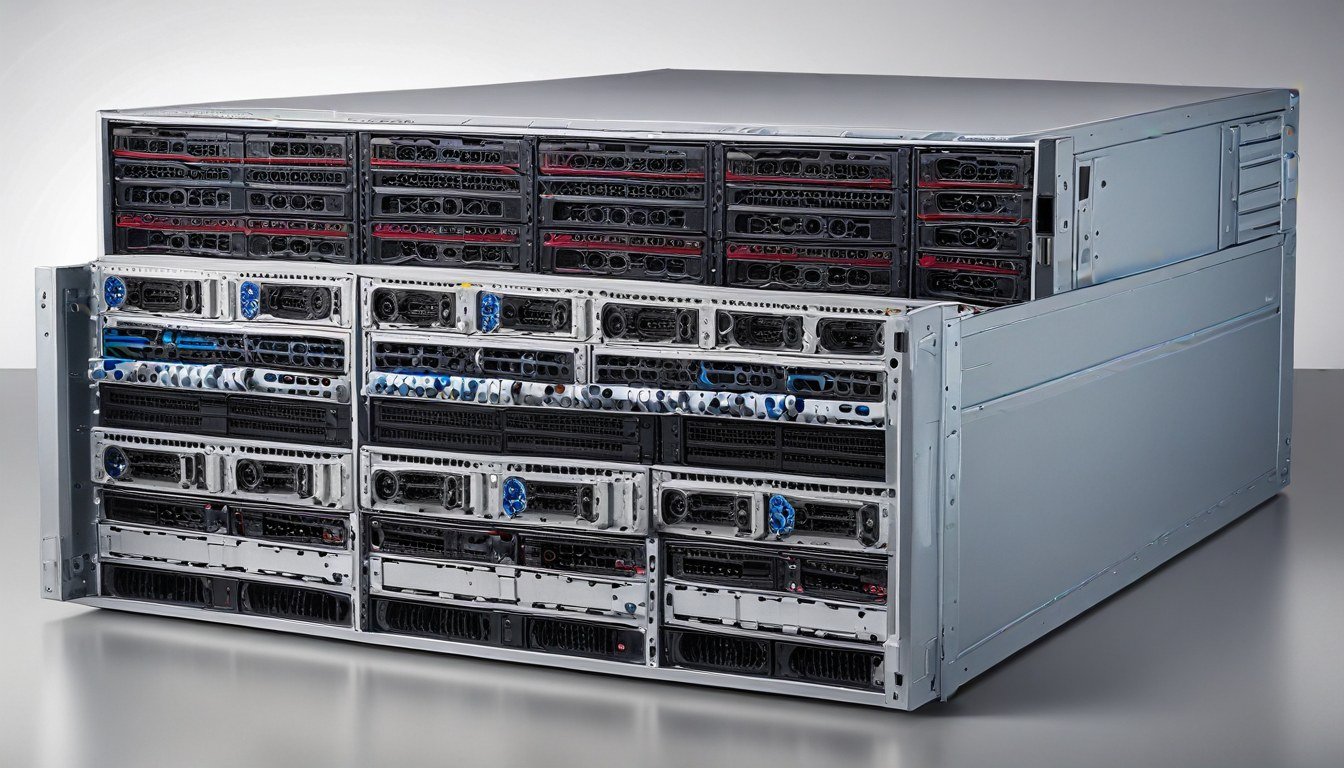
Photo
Footnotes
- Product number 8529.
- Family: fabrication writephi.
- Purchase: When you buy, you buy the use of that blueprint only.