
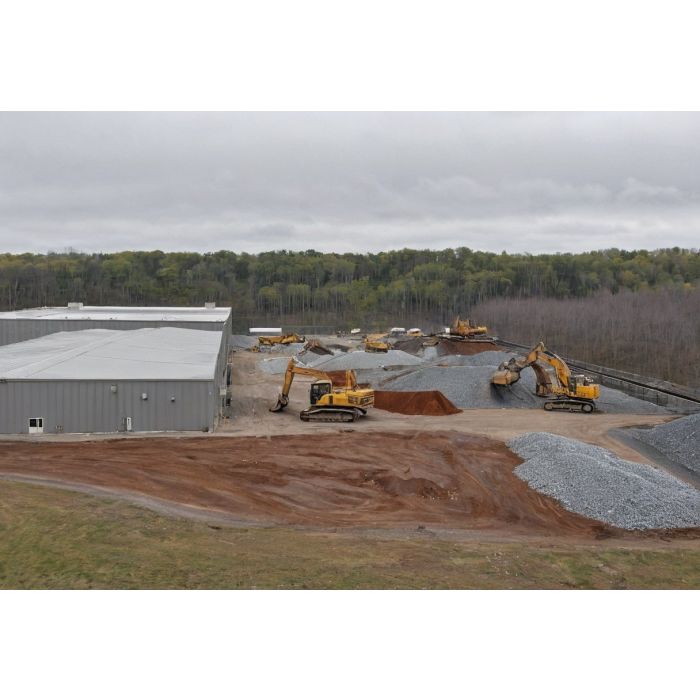
15-landfill-recycling-mine
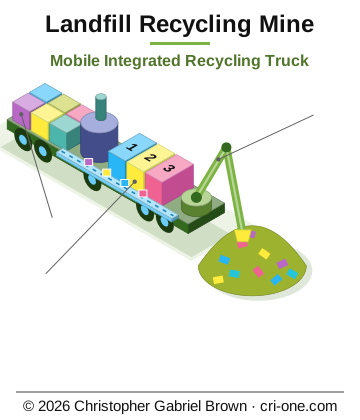
Asset valuation: $3,600,000,000. Project Title: How to Open a Landfill for a Recycling Mine Date Created: 2026-01-12 Status: Initial Development Based on: Alchemy Data - Patent Portfolio (Chris G. Brown) This project provides a comprehensive guide and implementation plan for establishing a landfill
Think of a landfill the way a prospector thinks of a riverbed: not a place where things were thrown away, but a place where things are waiting to be picked back up. That is the Landfill Recycling Mine. It is a complete plan for turning an existing landfill from an environmental liability into a working resource-recovery centre, from choosing the site and getting it permitted through to running the operation on autonomous machines.
The crown piece is one heavy-duty, all-wheel-drive truck. Twelve modules run on it at once: autonomous mining, three-stage separation by magnet, weight and size, an element-separation incinerator that pulls elements apart and purifies them instead of destroying them, waste-to-energy, water and carbon extraction, atomic-level recovery of gold, silver, platinum, palladium and the rare earths, continuous air purification, stormwater handling, and a container system that fits standard ISO boxes. The truck powers itself, generates one to five megawatts, makes a hundred to five hundred gallons of purified water a day, and can be driven onto any landfill with no outside infrastructure. A stationary-facility variant scales the same material flow to tens of megawatts and hundreds of tonnes a day.
This is for landfill owners, waste operators, municipalities and the engineering buyers who build for them. The buyer walks away with the full engineering archive: documentation, technical drawings, a 3-D print model, bill of materials, specifications, financial projections, and a drafted utility patent application with ten claims, written and ready to file. The fifty-plus patents it draws on stay with the inventor and are referenced, not transferred.
Description
Landfill Recycling Mine — Complete Landfill-to-Resource Recovery System (SKU 2042)
Inventor: Christopher Gabriel Brown, Lawrenceville, GA, USA. Source project: 15-landfill-recycling-mine . Patent posture: Utility patent application prepared and ready for filing — “Mobile Integrated Landfill Recycling and Resource Recovery Truck with Autonomous Mining, Element Separation, Energy Generation, and Complete Resource Extraction System.” The application contains 10 non-redundant claims covering the integrated mobile platform and its subsystems. The underlying technology portfolio references 50+ patents by the same inventor across landfill mining, air purification, element separation, electricity generation, water recovery, carbon extraction, autonomous robotics, and recycling-market economics. The complete engineering package (documentation, technical drawings, 3-D print model, BOM, specifications, patent application drafts, and financial projections) is delivered as a single archive. Maturity level: Designed — complete documentation package ready for manufacturing and implementation. Entity valuation: US $50,000,000 (conservative, pre-manufacturing). Date created: 2026-01-12.
Overview
The Landfill Recycling Mine is a comprehensive, integrated system for transforming existing landfills from environmental liabilities into profitable resource-recovery centres. The project provides everything needed to plan, permit, build, and operate a landfill mining operation — from site selection through full-scale autonomous processing — integrating 50+ patented technologies into a unified material-flow architecture. The crown component is a self-contained Mobile Integrated Recycling Truck that packages autonomous mining, three-stage material separation, reverse-nuclear element separation, waste-to-energy incineration, water and carbon extraction, atomic-level precious-metal mining, multi-source electricity generation, continuous air purification, stormwater runoff management, and a universal ISO-compatible container system on a single heavy-duty mobile platform. The truck is fully self-powered, generates 1–5 MW of electricity, produces 100–500 gallons of purified water per day, and can be deployed to any landfill site without external infrastructure. The project also includes a stationary-facility variant with larger-capacity geo-station air purification, modular recovery stations, and industrial-scale processing lines delivering 10–30+ MW and processing hundreds of tonnes per day.
Integrated Patent & Technology Portfolio
Seven major technology categories, 50+ referenced patents, all by Christopher Gabriel Brown:
Category Patents Key Technologies
Landfill Mining Systems Patent 1398, Patent 1401, Patent 660 Mobile dis-assembly plant with three-stage separation (magnetic, weight, size); autonomous robotics-controlled version for 24/7 unmanned operation; starch-and-carbon line arrangement with shred, sort, incinerate, re-compact, re-manufacture, gas-reclaim, and mineral-separation stages; tannery-method chemical processing
Air Purification & Environmental Control Patents 759–763, Patent 1588 Air recovery recycle particulate stations; modular recovery stations with filter-exhaust catalyst converters; geo stations for valley-scale air conditioning and ventilator generation; low-level backpack air cleaner (sodium-oxidation catalyst); personal air cleaner (sugar-oxidation catalyst, reversed Calvin cycle, microwave-fuse power); military-grade reverse-Calvin-cycle air purifiers
Economic & Regulatory Framework Patent 250, Patent 491, Patent 922 Ecology economic recycling processes; company incentives for recycling technology (weight-and-recovery-based government monetary programme); global recycles market exchange for solids, starches, gases, biohazards, and contaminants
Autonomous Robotics & Bots Patent 1401, Patent 1141, Patents 1437–1440, Patent 254, Patent 1140, Patent 448 Autonomous landfill mining bots; archive of common robotic motions and fixtures (library of skills); AI-and-learning aerial/ground/marine drones for site surveying and material detection; stealth AI drone; search-and-rescue maritime drone; machine-builders and robot-automology incentive programmes; automated robotics for extreme environments
Runoff Filters & Incinerator Systems Patent 5 (3557 2833), Patent 947, Patent 701, Patent 545, Patents 1521–1523, Patent 692, Patents 788–790, Patent 689 Advanced element-separation incinerator (reverse nuclear process — separates and purifies elements instead of destroying them); modified carburetor system (moisture, pressure, composite, fire-property separation); gas-station runoff reservoir with river-friendly filters; compressed thermal turbine and incinerator (three-cycle energy with solvent-tunnel exhaust purification); inverted gas sorting and reclaiming (catalytic converter, gas humidifier, dry/paste-wet solvent clay); recyclable air/water/oil filters; EPA-standard recyclable exchange filters; solution-purified engine exhaust (cycled cylinders, exchange filters, recyclable synthetic oil); vacuum-jet compressed incinerator; disposal incinerator quality control (modified ports, vacuum services)
Distillation, Heat Recovery & Water/Carbon Extraction Patent 664, Patent 661, Patents 529–530, Patents 310, 393, 574, Patent 659 Boiling-and-cooling wet materials (tannery method, cycle-recycle process); gas/liquid separation with settle-absolute-table-weight process (heating, resting, cooling cycles); condensation water farms (large-scale water generation from air); carbon-soot generation from plastic degradation; synthetic liquid plastic ester and carbon soot energy; limonene-generated silicone doping for plastic degradation and sooty-carbon generation; re-manufactured soot and gases separated
Electricity Generation & Element Mining Patent 141 (3421 2906), Patent 1402, Patent 1099, Patent 469, Patent 701, Patents 870–875, Patent 724, Patent 575, Patents 1656–1658, Patent 1105, Patent 1406 Atomic-weight vacuum precious-metal recycling and atom mining (>95% recovery, >98% purity for gold, silver, platinum, palladium, rare-earth elements); microwave reactor (air/water to turbine); magnetic-propulsion torque turbine (chain-reaction offset); synthetic pressurised gas turbine; compressed thermal turbine (5–20 MW); cycle electric generators (electricity from electricity, on/off magnetic, multiplied-dimension); free-fall generator (weight and gravity); pendulum generator (magnetic power switches); solar recycle centre (reflective focus and light); wind-mill recycle electric generator (multiplied engines and coils); mobile battery system
Mobile Integrated Recycling Truck — System Architecture
The truck is a heavy-duty, all-wheel-drive, off-road-capable industrial platform with modular front, middle, and rear sections. All 12 modules operate simultaneously in a self-contained, self-powered configuration requiring no external power, water, or infrastructure.
1 Mining & Excavation Front section, 20–25 ft 8–12 t 7-DOF robotic arm (25–30 ft reach, 5,000–10,000 lb lift, ±2″ accuracy, 360° rotation); excavator bucket (2 yd³), grapple (1,000–5,000 lb), magnetic separator (0.5 T), hydraulic shears; AI drone launcher (2–4 multi-rotor drones, 5–10 mi range, 4K+thermal+LiDAR); conveyor intake (6–8 ft wide, 50–100 t/hr)
2 Three-Stage Separation Middle, front 10–15 t Stage 1: electromagnetic separator (0.5–1.0 T, >95% ferrous extraction); Stage 2: weight/density sorting (heavy, medium, light streams); Stage 3: size classification (large >30 cm, medium 5–30 cm, small 90% overall material recovery
3 Reverse Nuclear Element Separation Middle, central 5–8 t Modified carburetor system (enhanced Karl Benz 1885 design): moisture-based, pressure-based, composite-based, and fire-property separation. >95% element separation efficiency, >99% contaminant removal, >90% medium reclamation, >98% element purity
4 Incineration & Energy Generation Middle, rear 15–20 t Compressed thermal turbine incinerator: three-cycle energy system (burn + turbine, thermal pipe, solvent-tunnel purification). 1–5 MW electricity; 500–1,500 °C primary, 200–800 °C secondary. Integrated gas reclamation (inverted sorting, catalytic converter, gas humidifier)
5 Water Extraction & Generation Middle, integrated 3–5 t Boiling/cooling tannery-method water extraction (>90% recovery from wet materials); condensation water farm (air-to-water via waste heat); 5-stage filtration; 1,000–5,000 gal storage; >98% purity; 100–500 gal/day net production
6 Carbon Recovery Middle, integrated 2–4 t Carbon activation, separation, soot generation from plastics (limonene doping, plastic-ester process), re-manufactured soot from incineration. >85% carbon recovery; commercial-grade output for energy, semiconductor manufacturing
7 Atomic-Level Element Mining Middle, specialised 2–3 t Atomic-weight vacuum system: extracts gold, silver, platinum, palladium, and rare-earth elements at atomic level. >95% precious-metal recovery, >98% purity
8 Air Purification Rear, integrated 2–3 t Low-temperature catalyst systems (carbon/sodium/sugar oxidation); reverse-Calvin-cycle technology; recyclable exchange filters (EPA-standard). >90% pollutant removal, continuous operation
9 Runoff Management Rear, integrated 1–2 t Runoff collection reservoir; river-friendly filtration; recyclable water filters; treated-water release meeting environmental discharge standards
10 Universal Container System Throughout Variable ISO-compatible containers (8′×4′×4′, 128 ft³) in 7 variants; 16–26 container capacity; RFID tracking; colour-coded; automated handling; market-exchange ready
11 Power & Energy Integrated throughout 5–10 t Main bus 480 V or 13.8 kV; 500–1,000 kWh battery storage; multi-source generation (thermal, gas, cycle, microwave, magnetic turbines). Self-powered with excess for external use
12 Control & Monitoring Control cab + distributed 1–2 t Central control unit; 10 module controllers; temperature, pressure, flow, and quality sensors; operator station with displays; emergency systems; autonomous or human-oversight modes
Total module mass (excluding containers): 54–84 tonnes. The chassis specification must accommodate this as a heavy multi-axle vehicle.
Mining & Excavation Module — Detailed Specifications
Arm segments Base 3′ dia × 4′ H; shoulder 4′; upper arm 6′; forearm 5′; wrist 2′; end effector 3′×3′×2′
End effectors (interchangeable) Excavator bucket (2 yd³), grapple (1,000–5,000 lb grip), magnetic separator (0.5 T), hydraulic cutting shears
Survey drones 2–4 multi-rotor AI-learning drones (Patents 1437–1440); 30–60 min flight; 5–10 mi range; 4K video + thermal imaging + LiDAR + air-quality + material-composition sensors
Conveyor intake 6–8 ft wide, 15–20 ft long, 50–100 t/hr; 10 yd³ feed hopper; 20–30 HP drive motor; 50–100 ft/min variable speed
1 — Magnetic Overhead electromagnetic separator 8′×10′ magnet, 0.5–1.0 T field, 50–100 kW, water/air cooled, variable field strength, 5–10 yd³ collection bin >95% ferrous extraction, 50–100 t/hr
2 — Weight Density/weight-based sorting Automated routing to heavy, medium, and light streams Weight measurement per scalable unit
3 — Size Particle-size classification Large >30 cm (appliances, furniture); medium 5–30 cm (containers, electronics); small Automated material handling
The three stages operate sequentially and iteratively — the method is repeated over and over until materials reach sufficient purity for recycling standards.
Reverse Nuclear Element Separation — Core Innovation
Patent 5 (3557 2833) introduces the revolutionary “reverse nuclear” concept: instead of destroying elements (as traditional incineration does), the system separates elements for recycling and purification . The modified carburetor system, enhanced from Karl Benz’s 1885 design, separates elements within four domains simultaneously:
- Moisture-based separation — elements separated within moisture via water-based extraction and hydration-state separation
- Pressure-based separation — pressure differentials separate elements (1.2–2.5 atm operating range)
- Composite-based separation — different material composites separated by chemical and physical properties
- Fire-property separation — elements separated within fire properties at 800–1,200 °C (air-to-material ratio 10:1 to 15:1)
Fume calibration Real-time continuous monitoring: moisture 15–25%, pressure 1.2–2.5 atm, temperature 800–1,200 °C
The system is founded on the “Air and Light” principle — starting with the two simplest elements and building a complete formula for element separation, purification, and reclamation. All mediums (gases, liquids, solids) from burned materials are reclaimed rather than destroyed.
Incineration & Energy Generation
The compressed thermal turbine incinerator (Patent 701) operates as a three-cycle energy system:
- Cycle 1 — Burn: Waste burns; the modified carburetor separates elements during combustion; heat turns a turbine generating electricity (1–5 MW on-truck; 5–20 MW in stationary facility)
- Cycle 2 — Journey: Remaining thermal energy (hot air and exhaust) travels through a pipe
- Cycle 3 — Purification: Into a tunnel of absorbing solvents, refining pollutants to an extremely fine degree of reusable means; exhaust emerges as purified gases, recovered elements, and clean air
Supporting technologies include the vacuum-jet compressed incinerator (Patent 790) for vacuum-based chain-reaction incineration, disposal incinerator quality control (Patent 788) with modified ports and vacuum services, and inverted gas sorting and reclaiming (Patent 545) with catalytic converter, gas humidifier, and solvent-clay processing (trash to rock or solvent sludge).
Three water sources: (1) boiling/cooling tannery-method extraction from wet waste (Patent 664); (2) condensation water farms generating water from air using waste heat (Patents 529, 530); (3) process-water recovery from all processing operations. Runoff protection via gas-station runoff reservoir (Patent 947) with recyclable water filters (Patent 1522) and river-friendly discharge.
Plastics Patent 393 Synthetic liquid plastic ester and carbon soot energy Synthetic ester + carbon soot + combustible energy + alcohol acids
Plastics Patent 574 Limonene-generated silicone doping Carbon soot + electricity + semiconductor-grade carbon
Incineration Patent 659 Re-manufactured soot and gases separated Processed carbon soot + purified gases, separated by weight and composite
Organics Patent 664 Tannery method heat activation Carbon compounds, carbon soot, energy-grade carbon
Recovery rate: >85% from organic materials. Purity: >90% pure carbon. Applications: Commercial carbon products, energy production, synthetic-metal semiconductor manufacturing.
Target elements Gold, silver, platinum, palladium, all rare-earth elements, heavy metals (lead, mercury, cadmium), base metals (copper, zinc, nickel)
Process steps Material preparation → vacuum application → atomic-weight separation → element identification → precious-metal extraction → purification → collection
Primary feed Electronic waste (circuit boards, phones, computers), industrial waste, mixed materials
Thermal turbine (primary) Patent 701 5–20 MW (facility); 1–5 MW (truck) Waste incineration turns turbine
Synthetic gas turbine Patent 469 Variable Reclaimed pressurised gases drive turbine
Cycle electric generators Patents 870–875 Variable On/off magnetic, multiplied-dimension cycle, electricity from electricity
Free-fall generator Patent 724 Variable Weight-and-gravity mechanised sequence (tubs filled, dropped, motor generates)
Pendulum generator Patent 575 Variable Pendulum with magnetic power switches at minimal pi ratio
Microwave reactor Patent 1402 Variable Air/water to turbine; reactive-material catalyst; recyclable reaction
Magnetic propulsion turbine Patent 1099 Variable Magnetic propulsion torque with chain-reaction offset calibration
Solar recycle centre Patents 1656–1658 Variable Reflective focus + light; solar-energy recycling; artificial solar LED recycle
Wind-mill generator Patent 1105 Variable Recycle electric generator with multiplied series of passing engines and coils
Mobile battery system Patent 1406 500–1,000 kWh On-board energy storage for truck operations
Total facility capacity: 10–30+ MW. Truck capacity: 1–5 MW. Result: Energy-independent operation with excess electricity for sale.
Mining bots Autonomous excavation and material extraction Patent 1401 — 24/7, 70–80% labour reduction
Sorting bots Three-stage material classification and grading Patent 1398 — magnetic, weight, size
Survey drones (aerial/ground) 3-D site mapping, material detection, monitoring Patent 1437 — AI navigation, machine learning, scenario-prepared
Multi-environment drones Air/water/ground operations, water management Patent 1438 — multi-environment AI learning
Stealth monitoring drones Discrete surveillance and environmental monitoring Patent 1439 — low-visibility AI
Search-and-rescue drones Emergency response and personnel safety Patent 1440 — AI maritime drone
Maintenance bots Equipment access, component replacement, inspection Patent 1140 — robotic spider design
Safety bots Hazard detection, compliance monitoring Patent 1440 — continuous monitoring
Fleet coordination: Central control system with bot-to-bot communication, dynamic task assignment, resource reallocation, and machine-learning optimisation. Fleet scalable from 10 to 100+ bots. All bots share the archive of common robotic motions and fixtures (Patent 1141) — when one bot learns a new technique, all bots benefit through collective intelligence.
Standard dimensions: 8′×4′×4′ (2.44×1.22×1.22 m), 128 ft³ volume. ISO 668 compatible (2 URCs = 1 standard 20-foot shipping container). Stackable 3-high. Standard corner castings for forklift/crane. RFID tags carry unique container ID, material type/grade, weight, processing date, quality certification, and market-value estimate. Colour-coded with QR codes and safety warnings. Truck carries 16–26 containers: 2–4 front, 8–12 middle, 6–10 rear.
Material Flow & Routing
The complete material routing system handles 10 material categories through a multi-phase process:
Non-ferrous metals Stage 2 (weight) Eddy-current sorting → shredding → market exchange >90%
Precious metals Electronics route Atomic-weight vacuum mining → purification → market exchange >95%
Plastics (clean) Stage 2 (light) Type sorting (PET, HDPE, PVC) → wash → shred → grade → market exchange >85%
Plastics (contaminated) Stage 2 (light) Carbon-soot generation → element separation incineration Complete via element recovery
Organics (compostable) Stage 2 (light) Composting + anaerobic digestion → biogas → market/agriculture >80%
Glass Stage 2 (heavy) Colour sorting → crush to cullet → market exchange >90%
Electronics Stage 3 (medium) Automated disassembly → component separation → multi-route output >75%
Construction materials Stage 3 (large) Concrete crushing → aggregate production; wood/metal sorted to own routes Variable
Hazardous materials All routes Identification → segregation → treatment → licensed disposal or recovery Complete treatment
Overall material recovery target: >85%. All outputs route to the Global Recycles Market Exchange (Patent 922) for trading of solids, starches, gases, biohazards, and treated contaminants.
Air recovery particulate stations Patent 759 Stationary Low-temperature carbon-ion oxidation catalyst; inhales polluted air, exhales clean air at acceptable percentage levels
Modular recovery stations Patent 760 Flexible/modular Filter-exhaust catalyst converters; carbon/sodium oxidation; air conditioning-level conversion; >85% air quality improvement
Geo stations Patent 761 Valley/industrial Catch air, control pollutants, exhaust with energy generation; government/private industrial scale
Backpack air cleaner Patent 762 Personal Low-temperature sodium-oxidation catalyst; portable backpack form factor
Personal air cleaner Patent 763 Personal Sugar-oxidation catalyst; reversed Calvin cycle powered by microwave fuse with water and sugar
Military air purifiers Patent 1588 Military/industrial High-capacity reverse-Calvin-cycle; military-grade reliability
Result: >90% pollutant removal across the site. The air leaving the operation is cleaner than when it arrived.
Material sales Metals, plastics, glass, organics, minerals, rare-earth elements $3–8 million
Government incentives Patent 491 — weight-and-recovery-based payments from local/federal programmes $1–3 million
Market exchange trading Patent 922 — global recycles market exchange (solids, starches, gases, biohazards, contaminants) $500K–2 million
Service revenue Landfill remediation, air purification, waste processing for other facilities $500K–1.5 million
Energy sales Excess electricity from multi-source generation (10–30+ MW facility capacity) Included in material/service revenue
Water sales Purified distilled water from extraction and condensation systems Included in material revenue
Carbon sales Commercial-grade carbon soot and compounds Included in material revenue
Total annual revenue (facility): $5–14.5 million. Single-truck annual revenue: $912,500–$5,000,000. Initial investment: $8.5–18 million. Annual operating costs: $1.5–3 million. Break-even: 12–18 months. ROI timeline: 3–5 years. Positive cash flow: Month 18–24.
- Federal: EPA (RCRA Subtitle C/D, Clean Air Act Title V/PSD/NSR, Clean Water Act NPDES, CERCLA); OSHA (HCS, respiratory protection, heavy-equipment safety); DOT (hazmat transportation, CDL, hours of service)
- State: Environmental permits, land-use permits, transportation permits, health and safety regulations
- Local: Business licences, building permits, zoning approvals, fire-safety permits
- Government programmes: Patent 491 (company incentives — weight/recovery-based), Patent 922 (global market exchange participation)
Phase 1: Planning & Preparation Months 1–6 Project initiation, site selection and assessment, regulatory planning, financial planning, technical design, business development
Phase 2: Permitting & Site Development Months 7–12 Permit applications, regulatory review, site acquisition, infrastructure development, equipment procurement and installation
Phase 3: Operations Startup Months 13–18 Staffing and training, regulatory compliance setup, pilot operations, full operations startup, market entry, operations stabilisation
Phase 4: Ongoing Operations Months 19+ Continuous operations, performance optimisation, expansion planning, technology upgrades
Total addressable market: Landfill mining ($10–50B/yr) + recycling ($100–500B/yr) + waste-to-energy ($20–100B/yr) = $130–650 billion/year globally.
Target Applications
- Municipal landfill remediation — city/county-owned facilities seeking environmental remediation and resource recovery
- Private waste-management companies — commercial operators seeking new revenue from closed or active landfills
- Industrial waste-site cleanup — manufacturing and industrial sites requiring hazardous-material processing
- Government environmental agencies — Superfund and CERCLA remediation projects
- Mining and resource companies — urban mining for precious metals and rare-earth elements from e-waste
- Energy companies — waste-to-energy generation from landfill materials
- Water-scarce regions — net-positive water production from waste heat and air condensation
- Military installations — self-contained mobile recycling and air purification in remote or hazardous environments
What Is in the Package
The complete 15-landfill-recycling-mine/ source tree contains 74 files across documentation, technical drawings, 3-D models, specifications, patent applications, and scripts:
Deliverable Contents
Core planning documents (6) README, Business Plan ($8.5–18M investment, $5–14.5M annual revenue, 5 revenue streams), Technical Specifications (all equipment and systems), Regulatory Compliance Guide (federal/state/local permits), Technology Integration Guide (system architecture), Implementation Roadmap (18-month phased plan)
Technology deep-dives (7) Advanced Incinerator Element Separation (reverse nuclear process); Autonomous Landfill Bots (fleet architecture, 5 bot types); Runoff Filters & Incinerator Systems (15 patents); Distillation, Heat Recovery & Water/Carbon Extraction (7 patents); Electricity Generation & Element Mining (11 patents); Material Routing Plan (10 categories, complete flow); Mobile Integrated Recycling Truck (12-module all-in-one system)
Patent application package Complete utility patent application (Markdown + plain text) with 10 claims, abstract, background, summary, detailed description, advantages, and 13 figure descriptions. Ready for USPTO filing
Technical drawings (13 SVGs) FIGURE_01 Overall View; FIGURE_02 Three-Stage Separation; FIGURE_03 Element Separation; FIGURE_04 Incineration Energy; FIGURE_05 Water Extraction; FIGURE_06 Carbon Recovery; FIGURE_07 Atom Mining; FIGURE_08 Air Runoff; FIGURE_09 System Integration; FIGURE_10 Operational Flow; FIGURE_11 Power Energy; FIGURE_12 Control Monitoring; FIGURE_13 Container System
Engineering specifications Real Specs (truck envelope, separation, power, water, control, containers); Expanded Module Specifications (1,745 lines, all 12 modules at component level); Assembly Detail; Power & Control Spec; Manufacturing Specifications; Operational Procedures; Detailed Test Procedure; Control Spec Mapping; Qualification Summary; Traceability Matrix; Requirements List; Modern Design Elements; Perfect Model Spec; Document Change Log
Bill of Materials BOM.md and BOM.csv — 12-module breakdown with masses, component-level detail for Module 1, process parameters, and proposed materials by temperature duty
3-D print model landfill_truck_assembly.scad — OpenSCAD parametric model of the truck (11 parts: chassis + 10 modules)
Drawings package DWG-001 Assembly Dimensioned (SVG), Wiring Diagram (SVG), Wire List, Part Drawing Index, Manufacturing Checklist, Inventor Drawing Package
DXF export script scripts/export_landfill_dxf.py — Python script for exporting technical drawings
Financial & business Cost Analysis & Financial Projections; Entity Valuation ($50M pre-manufacturing); Marketing Materials; Project Outcomes; Project Results Summary; The Story (human-readable day-in-the-life narrative)
Supporting documents USPTO Forms Required guide; Contact Info; MANIFEST.json; CITATION.cff; LICENSE; CHANGELOG; PLAYBOOK; Render Specification; product images
USPTO filing documents (PDF/DOCX) N417patentapp1172026.pdf, Application Type 1172026.docx, claims.docx, aia0001.pdf, aia0015.pdf, sb0015a.pdf, sb0017.pdf
Sales materials Store product description (HTML), product card (Markdown), vault delivery instructions (HTML)
File breakdown by type: 45 Markdown documents, 15 SVG drawings, 5 PDFs, 3 DOCX files, 2 text files, 1 JPG image, 1 PNG product image, 1 OpenSCAD 3-D model, 1 Python script. Total: 74 files.
This package ships on a single Blu-ray disc, posted to the delivery address on your order. The archive on the disc is AES-256 encrypted; the passphrase is sent separately, by email, once the disc is despatched — so the disc alone is of no use to anyone who intercepts it.
Discs are despatched by tracked, signed-for post. Allow 5 business days for mastering and verification before despatch.
© 2026 Christopher Gabriel Brown
Photo
Footnotes
- Product number 8461.
- Family: environment.
- Purchase: When you buy, you buy the use of that blueprint only.