Satellite blvd

Subscribe to RSS Feed

What This Site Offers

This site offers intellectual property and technology packages from Christopher Gabriel Brown: foundry-ready chip designs, research discoveries, and technology handoffs that buyers can license or acquire. You can place a bid on items in the catalog, refer a buyer, or read more about the products and valuations.

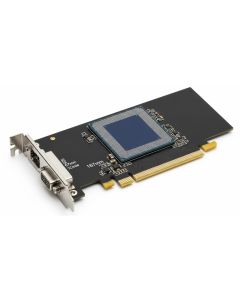
One of the flagship offerings is AutoPhi Modern: a single, unified computing product that brings together CPU, GPU, and accelerator designs into one system and one handoff. Previously these were listed as several separate projects; they are now consolidated into one product so that a buyer can acquire the full stack in one place, with one valuation and one deliverable. If you are new to the catalog, think of AutoPhi Modern as the option that covers the entire high-performance computing line in a single deal.

AutoPhi Modern in the catalog · All products · Make a bid

Deep dive

AutoPhi Modern is the result of a deliberate consolidation: instead of offering many separate chip and accelerator projects, we package them into one product with one processor at its core (the Complete Unit). The buyer receives one handoff folder that includes the product definition, the processor design, and a script that pulls in every related design (CPU lineage, accelerator lineage, and form-factor variants) so that a single acquisition covers the full stack.

What's inside AutoPhi Modern

The product: A “modern calculator” in the sense of one system that does general compute, graphics, and acceleration. The processor: The Complete Unit — a single-chip (or symmetric chiplet) design that unifies CPU and accelerator with the same performance ladder and the same set of nine core technologies (power recycling, vertical threading, chiplet stacking, nanophotonic data flow, quantum error correction, cooling, quantum battery layers, quantum–classical hybrid, and neuromorphic AI). The handoff: One folder; run the included script and it fills a subfolder with the processor design plus all CPU and accelerator lineage so the deliverable is self-contained.

Why consolidate?

Clarity for the buyer: one decision, one valuation band ($3T–$5T product/strategic; recommended ask $3T–$4T), and one deliverable. No need to choose among multiple AutoPhi entries or to figure out how they fit together. The technical work (Scale CPU line, Quantum Processor, REV accelerators, MicroSDXC form factor) stays the foundation; consolidation is how we offer it — one product, one processor, full lineage.

The technical lineage (for the curious)

What was merged: the CPU side (Scale series: base, Plus, Pro, Ultimate) — all map into the Complete Unit’s CPU domain. The accelerator side (Quantum Processor and REV-1, REV-4, REV-5) — all map into the Complete Unit’s accelerator domain. The form factor (MicroSDXC) is a projection of the same processor in a compact card. So one chip design (the Complete Unit) carries the structure of every prior AutoPhi branch; the handoff includes copies of those projects so the buyer has both the unified view and the underlying sources.

Even deeper: one product, one folder, one script

The AutoPhi Modern repo includes a small script (Windows and WSL). When you run it, it copies the Complete Unit (processor) plus the Scale CPU projects, the Quantum Processor project, the REV accelerator projects, and the MicroSDXC project into a single included_projects folder. After that, the whole AutoPhi Modern folder is one burn: product docs, processor, and full lineage. No separate downloads or puzzle pieces. Valuation and payment options (one-time, installments, royalty, revenue share, milestone-based, strategic acquisition) are in the catalog and the full description.

NCS-19 Communications Satellite

Another flagship offering is the NCS-19 Communications Satellite: a quantum-battery-powered, autonomous, encrypted satellite system designed for direct-to-phone connectivity anywhere on Earth without cell towers or carriers. The design package includes complete hardware specifications, a tested communication protocol, 33 USPTO patent applications, and 1,752+ copyrighted inventions. The system pairs with the NewStar Cell tri-mode phone to deliver school, business, and consumer connectivity through one device and one satellite link.

NCS-19 in the catalog · All products · Make a bid

Video transcript with plain-English explanations

Below is the full spoken transcript of the 33-second video above. Each line is followed by an explanation of every technical term so that any reader — regardless of background — can understand exactly what this satellite does and why it matters.

"Five hundred fifty kilometers above you, a satellite locks a beam directly to a phone in someone's hand."

550 kilometers — About 342 miles up. This altitude is called Low Earth Orbit, or LEO. It is close enough to Earth that the signal travels fast with very little delay. Older communication satellites sit roughly 22,000 miles away, which introduces noticeable lag. LEO eliminates that problem.

Locks a beam — The satellite aims a focused radio signal straight at an individual phone, the way a spotlight points at one person on a stage instead of lighting the whole room. The technical term for this is beamforming. It means stronger signal, less wasted energy, and better privacy because the transmission is directed rather than broadcast to everyone.

"NCS-19. Sixty-three simultaneous beams. Four thousand ninety-six antenna elements."

NCS-19 — The project designation. NCS stands for NewComm Satellite. 19 is the project number in the broader intellectual property catalog.

63 simultaneous beams — The satellite can point 63 separate signals at 63 different locations on the ground at the same time. Each beam serves a cluster of phone users in a geographic area. If one beam covers a city and another covers a rural county, both operate independently and simultaneously.

4,096 antenna elements — This is a phased array antenna. Instead of one large satellite dish that has to physically rotate to point in a direction, NCS-19 uses 4,096 tiny individual antennas arranged in a flat panel. By adjusting the timing of the signal at each element electronically, the antenna steers its beams instantly in any direction with no moving parts. This is the same core technology used in modern fighter jets (F-35) and Navy destroyers (Aegis combat system). It is extremely reliable because there are no mechanical components to wear out.

"Full encryption negotiation in under one second."

Encryption negotiation — Before any voice or data is sent between the phone and the satellite, the two devices agree on a secret code to scramble the conversation so that nobody listening in between can read it. This agreement process is called a handshake. On many existing systems it takes several seconds. NCS-19 completes it in under one second.

AES-256 — Advanced Encryption Standard with a 256-bit key. This is the encryption standard used by the United States government to protect classified information. The number 256 refers to the length of the secret key — the longer the key, the harder the encryption is to crack. AES-256 is considered unbreakable by any computer that exists today. Every major bank, military system, and secure messaging app uses some version of AES.

Quantum Key Distribution (QKD) — An optional additional layer of protection available in Business mode. Instead of relying on mathematical complexity alone (which a future quantum computer might theoretically break), QKD uses the laws of physics to protect the encryption keys. If anyone attempts to intercept or observe the key while it is being exchanged, the act of observation physically alters the key, which alerts both the phone and the satellite immediately. It is the most secure form of communication known to exist.

"No tower. No carrier. No middleman."

No tower — Your phone connects directly to the satellite overhead. It does not need a cell tower on the ground. This means it works in rural areas with no infrastructure, in disaster zones where towers have been destroyed, on open ocean, in mountains, and in any other location where you can see the sky. Roughly 80% of the Earth's land surface has little to no cell coverage today. NCS-19 covers all of it.

No carrier — You are not dependent on AT&T, Verizon, T-Mobile, or any traditional phone company to provide your signal. The satellite itself is the network. This eliminates carrier fees, coverage gaps, throttling, and the ability of a third-party company to control or monitor your connection.

No middleman — Your data travels from your phone to the satellite to its destination. No third party handles it, stores it, reads it, or sells it. This is called a zero data sharing architecture. Your communications are yours.

"The protocol is written. The interface is tested. The specification is complete."

Protocol — The precise language the phone and satellite use to communicate. NCS-19 defines nine specific message types that cover every interaction: establishing a connection, choosing a beam, setting the encryption mode, switching between School/Business/Play modes on the paired NewStar phone, handling satellite-to-satellite handoffs, and triggering emergency SOS services. Every message type is fully documented.

Interface — The exact point where the phone's software meets the satellite's software. A working simulator has been built that mimics real satellite behavior so the firmware can be tested without an actual satellite in orbit. 114 integration tests have been written and executed. All 114 pass. 148 communication frames were exchanged in 0.01 seconds during testing.

Specification — The complete written blueprint for how to build and operate the satellite. This includes physical dimensions, materials (aluminum 6061-T6 structure, gold multilayer insulation blankets, titanium thruster nozzles), power systems (quantum battery, 10+ year continuous operation), antenna design (400mm x 300mm phased array panel), orbit parameters (550 km sun-synchronous LEO), all 13 subsystem modules with weights, and the full communication payload. Everything an engineering team needs to begin manufacturing is documented and ready.

"What doesn't exist yet is the hardware in orbit. That's what the capital is for."

This is a fully designed, fully documented, patent-protected satellite communications system. The engineering work is done. What remains is manufacturing the physical satellite hardware, launching it into orbit, and producing the phones that connect to it.

The product is protected by 33 USPTO patent applications filed between 2012 and 2025, with the most recent (application 19/177,547) filed April 12, 2025. An additional 1,752+ copyrighted inventions underpin the technology. The implementation timeline is 48 months from contract award to operational deployment, across four phases: design and development, prototype and testing, production and integration, and deployment and operations.

Deep dive: how NCS-19 works with the NewStar phone

NCS-19 is designed as the other half of the NewStar Cell phone system. The phone and satellite were engineered together so they speak the same protocol natively. When a NewStar phone user taps "Connect," the following happens in under six seconds:

Step 1 — GPS lock (under 2 seconds): The phone determines its own position using dual-band GPS so the satellite knows where to aim.
Step 2 — Beam acquire (under 3 seconds): The satellite steers one of its 63 beams to cover the phone's location.
Step 3 — Encryption handshake (under 1 second): The phone and satellite agree on encryption parameters based on the phone's current mode.
Step 4 — Connected: The link is live. Total time: under 6 seconds.

Mode-aware routing

The satellite automatically adjusts its behavior based on which mode the NewStar phone is in. School mode routes through content-filtered public encryption (AES-128). Business mode routes through government-grade channels with quantum key distribution and AES-256. Play mode opens broadband internet with standard AES-256 encryption. The user does not configure anything — the phone tells the satellite which mode it is in, and the satellite responds accordingly.

Emergency SOS

The NewStar phone has a dedicated hardware SOS button on its left side. When pressed, the satellite overrides all normal traffic to open an emergency services channel with the highest encryption priority and a global beam type. This works regardless of which mode the phone is in, regardless of whether the phone has an active connection, and regardless of whether any cell tower exists within range. It is a hardware guarantee, not a software feature.

What the satellite carries inside

NCS-19 is composed of 13 subsystem modules that integrate into a single satellite body weighing approximately 15 kg: quantum battery (power), 28V power converter, on-board computer, communication transponder, AES-256 encryption module, quantum key distribution module, phased array antenna, inter-satellite optical link terminal, edge computing and AI module, American Dollar blockchain processor, sensor package, GPS navigation unit, and two thruster modules for orbital maneuvering. The satellite operates autonomously with AI-powered beam management and requires no solar panels due to its quantum battery power system.

We can't find products matching the selection.