AutoPhi 3.5 ZFLOPS
Publicly online since 2010 · U.S. patent applications since 2012 · inventions offered since 2014. The work of Christopher Gabriel Brown, independently documented.
AutoPhi 3.5 ZFLOPS — Foundry Handoff Ready -- March 2026 ZETTAFLOP 1Z ACCELERATOR 1+ ZettaFLOPS Complete foundry-ready design package for a single-card ZettaFLOPS accelerator. Original Light CPU and Quantum CPU architecture with 9 integrated technologies.
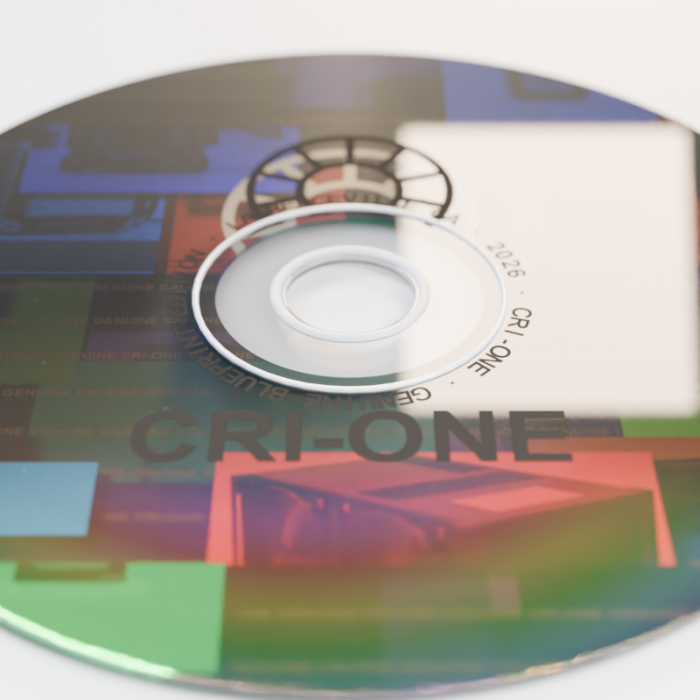
- What you receive: a blueprint package — design documents as an instant digital download.
- License: evaluation use; all intellectual property retained by CRI-ONE.
- Want everything? The complete engineering write-up is under Full details.
Foundry Handoff Ready -- March 2026
ZETTAFLOP 1Z ACCELERATOR
1+ ZettaFLOPS
Complete foundry-ready design package for a single-card ZettaFLOPS accelerator. Original Light CPU and Quantum CPU architecture with 9 integrated technologies. PCIe 5.0 x16 half-length form factor.
877 PFLOPS
Standalone Min
3.5 ZFLOPS
Max (REV-5)
500 Layers
3D Stack
5mm
Total Height
Card Cross-Section
PCIe 5.0 x16 half-length card with 500-layer 3D die stack, 5mm total height. No fan or heatsink.
PCB -- 167mm x 111mm (half-length) PCIe 5.0 x16 EDGE CONNECTOR 500 LAYERS 36mm x 36mm per layer 3D DIE STACK 5mm ~10um/layer QUANTUM BATTERY (20 layers) EM COOLING (32 zones) LIGHT CPU QUANTUM CPU (64 qubits) NANOPHOTONIC BUS -- 1,400 TB/s LED POWER RECYCLING (90%) Half-length PCIe 5.0 x16 card -- 167mm x 111mm -- no fan, no heatsink LEGEND: 500-Layer Die Stack (5mm) TSVs (12K/mm2) Light CPU Quantum CPU Photonic Bus Power/Cooling
Architecture
Original CPU design -- not RISC-V, not ARM, not x86.
Light CPU Core
Single-photon computation initiation. Color-coded semiconductor lasers encode mathematical operations. Digital micro mirrors route data optically. Staircase mirror chip provides temporal processing.
Quantum CPU Core
64 configurable qubits with 16 original instructions across three domains: Security (encrypted computation), Performance (Grover's search, Shor's factoring), and Sanitary (error correction).
Hybrid Integration
Light and Quantum CPUs in unified coordination. Combined completion tracking, security verification, performance optimization, and sanitary verification across both domains.
Color Mathematics Instruction Set
RED
Addition
BLUE
Subtraction
GREEN
Multiplication (2x)
YELLOW
Division
Performance Scaling
877 PetaFLOPS standalone to 3.5 ZettaFLOPS with accelerator integration.
|
Configuration |
Performance |
Notes |
|
Standalone CPU (Scale-1, 4 GHz) |
877 PetaFLOPS |
Minimum baseline with Light Trigger |
|
Standalone CPU (Scale-64, 16 GHz) |
8.594 ExaFLOPS |
Maximum standalone, GREEN operations |
|
With REV-1 Accelerator |
1.75 ZettaFLOPS |
Exceeds 1 ZettaFLOP target |
|
With REV-4 Accelerator |
2.50 ZettaFLOPS |
Mid-range configuration |
|
With REV-5 Accelerator |
3.50 ZettaFLOPS |
Maximum configuration |
1.1 PB
Memory
78 PB/s
Memory BW
1,400 TB/s
Photonic BW
64
Qubits
PCIe 5.0
Interface
~140W
Power
9 Integrated Technologies
All nine advancements within a single PCIe card, 5mm height, 500 layers.
1
LED Power Recycling
90% photon capture. 42% net power reduction. Harvests ambient and emitted light back into the power network.
2
Vertical Threading
12,000 TSVs/mm2. 125 TB/s inter-layer bandwidth. 18 dedicated 64-bit buses across all 500 layers.
3
Chiplet Stacking
500 active layers in 5mm. 10 microns per layer. 18 chiplets per stack, up to 28 stacks.
4
Nanophotonic Data Flow
1,400 TB/s across 2,800 optical channels. 0.5 TB/s per channel. 1,800x signal integrity improvement.
5
Quantum Error Correction
99.998% accuracy across 1,400 logical qubits. Surface-code correction at 1 MHz cycle rate.
6
Electromagnetic Cooling
97% cooling efficiency. 32 independent thermal zones. Zero moving parts, zero fans.
7
Quantum Battery Layers
20 integrated battery layers. 1,500 Wh capacity. 75 MW burst power for peak quantum operations.
8
Quantum-Classical Hybrid Interface
Single-cycle data handoff between quantum and classical domains. Zero-latency domain crossing.
9
Neuromorphic AI Engine
Event-driven spiking neural network hardware. Near-zero idle power. AI-driven compute scheduling.
Physical Design
Half-length PCIe 5.0 x16 form factor. No fan, no heatsink -- electromagnetic cooling only. Compatible with any PCIe 5.0 server or workstation.
|
Parameter |
Specification |
|
Form Factor |
PCIe 5.0 x16 half-length, full-height |
|
Card Dimensions |
167mm x 111mm |
|
Die Stack Height |
5mm (500 layers at ~10um pitch) |
|
Die Size (per layer) |
36mm x 36mm (1,296 mm2) |
|
3D Stack Layers |
500 |
|
TSV Density |
12,000 TSVs/mm2 |
|
Power (after LED Recycling) |
~140W (within PCIe 300W budget) |
|
Cooling |
Electromagnetic -- zero fans, zero external heatsink |
|
PCIe Interface |
x16 lanes at 32 GT/s = 512 GT/s total |
|
On-board Energy |
1,500 Wh (quantum battery layers) |
Verification Status
All modules tested. All claims verified.
579 / 579
Tests Passed
100% pass rate across 47 verification layers. RTL, synthesis, timing, FLOPS claims, instruction sets, and physical calculations verified.
6
Testbenches
Light CPU, Quantum CPU, Hybrid Integration, Accelerator Integration, Top-Level System, and Quick Smoke Test.
67
Handoff Files
RTL, synthesis, GDSII, constraints, testbenches, OpenLANE configs, documentation, scripts, test vectors, and package specs.
Estimated Manufacturing COGS
Projected per-card manufacturing cost for the buyer once in production.
|
COGS Component |
Cost |
|
Wafer / Die (7nm, 500-layer 3D stack) |
$45,000 |
|
Memory Subsystem (photonic + quantum) |
$12,000 |
|
Package Assembly (BGA, TSV bonding) |
$8,000 |
|
Quantum Battery Layers |
$5,000 |
|
Testing and QA |
$5,000 |
|
Electromagnetic Cooling |
$3,000 |
|
PCB and Card Assembly |
$3,000 |
|
LED Power Recycling |
$2,000 |
|
Overhead and Contingency (10%) |
$8,300 |
|
Total COGS per Card |
$91,300 |
Design Package Pricing
What you are purchasing is the complete foundry handoff package -- all files needed to manufacture the accelerator card.
Foundry Handoff Package
$500B
One-time acquisition
- Complete RTL (6 modules)
- Synthesis scripts and netlists
- GDSII and OpenLANE configs
- Testbenches (579/579 passing)
- Timing constraints and DEF
- Full technical documentation
What is Included
67 Files
Everything needed to go to fab
- RTL-to-GDSII complete flow
- SkyWater 130nm / 14nm / 7nm targets
- Package specs and test vectors
- Build and simulation scripts
What is Not Included
IP Retained
By inventor
- Patent rights remain with inventor
- No IP transfer or licensing
- Manufacturing license negotiable
- Buyer fabricates at own facility
Patent Portfolio
All underlying technology is patent-protected. IP is retained by the inventor and is not included in card sales.
Patent 29/839,062
Light Trigger -- Single photon computation initiation
Patent 3561 2876
Cold Light Micro Chip -- Color-based mathematics with semiconductor lasers
Patent 1026
LED Recycle -- Photon capture and power recycling at 90% efficiency
Patents 1096, 1097, 1098
Electromagnetic Cooling -- Method, apparatus, and integrated system
Design Package Available for Acquisition
Complete foundry handoff: RTL, synthesis, GDSII, constraints, testbenches, and documentation. 579 of 579 verification tests passed. Ready to send to fab.
Christopher Gabriel Brown
Lawrenceville, GA, USA
Email: christopher@cri-one.com | crioneaka@outlook.com
ZETTAFLOP 1Z ACCELERATOR -- 1 ZettaFLOPS Performance Accelerator IC -- Design Package -- March 2026
Complete Foundry Handoff Package -- 67 Files -- 579/579 Verification Tests Passed
Patents: 29/839,062 | 3561 2876 | 1026 | 1096-1098