Description
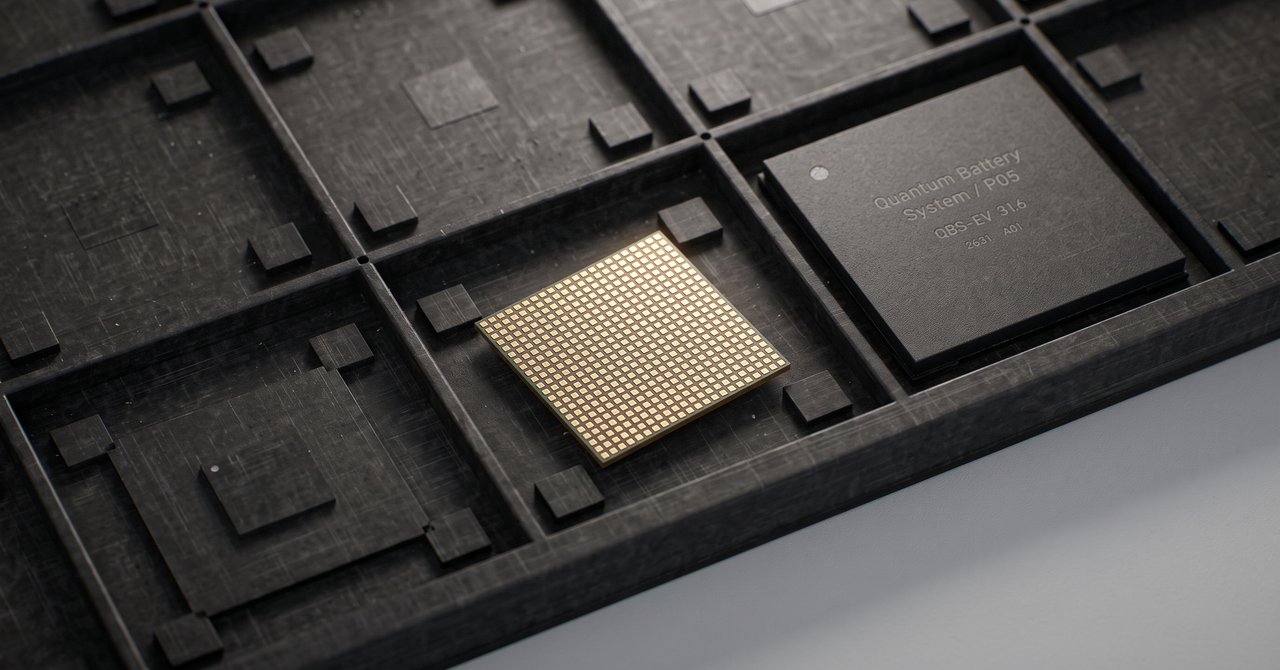
Quantum Battery System — Self-Recharging Power IC (SKU 2031)
Inventor & design author: Christopher Gabriel Brown, independent inventor, Lawrenceville, Georgia, USA. Status: Complete — ready for foundry hand-off; maturity level 4 (tape-out / mass-manufacturable). Patent coverage: U.S. Patent Application No. 18/370,908 — AutoPhi: Quantum battery integration & electromagnetic propulsion IC (filed 21 September 2023); U.S. Patent Application No. 19/403,339 — Optical Quantum Battery ; U.S. Patent Application No. 19/540,453 — Integrated Technology Portfolio , an umbrella utility filing covering fifteen inventions (filed 13 February 2026); Patent 3561/2876 — one-light-trigger and varied-coloured-laser semiconductor (foundational); Patent 1026 — battery with electrical generator and recycle (foundational). All applications pending examination unless explicitly marked GRANTED — verify current status at the USPTO Patent Center. Package type is Base, No IP : a complete foundry hand-off dossier is delivered, without transfer of the underlying intellectual-property rights.
Overview
The Quantum Battery System is the AutoPhi architecture with the data-processing modules removed and the surviving power subsystem re-purposed for net power export . It uses the same chip architecture as AutoPhi Modern (Project 02) and AutoPhi FUTURE (Project 18), but the computation blocks — Color Math ALU, Light Trigger Core (ISA execution pipeline), Neuromorphic AI Engine, Nanophotonic Data Flow and Quantum Error Correction — have been stripped out. What remains is a self-recharging power source that, in operation, generates more power than it consumes and hands the surplus out to external loads.
Momentum output is paramount. Photon momentum transfer (p = h ÷ λ = E ÷ c) on an AES semiconductor substrate (Project 14 — Semiconductor Material Discovery) drives ultra-fast charge-and-release cycling. The quantum-dot arrays absorb and release energy at photonic speeds — charge in, release out, recharge instantly. The momentum cycle is the engine; storage is secondary.
The core loop: LED nano-charging drives quantum-dot arrays, electromagnetic (EM) cooling reclaims waste heat, and the quantum execution unit manages quantum-state operations inside the energy cycle. The closed loop recycles energy at 84–98 % overall efficiency (matching AutoPhi Patent 18/370,908), with net surplus exported through the power-export bus. The chip presents a deliberately minimal interface — reset high to turn it on, reset low to turn it off — and manages throttle, boost, thermal balance, self-consumption tracking and lifetime energy accounting entirely on-die.
The deliverable is a complete foundry hand-off package : RTL source, synthesised netlists, timing and physical constraints, a standalone GDSII generator, a comprehensive testbench, verification reports, engineering blueprint files, and a library of 5,000+ pre-configured battery variants covering momentum fold, cycle time and cost-of-goods (COGs) breakdowns across every target application.
Headline Specifications
Attribute Value
Product name Quantum Battery System — AutoPhi-derived power IC
SKU 2031
Package identifier 05-quantum-battery
Maturity level 4 — Tape-out / Mass-Manufacturable
Overall closed-loop efficiency 84–98 % (matches AutoPhi Patent 18/370,908)
Momentum output range 1× to 200,000,000× photon-momentum fold (25 tiers)
Cycle time range 2.0 s down to 0.0001 s (photonic speed)
Output phases per cycle 1 to 1,000
On-die battery capacity 1,500 Wh across 20 quantum-battery layers
Peak burst delivery 75 MW (full implementation)
LED power-recycling efficiency 90 % across 32 harvester zones
EM cooling efficiency 97 % across 32 thermal zones
Vertical threading density 12,000 through-silicon vias per mm²
Chiplet stacking Up to 500 layers
Quantum execution unit 16-instruction quantum-gate set (energy-cycle operations only)
Lifetime energy accounting 48-bit accumulators (infrastructure-scale, overflow-safe)
Export rate smoothing 4-cycle sliding window (grid-stability oriented)
Auto-throttle threshold Battery state-of-charge below 25 %
Auto-boost threshold Battery state-of-charge above 90 %
Substrate material AES semiconductor (Project 14) — 400 W/(m·K) thermal, 12,000 cm²/(V·s) electron mobility
Substrate material cost (bulk) ~$5 per kg
CMOS integration Yes — on-chip battery systems on AES
Pre-configured variants 5,000+ (CSV and JSON)
Package type Base, No IP — foundry hand-off without IP-rights transfer
Architecture — What the Chip Does
The top-level module is quantum_battery_system , instantiated inside led_power_recycling_circuit.v . It hosts five co-operating submodules; four are re-used verbatim from AutoPhi Modern (Project 02) and AutoPhi FUTURE (Project 18), and one — the power-export controller — is unique to this product. Together they implement the closed “power-from-power” loop: LED nano-charging feeds the quantum-dot arrays, the arrays cycle energy at photonic speed under the direction of the quantum execution unit, waste heat is scavenged by the EM cooler and returned to the pool by the LED recycler, and the export controller meters the surplus out to the external bus while keeping the internal battery state healthy.
Submodule (RTL) Origin Role & key numbers
led_power_recycler AutoPhi Modern Tech #1 32 photon-harvester zones; 90 % round-trip efficiency; converts waste-heat photons back to usable electrical energy inside the closed loop.
quantum_battery_ctrl AutoPhi Modern Tech #7 20-layer quantum-battery stack; 1,500 Wh capacity; 75 MW burst delivery; charge and discharge scheduling for the layer stack.
em_cooling_ctrl AutoPhi FUTURE Tech #6 32 thermal zones; 97 % electromagnetic heat-extraction efficiency; feeds waste-heat photons into the LED recycler.
quantum_exec_unit AutoPhi Modern Tech #8 16-instruction quantum-gate set; drives quantum-state operations inside the energy cycle. Data-processing gates from AutoPhi Modern are excluded — only the energy-cycle subset is enabled.
power_export_ctrl NEW — Quantum-Battery exclusive Auto-managed surplus export with dynamic self-consumption tracking (measures real cooling draw across the 32 zones rather than a fixed estimate), partial burst export, auto-throttle below 25 % state-of-charge, auto-boost above 90 %, 4-cycle export-rate smoothing, and 48-bit lifetime accumulators for infrastructure-scale energy accounting without overflow.
Technology Stack — Kept, Removed, Added
The Quantum Battery System is defined as much by what has been removed from AutoPhi as by what has been kept. Six technologies from the AutoPhi Modern / AutoPhi FUTURE stack are re-used unchanged; five computation technologies are stripped out; three new capabilities are added on top.
Technology Specification AutoPhi source
Tech #1 — LED Power Recycling 90 % efficiency; 32 harvester zones led_power_recycler.v
Tech #2 — Vertical Threading 12,000 through-silicon vias per mm² Physical design
Tech #3 — Chiplet Stacking Up to 500 layers Physical design
Tech #6 — EM Cooling 97 % efficiency; 32 thermal zones (AutoPhi FUTURE) em_cooling_ctrl.v
Tech #7 — Quantum Battery Layers 20 layers; 1,500 Wh; 75 MW burst quantum_battery_ctrl.v
Tech #8 — Quantum Execution Unit 16-instruction quantum-gate set quantum_exec_unit.v
Removed (data-processing only):
- Tech #4 — Nanophotonic Data Flow (data interconnect)
- Tech #5 — Quantum Error Correction (computation reliability)
- Tech #9 — Neuromorphic AI Engine (AI inference)
- Color Math ALU (wavelength-encoded arithmetic)
- Light Trigger Core (ISA execution pipeline)
New to the Quantum Battery:
- Momentum Output Engine — photon-momentum transfer (p = h ÷ λ) driven ultra-fast charge-and-release cycling on the AES substrate; momentum fold scales from 1× up to 200,000,000×.
- Auto-Managed Power Export Controller — dynamic self-consumption tracking, partial burst export, auto-throttle and auto-boost, 4-cycle rate smoothing, 48-bit lifetime accumulators.
- Power-from-Power Loop — the closed-loop self-sustaining generation cycle that ties the LED recycler, EM cooler, quantum-dot arrays and export controller together into a single control-theoretic engine.
- AES Semiconductor Substrate (Project 14) — 400 W/(m·K) thermal conductivity, 12,000 cm²/(V·s) electron mobility, semiconductor-quality score 100/100, ~$5/kg bulk material cost.
Smart Design — Simple Interface, Complex Interior
Simple on the outside, lots of parts inside. The chip handles everything automatically; no user configuration is required.
Behaviour What it does
Turn on / turn off rst_n=1 to run, rst_n=0 to stop — that is the interface. Connect waste-heat input, connect export output, apply power.
Auto-throttle Reduces export when the on-die battery state-of-charge drops below 25 %, protecting stored charge and preventing brown-out of the self-sustaining loop.
Auto-boost Increases export when the on-die battery state-of-charge exceeds 90 %, preventing overcharge waste and thermal build-up.
Dynamic self-consumption Tracks real cooling draw measured across the 32 EM-cooling zones — not a fixed nameplate estimate — so exported surplus is always net of true internal load.
Partial burst export Continues exporting surplus even during a 75 MW burst-delivery event, so the external bus does not stall while the burst channel is active.
Rate smoothing Smooths export-rate changes over a 4-cycle window for grid stability — downstream inverters see gentle transitions rather than step changes.
48-bit accumulators Track lifetime imported and exported energy at infrastructure scale (utility / grid / fleet), overflow-safe over the design lifetime.
5,000-System Configuration Performance
The pre-configured variant library is split into two 2,500-system halves and can be combined into a 5,000-system hybrid deployment. Momentum output is paramount; energy storage is secondary.
Part 1 — Momentum Output (2,500 systems)
Parameter Value
Momentum-fold range 1× to 200,000,000× (25 tiers)
Cycle time 2.0 s down to 0.0001 s (photonic speed)
Output phases per cycle 1 to 1,000
Peak power output 2.5 MW
Average power output 12.5 kW
Max annual output 2,500 TWh
Average annual output 4.56 TWh
Efficiency (average / max) 90.5 % / 98 %
Substrate AES semiconductor on every configuration
COGs coverage Material, fabrication, assembly and test included per variant
Part 2 — Energy Storage (2,500 systems, secondary)
Parameter Value
Peak storage 925,000 kWh
Average storage 23.125 kWh
Momentum fold 1× to 2× (baseline, storage-optimised)
Efficiency (average / max) 87.5 % / 95 %
Self-discharge 0.05 % per month
Combined (5,000 hybrid systems)
Parameter Value
Max annual output 5,000 TWh
Average annual output 9.13 TWh
Combined efficiency (average / max) 79 % / 93 %
Energy recycling (average / max) 85 % / 98 %
AES Semiconductor Substrate
Every configuration in the library is fabricated on the AES semiconductor substrate developed under Project 14 (Semiconductor Material Discovery). Its properties are what make the photonic-speed momentum cycle possible on-die rather than in a separate optical rig.
Property Value
Thermal conductivity 400 W/(m·K)
Electron mobility 12,000 cm²/(V·s)
Semiconductor-quality score 100 / 100
Bulk material cost ~$5 per kg
CMOS integration Yes — supports on-chip battery cells co-located with control logic
Coinciding Portfolio Projects
The Quantum Battery derives from, and feeds, a wider portfolio of inventions by the same author. The table below records the relationships stated in the package manifest.
# Project Relationship to Quantum Battery
01 Electronic Autocar Platform Vehicle-scale power source; drive motors and burst acceleration supplied by the Quantum Battery.
02 AutoPhi Modern Source architecture — RTL and nine technologies; four submodules are re-used verbatim.
03 Electric Jet Platform Aircraft-scale power source; extended-endurance electric propulsion.
04 War Satellite System Spacecraft power; extended mission duration through self-recharging.
14 Semiconductor Material Discovery AES semiconductor substrate on which every Quantum Battery configuration is fabricated.
18 AutoPhi FUTURE Next-generation architecture improvements — EM cooling zone count is uprated from Modern to FUTURE spec.
19 NewComm Satellite Satellite power source; payload and communications powered from the export bus.
Applications
Fifteen or more application categories are catalogued in the blueprints, spanning IoT, transportation, infrastructure and specialised environments.
Sector Application notes
IoT devices Self-sustaining sensor networks; extended operation without maintenance; on-chip power for embedded systems.
Electric vehicles Power export to drive motors; self-recharging eliminates conventional range limits; 75 MW burst delivery for acceleration.
Grid storage Utility-scale storage and export; self-sustaining generation reduces grid dependency; scalable variants for utility installations.
Data centres On-chip power for server processors; uninterruptible self-recharging supply; energy cost reduction through export.
Aerospace Satellite and aircraft power; extended mission duration; export to payloads and communications equipment.
Medical devices Reliable power for critical and implantable applications; self-recharging eliminates battery replacement.
Marine Self-sustaining vessel power; extended operation without refuelling; marine sensor networks.
Infrastructure Municipal and industrial power installations at hundreds of kWh to hundreds of MWh scale.
Patent, Prior-Art and IP Position
Patent / application Subject & filing information
U.S. Application No. 18/370,908 AutoPhi: Quantum battery integration & electromagnetic propulsion IC; filed 21 September 2023; pending — verify at USPTO Patent Center.
U.S. Application No. 19/403,339 Optical Quantum Battery.
U.S. Application No. 19/540,453 Integrated Technology Portfolio — consolidated utility application, fifteen inventions; filed 13 February 2026; pending.
Patent 3561/2876 One-light-trigger and varied-coloured-laser semiconductor (foundational).
Patent 1026 Battery with electrical generator and recycle (foundational).
Prior art: the inventor's prior-art review notes that the closest third-party filings are US 2010/0183919 A1 (quantum-dot ultracapacitor and electron battery), US 2012/0305059 A1 (photon recycling in an optoelectronic device), US 2002/0170591 A1 (on-chip solar cells within a common substrate) and US 4,775,876 (photon-recycling LED, 1988). The defensible independent claim is anchored on the three-way combination of LED nano-array plus silicon quantum-dot storage plus 0.1–10 T magnetic-field coherence, and on the resulting energy-density outcome — not on photon recycling or QD storage alone. The 90 % round-trip figure appears as a peak in the specification, not as a numerical limitation in an independent claim.
Foundry Hand-off Contents (Package Detail)
The dossier's contents by category:
Category
Images (diagrams, layouts, renders)
Documentation (Markdown, notes, reports)
Source code (Python tooling, generators, verification)
Web pages (HTML)
Other
Data (CSV, JSON configuration libraries)
Documents (PDF, ODF)
Archives (ZIP)
HDL (Verilog RTL & testbenches)
EDA flow output (SDC, TCL)
Layout (GDSII)
Key artefacts by role
Role Representative files
Top-level RTL blueprints/led_power_recycling_circuit.v (defines quantum_battery_system and instantiates every submodule) and its testbench blueprints/led_power_recycling_circuit_tb.v .
Foundry-hand-off RTL & test vectors blueprints/foundry_handoff/verilog/led_power_recycling_circuit.v ; blueprints/foundry_handoff/netlists/led_power_recycling_synthesized.v ; blueprints/foundry_handoff/test_vectors/led_power_recycling_circuit_tb.v .
Synthesis & verification tooling blueprints/LED_POWER_RECYCLING_SYNTHESIS.py ; blueprints/LED_POWER_RECYCLING_VERIFICATION.py ; Yosys synthesis outputs; verification reports.
EDA constraints blueprints/foundry_handoff/constraints/timing.sdc ; handoffs/foundry_handoff/constraints/timing.sdc ; physical constraints ( .xdc ); Vivado run script blueprints/led_power_recycling_output/vivado_led_power_recycling_circuit.tcl .
Layout blueprints/GEN6_QUANTUM_01141_COMPLETE_64LAYER.gds — 64-layer generation-6 quantum layout, complete.
GDSII generation Standalone package: root-level GDSII_GENERATOR_STANDALONE_CD.zip ; hand-off scripts handoffs/FAILSAFE_GDSII_GENERATOR.py , handoffs/VERIFY_GDSII.py , handoffs/RUN_GDSII_GENERATION.bat , handoffs/create_foundry_handoff.py .
Configuration libraries 5,000+ pre-configured variants across CSV and JSON: battery_configs_100.csv / .json , battery_configs_200.csv , battery_configs_1000.csv / .json , and further scale files with momentum fold, cycle time and COGs per configuration.
Specification documents blueprints/PIC16F84-T300.pdf .
Engineering figures Twelve numbered patent figures FIG1–FIG12 in SVG (isometric, top-plan, side cross-section, connection-hub detail, electrical schematic, magnetic field, generator coil, power electronics, energy flow, cutaway, topology comparison, performance graph).
Sales & validation collateral Proofs of function PROOF_OF_FUNCTION_1 – 10 ; validation roadmap; master price sheet; investor pitch deck; licensing proposal; store product card and description.
Interface & Integration Summary
Signal / port Purpose
rst_n Active-low reset. rst_n=1 to enable the chip; rst_n=0 to shut the chip down cleanly.
Waste-heat input Physical thermal path from the host system into the EM-cooling zones; feeds the recycling loop.
Power export bus Net-surplus electrical output to external loads; rate-smoothed over 4 cycles for grid stability.
Lifetime accumulators 48-bit imported / exported energy registers, read-only, for infrastructure metering.
Manufacturing & Deployment Path
To manufacture the chips:
- Generate GDSII files using the standalone GDSII generator ( GDSII_GENERATOR_STANDALONE_CD.zip or FAILSAFE_GDSII_GENERATOR.py ) with the synthesised netlist and constraints.
- Select a semiconductor foundry (TSMC, Samsung, GlobalFoundries or equivalent).
- Submit the foundry package: generated GDSII, timing constraints ( .sdc ), physical constraints ( .xdc ), design documentation, and the test-vector set.
- Confirm process-technology compatibility with the AES-substrate flow described in Project 14.
- Place the wafer-production order.
- Package the returned die and test them using the supplied testbench.
To deploy the system:
- Select a configuration from the 5,000+ pre-computed variants that matches the application.
- Review the integration guide in the blueprints directory.
- Manufacture the quantum-dot array battery cells per specification.
- Install the manufactured ICs into the battery-management system.
- Route the power-export bus to the external load.
- Commission per the supplied procedures and verify that the closed loop is delivering 84–98 % efficiency.
Typical timeline (indicative): GDSII generation 1–2 days using the supplied tools; foundry wafer fabrication and packaging 12–16 weeks; system integration 1–3 months depending on application; commissioning 1–2 weeks.
What Is in the Package
The Blu-ray disc contains the complete 05-quantum-battery project tree as an AES-256 encrypted archive. Contents are:
- Root-level dossier: README.md (project overview and specifications), WEB_DESCRIPTION.html (styled product description), MANIFEST.json (manifest of every artefact and category count), CHANGELOG.md , CITATION.cff , LICENSE (Proprietary — Copyright © 2026 Christopher Gabriel Brown), CONTACT_INFO.txt , HANDOFF_BLURB.md , PLAYBOOK.md , PRIOR_ART_LED_RECYCLING.md , and GDSII_GENERATOR_STANDALONE_CD.zip .
- blueprints/: top-level RTL ( led_power_recycling_circuit.v and its testbench), 64-layer generation-6 GDSII layout ( GEN6_QUANTUM_01141_COMPLETE_64LAYER.gds ) with 3D isometric renders and animations, executive summary and technical whitepaper, 12 numbered patent figures FIG1–FIG12 in SVG, 5,000+ battery configuration files (CSV and JSON), synthesis and verification Python tooling, Yosys synthesis outputs, verification reports, timing constraints ( .sdc ) and physical constraints ( .xdc ), Vivado TCL run script, cost-of-goods and valuation analyses, CMOS optimisation charts and diagrams, and the full foundry_handoff/ sub-tree containing the foundry-ready RTL, netlist and test-vector copies.
- handoffs/ : the standalone GDSII generator toolchain ( FAILSAFE_GDSII_GENERATOR.py , VERIFY_GDSII.py , RUN_GDSII_GENERATION.bat , create_foundry_handoff.py ) and additional foundry hand-off ZIP bundles, plus a second copy of the foundry constraints tree.
- sales-pitches/ : proofs of function (PROOF_OF_FUNCTION_1 through 10, each with a matching product listing), master price sheet, agreement tracker, communication policy, email-campaigns with NDA workflow, validation roadmap and revenue strategy (both Markdown and HTML), investor pitch deck, licensing proposal, complete package and individual sales guides, outreach emails, store product card, store product description, and vault delivery instructions.
How this is delivered
This package ships on a single Blu-ray disc, posted to the delivery address on your order. The archive on the disc is AES-256 encrypted; the passphrase is sent separately, by email, once the disc is despatched — so the disc alone is of no use to anyone who intercepts it.
Discs are despatched by tracked, signed-for post. Allow 5 business days for mastering and verification before despatch.
© 2026 Christopher Gabriel Brown
Footnotes
- Product number 8450.
- Family: energy.
- Purchase: When you buy, you buy the use of that blueprint only.
Also patent-pending under Quantum-Reactor-Scale. The compute-core architecture of this product is additionally covered by U.S. patent-pending applications 19/865,419 and 19/865,443 (filed 2026-11-06), with the chip-scale instantiation available as QRS-116 Compute Core Blueprint, and the reactor-scale embodiments available as QRS-117 Quantum Electric Reactor Blueprint (electricity-primary) and QRS-118 Compute Reactor Blueprint (compute-primary).