
33-health-recovery
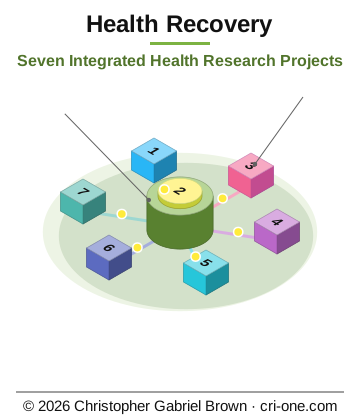
Asset valuation: $10,000,000,000. Master index of all projects: PROJECTSINDEX. Last edited: 2026-05-02 Status: Bundle of seven health-related research and product projects Maturity (per PACKAGEARCHITECTURE.md): L1 (Research) — bundles research-grade and product-grade content
Think of seven folders on one table, each a different angle on one question: what the body needs, and what goes wrong when it does not get it. That is the Health Recovery bundle. Two folders are product-grade: the KidVital and VitalCore supplement lines, nine complete formulations, four for children and five for adults, each a machine-readable file with exact per-ingredient amounts, daily-value percentages, serving size, excipients, allergen-free declarations and shelf life, with the FDA OTC and GMP paperwork beside them. The other folders are research: a Python probability engine built on the Alchemy Data V2 system that scores candidate compounds out of one hundred, three disease-mechanism studies on diabetes, Alzheimer's and Parkinson's, a broader mechanism database covering three hundred diseases, and the patent-pending NeuroElement brain formulation.
The research folders are discovery notes, not treatment claims. The diabetes search run on January 12, 2026 surfaced eleven research-focused compounds across nine candidate mechanisms, with the top candidate scoring 50.5 out of 100, a ranked place to start looking, not an answer. Three of the seven sub-projects carry confirmed USPTO applications. The archive holds 3,398 files: documentation, source code, data sets, patent filings, drawings and reports. It is for a supplement maker who wants formulations specified down to the excipient, and for a research group that wants a working engine and a head start on the mechanism hunt. The buyer walks away with the whole archive and the engine that runs it; the inventor's name stays on the filings and the discovery record.
Description
Health Recovery — Seven Integrated Health Research Projects
The Health Recovery package is the catalog’s integrated health-and-disease bundle. It assembles seven health-related projects covering OTC supplement formulations, alchemical-data probability analysis, three dedicated disease-mechanism research efforts (diabetes, Alzheimer’s, Parkinson’s), a broader 300-disease mechanism-research database, and the patent-pending NeuroElement brain formulation. Three of the seven sub-projects carry confirmed USPTO patent applications (19/441,975, 19/445,644, 19/555,525). The archive contains 3,398 files across documentation, source code, data sets, patent filings, SVG drawings, and research reports.
1. OTC Vitamins — KidVital & VitalCore Product Lines
Nine complete formulations — four for children and five for adults — each specified as a machine-readable JSON file with exact per-ingredient amounts, daily-value percentages, format, serving size, excipients, allergen-free declarations, and shelf-life data. Accompanying regulatory files cover FDA OTC compliance, GMP manufacturing specifications, label requirements, allergen matrices, and packaging specs for both lines. An Alchemy-analysis layer adds nutrient-probability modelling, life-stage element differences, and age-cohort absorption rates.
KidVital Daily Chewable tablet / Gummy 1 tablet or 2 gummies Vitamin A (beta-carotene) 2,500 IU (83% DV); Vitamin C (ascorbic acid) 60 mg (100% DV); Vitamin D3 (cholecalciferol) 600 IU (100% DV); Vitamin E (d-alpha-tocopherol) 15 IU (100% DV); Vitamin B6 (pyridoxine HCl) 1 mg (100% DV); Vitamin B12 (cyanocobalamin) 6 mcg (100% DV); Folate (folic acid) 400 mcg (100% DV); Zinc (zinc citrate) 5 mg (63% DV); Iron (ferrous fumarate) 4.5 mg (45% DV); Calcium (calcium carbonate) 100 mg (10% DV). Excipients: natural fruit flavor, citric acid, pectin, coconut oil, carnauba wax. Free from: gluten, dairy, soy, artificial colors, high-fructose corn syrup. Shelf life: 24 months.
KidVital Immune Gummy 2 gummies Vitamin C (ascorbic acid) 125 mg (208% DV); Zinc (zinc gluconate) 7.5 mg (94% DV); Elderberry extract (Sambucus nigra) 50 mg; Vitamin D3 (cholecalciferol) 1,000 IU (167% DV); Echinacea extract 25 mg. Shelf life: 24 months.
KidVital Brain (ages 6–12) Chewable softgel 1 softgel Omega-3 DHA (algal source) 200 mg; Choline (choline bitartrate) 100 mg; Vitamin B6 (pyridoxine HCl) 2 mg (200% DV); Vitamin B12 (methylcobalamin) 10 mcg (167% DV); Iron (ferrous bisglycinate) 5 mg (50% DV); Phosphatidylserine 25 mg. Shelf life: 18 months.
KidVital Grow Chewable tablet 1 tablet Calcium (calcium citrate) 250 mg (25% DV); Vitamin D3 (cholecalciferol) 1,000 IU (167% DV); Magnesium (magnesium oxide) 65 mg (25% DV); Vitamin K2 (menaquinone-7) 45 mcg (75% DV); Zinc (zinc citrate) 5 mg (63% DV). Shelf life: 24 months.
VitalCore Daily (18+) Tablet 1 tablet Vitamin A (mixed carotenoids) 5,000 IU (100% DV); Vitamin C (ascorbic acid) 90 mg (100% DV); Vitamin D3 (cholecalciferol) 2,000 IU (333% DV); Vitamin E (d-alpha-tocopherol) 30 IU (100% DV); Vitamin K2 (menaquinone-7) 90 mcg (100% DV); Vitamin B1 (thiamine) 1.5 mg (100% DV); Vitamin B2 (riboflavin) 1.7 mg (100% DV); Vitamin B6 (pyridoxine HCl) 2 mg (100% DV); Vitamin B12 (methylcobalamin) 6 mcg (100% DV); Folate (methylfolate) 400 mcg (100% DV); Biotin 300 mcg (100% DV); Calcium (calcium citrate) 200 mg (20% DV); Iron (ferrous bisglycinate) 18 mg (100% DV); Magnesium (magnesium glycinate) 100 mg (25% DV); Zinc (zinc picolinate) 11 mg (100% DV); Selenium (selenomethionine) 55 mcg (100% DV); Chromium (chromium picolinate) 35 mcg (100% DV). Shelf life: 30 months.
VitalCore Energy (18+) Capsule 2 capsules Vitamin B1 (thiamine) 25 mg (1,667% DV); Vitamin B2 (riboflavin) 25 mg (1,471% DV); Vitamin B6 (P-5-P) 25 mg (1,250% DV); Vitamin B12 (methylcobalamin) 500 mcg (8,333% DV); Iron (ferrous bisglycinate) 18 mg (100% DV); CoQ10 (ubiquinol) 100 mg; Ashwagandha extract (KSM-66) 300 mg; Rhodiola rosea extract 200 mg. Shelf life: 24 months.
VitalCore Joint (30+) Tablet 2 tablets Glucosamine sulfate 1,500 mg; MSM (methylsulfonylmethane) 1,000 mg; Turmeric extract (95% curcuminoids) 500 mg; Collagen peptides (Type II) 200 mg; Boswellia serrata extract 200 mg; Vitamin C (ascorbic acid) 60 mg (67% DV); Manganese (manganese citrate) 2 mg (87% DV). Shelf life: 24 months.
VitalCore Heart (30+) Softgel 1 softgel Omega-3 fish oil (EPA/DHA) 1,000 mg; CoQ10 (ubiquinol) 100 mg; Magnesium (magnesium taurate) 200 mg (50% DV); Garlic extract (allicin) 300 mg; Vitamin K2 (menaquinone-7) 90 mcg (100% DV). Shelf life: 18 months.
VitalCore 50+ Tablet 1 tablet Vitamin D3 (cholecalciferol) 4,000 IU (667% DV); Vitamin B12 (methylcobalamin) 1,000 mcg (16,667% DV); Calcium (calcium citrate) 500 mg (50% DV); Magnesium (magnesium glycinate) 200 mg (50% DV); Lutein (from marigold) 10 mg; Zeaxanthin 2 mg; Lycopene 5 mg; CoQ10 (ubiquinol) 50 mg; Zinc (zinc picolinate) 11 mg (100% DV); Selenium (selenomethionine) 55 mcg (100% DV). Shelf life: 24 months.
2. Alchemy Probability Data — Compound-Mechanism Analysis Engine
The Alchemy Probability Data sub-project is the computational substrate that powers every disease-research discovery in this bundle. It is a Python-based probability engine built on the proprietary Alchemy Data V2 system. Core scripts include alchemy_config.py (configuration and element definitions), alchemy_data_v2.py (the probability-calculation engine that computes discovery scores and degree-based probability cascades through 240th-degree resolution), bluray_data_api.py (data-access layer), and bluray_data_generator.py (archival output generator). The database stores elemental probability matrices, transformation pathways (heat, mix, oxidation, synthesis, phase-change, ionization, alloy-formation reactions with exact temperature, catalyst, environment, energy-change, and probability values), and synthesis methods for every candidate compound. Each compound receives a discovery score out of 100 based on its mechanism coverage, probability ranking, and transformation richness. Four blueprint documents (commons.odf, abnormal.odf, reallight.odf, unique.odf) define the foundational element relationships. This engine is the shared analytical backbone of sub-projects 3, 4, 5, 6, and 7.
3. Diabetes Research Discovery
A comprehensive research-focused database search conducted on January 12, 2026, using the Alchemy Data V2 system. The search identified 11 research-focused compounds across 9 distinct candidate mechanisms . The top candidate, C-H-O-N , achieved a discovery score of 50.5 / 100 with a probability of 0.010094.
The 9 identified mechanisms: cell regeneration (11 compounds); beta cell regeneration (11 compounds); insulin regeneration (11 compounds); growth factors (11 compounds); glucose metabolism restoration (10 compounds); insulin signaling pathway activation (8 compounds); glycogen synthesis (2 compounds); insulin sensitivity improvement (2 compounds).
All 11 compounds (ranked by discovery score):
- C-H-O-N — Score: 50.5/100, probability 0.010094. Mechanisms: cell regeneration, beta cell regeneration, insulin regeneration, growth factors.
- C-H-O-N-S — Score: 50.2/100, probability 0.003296. Mechanisms: cell regeneration, glucose metabolism, beta cell regeneration, insulin regeneration, growth factors.
- C-H-O-N-P — Score: 50.2/100, probability 0.003273. Mechanisms: cell regeneration, glucose metabolism, glycogen synthesis, beta cell regeneration, insulin signaling, insulin regeneration, growth factors.
- C-H-O-N-Zn — Score: 50.1/100, probability 0.002757. Mechanisms: cell regeneration, glucose metabolism, beta cell regeneration, insulin signaling, insulin regeneration, growth factors.
- C-H-O-N-Mg — Score: 50.1/100, probability 0.002079. Mechanisms: cell regeneration, glucose metabolism, beta cell regeneration, insulin regeneration, insulin sensitivity, growth factors.
- C-H-O-N-S-Zn — Score: 50.0/100, probability 0.000919. Mechanisms: cell regeneration, glucose metabolism, beta cell regeneration, insulin signaling, insulin regeneration, growth factors.
- C-H-O-N-P-Zn — Score: 50.0/100, probability 0.000912. Mechanisms: cell regeneration, glucose metabolism, glycogen synthesis, beta cell regeneration, insulin signaling, insulin regeneration, growth factors.
- C-H-O-N-Cu-Zn — Score: 50.0/100, probability 0.000827. Mechanisms: cell regeneration, glucose metabolism, beta cell regeneration, insulin signaling, insulin regeneration, growth factors.
- C-H-O-N-Fe-Zn — Score: 50.0/100, probability 0.000790. Mechanisms: cell regeneration, glucose metabolism, beta cell regeneration, insulin signaling, insulin regeneration, growth factors.
- C-H-O-N-Zn-Mg — Score: 50.0/100, probability 0.000580. Mechanisms: cell regeneration, glucose metabolism, beta cell regeneration, insulin signaling, insulin regeneration, insulin sensitivity, growth factors.
- C-H-O-N-Ca-Zn — Score: 50.0/100, probability 0.000541. Mechanisms: cell regeneration, glucose metabolism, beta cell regeneration, insulin signaling, insulin regeneration, growth factors.
Deliverables include the full compound discovery JSON (with probability cascades through 240th degree, transformation matrices, and synthesis methods for each compound), known-properties reports (three versions), a patent application draft, four SVG patent drawings (chemical structures, synthesis scheme, coordination structures, pharmaceutical formulations), reference charts, and the Python discovery engine ( run_diabetes_discovery.py , config.py ).
4. Alzheimer’s Research Discovery — USPTO Application 19/441,975
A parallel research-focused database search targeting Alzheimer’s disease mechanisms. The research identified candidate compounds scored against mechanisms including neuroinflammation, BDNF signaling, synaptic function, neuronal regeneration, tau regulation, antioxidant activity, amyloid reduction, cholinergic support, mitochondrial function, glutamate regulation, and calcium homeostasis.
The patent application (USPTO 19/441,975), titled “Novel Metal-Amino Acid Complexes and Methods for Treating Alzheimer’s Disease,” contains 20 claims : 4 independent claims covering zinc-amino acid coordination complexes (broadest amyloid + tau coverage), copper-amino acid coordination complexes (amyloid clearance + antioxidant), multi-metal coordination complexes (Fe-S, Fe, Fe-Cu for mitochondrial support), and mineral-enhanced complexes (Mg, Ca for neuroprotection); plus 16 dependent claims covering amino acid specificity (histidine, cysteine/methionine, glycine/glutamic acid), pharmaceutical compositions (oral, injectable, intranasal), methods of treatment, and synthesis methods. The package includes four SVG patent drawings and the full discovery data with compound-level probability matrices.
5. Parkinson’s Research Discovery — USPTO Application 19/445,644
Filed January 12, 2026 (Confirmation No. 4455, Patent Center No. 73928275). The application is titled “Novel Metal-Amino Acid Complexes and Methods for Treating Parkinson’s Disease.”
- Claim 1 — Halogen complexes: zinc-fluorine, zinc-chlorine, zinc-bromine, and zinc-iodine amino acid coordination complexes.
- Claim 2 — Boron/silicon complexes: zinc-boron, zinc-silicon, and iron-boron amino acid coordination complexes.
- Claim 3 — Multi-metal coordination complexes: iron-copper-zinc, iron-sulfur-copper, and phosphorus-magnesium-zinc amino acid coordination complexes.
- Claim 4 — Complex organic-inorganic hybrids: sulfur-phosphorus-zinc and phosphorus-iron-sulfur amino acid coordination complexes.
16 Dependent Claims:
- Claims 5–8 — Amino acid specificity: amino acids selected from glycine, alanine, serine, threonine, cysteine, methionine, aspartic acid, glutamic acid, lysine, arginine, histidine, and combinations thereof.
- Claim 9 — Pharmaceutical composition: therapeutically effective amount of any of Claims 1–8 with a pharmaceutically acceptable carrier.
- Claims 10–12 — Formulation types: oral (Claim 10), injectable (Claim 11), and transdermal (Claim 12).
- Claims 13–17 — Methods of treatment: method of treating Parkinson’s disease (Claim 13); oral administration (Claim 14); injectable administration (Claim 15); transdermal administration (Claim 16); combination therapy with levodopa, carbidopa, dopamine agonists, MAO-B inhibitors, and COMT inhibitors (Claim 17).
- Claims 18–19 — Synthesis methods: synthesis of halogen complexes (Claim 18, pH 7–8, 60–80°C) and multi-metal complexes (Claim 19).
- Claim 20 — Use claim: manufacture of a medicament for treating Parkinson’s disease.
Total compound coverage: 12 compound types (4 halogen, 3 boron/silicon, 3 multi-metal, 2 complex hybrids). Deliverables include the full patent specification (DOCX), four SVG patent drawings, USPTO forms, the filing receipt, and the complete discovery data JSON.
6. Disease Mechanism Research — 300-Disease Mechanism Database
A comprehensive database covering 300 non-opioid diseases , each with a dedicated mechanism-research document generated from the Alchemy Data V2 engine. Of the 300 candidate approaches analyzed, 223 (74.3%) are classified as novel (new alchemy-based compounds not found in standard pharmaceutical databases), and 77 (25.7%) are hybrid (combining established and novel approaches). All 300 contain novel elements.
Disease categories and counts:
- Infectious diseases (diseases 1–50, 50 diseases): influenza types A/B/C, COVID-19, HIV/AIDS, hepatitis A–E, tuberculosis, pneumonia types, meningitis types, malaria, dengue, Zika, Lyme disease, STIs, and others.
- Cardiovascular diseases (51–75, 25 diseases): hypertension, coronary artery disease, heart failure, arrhythmias, cardiomyopathies, valve disorders, peripheral artery disease.
- Respiratory diseases (76–100, 25 diseases): asthma (mild/moderate/severe), COPD, emphysema, cystic fibrosis, pulmonary fibrosis, sleep apnea, RSV.
- Gastrointestinal diseases (101–125, 25 diseases): GERD, peptic ulcer, Crohn’s, ulcerative colitis, IBS, celiac disease, pancreatitis, NAFLD/NASH.
- Endocrine disorders (126–150, 25 diseases): diabetes types 1/2, thyroid disorders, Addison’s, Cushing’s, metabolic syndrome.
- Neurological disorders (151–175, 25 diseases): epilepsy, multiple sclerosis, Parkinson’s, Alzheimer’s, ALS, Huntington’s, migraines, narcolepsy.
- Musculoskeletal disorders (176–200, 25 diseases): osteoarthritis, rheumatoid arthritis, gout, osteoporosis, fibromyalgia, Paget’s disease.
- Dermatological conditions (201–225, 25 diseases): psoriasis types, eczema types, acne, rosacea, vitiligo, skin cancers.
- Hematologic disorders (226–250, 25 diseases): anemias, sickle cell disease, hemophilia, leukemias, lymphomas, myeloma.
- Psychiatric disorders (251–275, 25 diseases): depression, bipolar types, anxiety disorders, OCD, PTSD, schizophrenia, eating disorders, personality disorders.
- Renal disorders (276–290, 15 diseases): chronic kidney disease stages 1–5, nephrotic/nephritic syndrome, polycystic kidney disease, kidney stones.
- Hepatic disorders (291–300, 10 diseases): chronic hepatitis B/C, autoimmune hepatitis, Wilson’s disease, hemochromatosis, liver cirrhosis.
The database is backed by a large Python analysis pipeline (30+ scripts) including generate_research.py , deep_alchemy_analysis.py , discover_medical_compounds.py , cross_search_drug_studies.py , extract_alchemy_compounds.py , categorize_treatments.py , add_probability_matrices.py , add_transformation_pathways.py , and others. Supporting data files include alchemy_compounds.json , real_alchemy_data.json , FOUR_DATABASE_EXAMS_REPORT.json , DEEP_ALCHEMY_ANALYSIS.json , and MEDICAL_COMPOUND_DISCOVERY_REPORT.json .
7. NeuroElement Brain Formulation — USPTO Application 19/555,525 (24 Claims)
A patent-pending, computationally designed 7-compound brain-optimization formulation. Designed using a proprietary algorithmic method that analyzed 54 brain diseases , 65 neurotransmitters , and 40 neurobiochemical mechanisms . The formulation delivers 10 of 14 brain-essential chemical elements (C, H, O, N, Mg, Zn, Se, P, Fe, S) through bioavailable, blood-brain-barrier-crossing forms. Elements not covered: Cu, I, Mn, Cl (addressed in patent claims as optional additions). The global brain health supplement market is valued at approximately $14 billion (2026).
1. Magnesium L-Threonate C 8 H 14 MgO 10 1,000 mg 500 mg AM + 500 mg PM ~96 mg Mg Glutamate regulation, NMDA modulation, calcium regulation, energy production
2. Zinc Carnosine C 9 H 12 N 4 O 3 Zn 75 mg AM only ~16 mg Zn NMDA modulation, BDNF signaling, amyloid regulation, synaptic function
3. Ebselen C 13 H 9 NOSe 300 mg PM only ~22 mg Se Redox regulation, antioxidant, thyroid function, neuroprotection; lithium-mimetic (IMPase inhibition)
4. Pyridoxal-5-Phosphate (P5P) C 8 H 10 NO 6 P 25 mg AM only ~3.1 mg P Neurotransmitter synthesis (serotonin, dopamine, GABA, norepinephrine)
5. Iron Bisglycinate C 4 H 8 FeN 2 O 4 25 mg AM only ~5 mg Fe Dopamine synthesis (tyrosine hydroxylase cofactor), mitochondrial function, myelination
6. N-Acetyl-L-Cysteine (NAC) C 5 H 9 NO 3 S 600 mg PM only ~60 mg S Glutathione precursor, antioxidant, oxidative stress, gasotransmitter signaling
7. Citicoline (CDP-Choline) C 14 H 26 N 4 O 11 P 2 500 mg 250 mg AM + 250 mg PM ~108 mg P Cell membrane synthesis, signal transduction, acetylcholine precursor
Daily total: 2,665 mg across 3 capsules (1 morning, 2 evening; Size 00 HPMC vegetarian capsules).
Dosing schedule rationale: Iron bisglycinate (AM) and NAC (PM) are separated by 12 hours to prevent thiol chelation of Fe 2+ . P5P supports active-phase neurotransmitter synthesis during waking hours. Ebselen and NAC support glutathione regeneration during sleep-phase neurochemistry. Magnesium L-threonate is split AM/PM for steady-state brain magnesium levels.
Morning capsule (Capsule A, 960 mg fill): Magnesium L-threonate 500 mg, Zinc carnosine 75 mg, P5P 25 mg, Iron bisglycinate 25 mg, Citicoline 250 mg, excipients (MCC, Mg stearate, SiO 2 ) 85 mg.
Evening capsule B1 (830 mg fill): Magnesium L-threonate 500 mg, Ebselen 300 mg, excipients 30 mg.
Evening capsule B2 (880 mg fill): N-Acetyl-L-Cysteine 600 mg, Citicoline 250 mg, excipients 30 mg.
Patent application 19/555,525 (filed March 3, 2026; Confirmation No. 9226) contains 24 claims :
- Claims 1–11 — Composition claims: the multi-element neurotherapeutic composition (Claim 1); dosing ranges for all 7 compounds (Claim 2); divided-dose AM/PM regimen with iron/NAC separation rationale (Claim 3); capsule fill weights — morning 960 mg, evening combined 1,710 mg (Claim 4); excipients (Claim 5); mechanism coverage — at least 30 of 40 mechanisms (Claim 6); disease coverage — at least 10 brain diseases from a list of 16 (Claim 7); ebselen as lithium mimetic (Claim 8); NAC as intra-composition safety mechanism for iron chelation (Claim 9); iron + zinc sequential dopamine pathway (Claim 10); copper-free formulation with NAC chelation of dietary copper (Claim 11).
- Claims 12–15 — Method of formulating: geometric-dilution pre-blending under reduced lighting for P5P photodegradation protection (Claim 12); blending periods (Claim 13); evening formulation preparation (Claim 14); quality control testing — weight tolerance ±5%, disintegration within 30 min at 37°C, moisture below 5% (Claim 15).
- Claims 16–19 — Method of treatment: treating neurological or psychiatric disorders (Claim 16); specific disorder list including Alzheimer’s, Parkinson’s, epilepsy, depression, bipolar, schizophrenia, ALS, Huntington’s, MS, ADHD, autism, anxiety, dementia, migraine, insomnia, TBI (Claim 17); divided-dose regimen over at least 4 weeks (Claim 18); coverage of at least 30 mechanisms across at least 10 diseases simultaneously (Claim 19).
- Claims 20–24 — Computational method: designing a multi-target neurotherapeutic composition by constructing disease and neurotransmitter databases, computing mechanism and disease coverage scores, selecting the optimal element combination, and selecting BBB-crossing delivery compounds (Claim 20); sequential enzymatic dependency identification (Claim 21); neurological/psychiatric classification by molecular weight (Claim 22); database size requirements — at least 40 diseases, 50 neurotransmitters, 30 mechanisms (Claim 23); specific compound-to-element mappings for all 7 compounds (Claim 24).
Supporting deliverables include 9 SVG patent drawings, the complete brain diseases database (54 diseases), neurotransmitter database (65 neurotransmitters), brain elements database (20 elements), Python research tools ( brain_chemistry_db.py , brain_compound_analyzer.py , neurotransmitter_db.py , supplement_facts.py , report_generator.py ), a product valuation report, test suites, and a research-document library.
19/445,644 Novel Metal-Amino Acid Complexes — Parkinson’s Disease 20 claims Filed Jan 12, 2026
19/555,525 NeuroElement Multi-Element Neurotherapeutic Composition 24 claims Filed Mar 3, 2026
FDA disclaimer: The OTC vitamin formulations and the NeuroElement supplement described in this package have not been evaluated by the U.S. Food and Drug Administration. These products are not intended to diagnose, treat, cure, or prevent any disease. The disease-mechanism research (diabetes, Alzheimer’s, Parkinson’s, 300-disease database) consists of computational research findings that have not been clinically validated . No compound discussed in this package is a proven treatment for any disease. Nothing in this package constitutes medical advice. Consult a qualified health professional before using any supplement or acting on any research finding contained herein.
Intellectual property note: Three sub-projects carry active USPTO patent applications (19/441,975, 19/445,644, 19/555,525). This is a single-tier purchase. Intellectual property is not conveyed with purchase; IP-related terms require separate negotiation.
How this is delivered
This package ships on a single Blu-ray disc, posted to the delivery address on your order. The archive on the disc is AES-256 encrypted; the passphrase is sent separately, by email, once the disc is despatched — so the disc alone is of no use to anyone who intercepts it.
Discs are despatched by tracked, signed-for post. Allow 5 business days for mastering and verification before despatch.
File names inside the package may use older working titles.
Photo
Footnotes
- Product number 8481.
- Family: health research.
- Purchase: When you buy, you buy the use of that blueprint only.