Contents 24 files in 7 folders · listed 14 November 2026
This lists the whole project folder, 84-phantasmphi-cpu, which 13 products on this site draw on. What this product delivers is stated on this page under What you get.
- animate/
- make_phantomcore_3d.py 14 KB
- make_phantomcore_voxel.py 11 KB
- phantomcore-3d.svg 228 KB
- phantomcore-voxel.svg 71 KB
- README.md 2 KB
- build/
- phantom_soc_sky130.v 11.5 MB
- phantom_soc_tb.vvp 106 KB
- phantom_soc_v2_tb.vvp 119 KB
- phc01_sky130.log 766 KB
- phc02_sky130.v 17 KB
- phc02_yosys.log 190 KB
- rtl/
- phc02/
- tb/ 1 file
- phantom_core_cpu_v2.v 9 KB
- phantom_soc_v2.v 7 KB
- seq_divider.v 3 KB
- sram_1rw.v 2 KB
- sw/
- tb/
- phantom_core_cpu.v 9 KB
- phantom_soc.v 6 KB
- CONTACT_INFO.txt 1 KB
- phantomcore-cpu-deploy.zip 6 KB
- README.md 4 KB
- STATUS-PHC02.md 5 KB
For the Curious
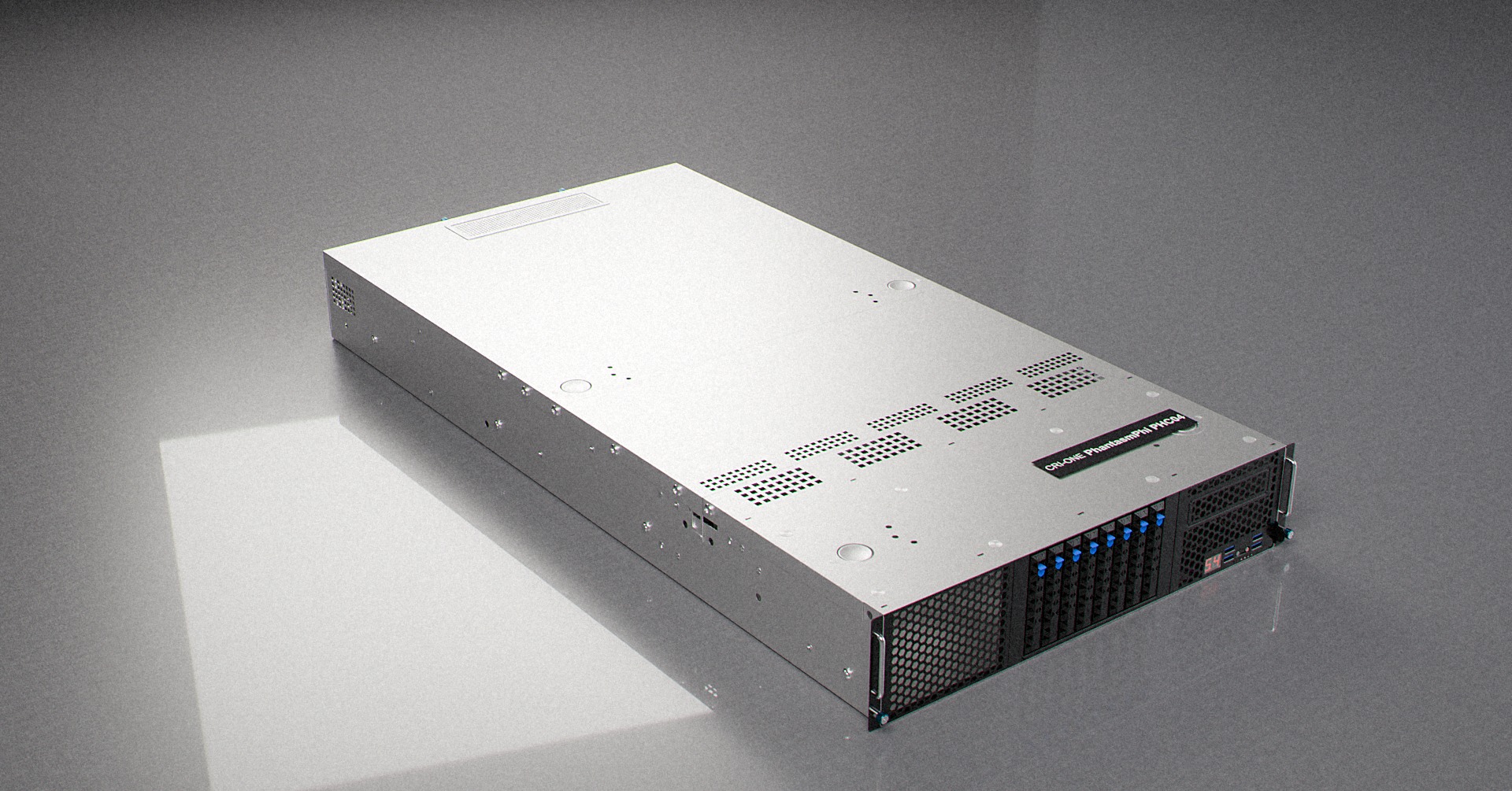
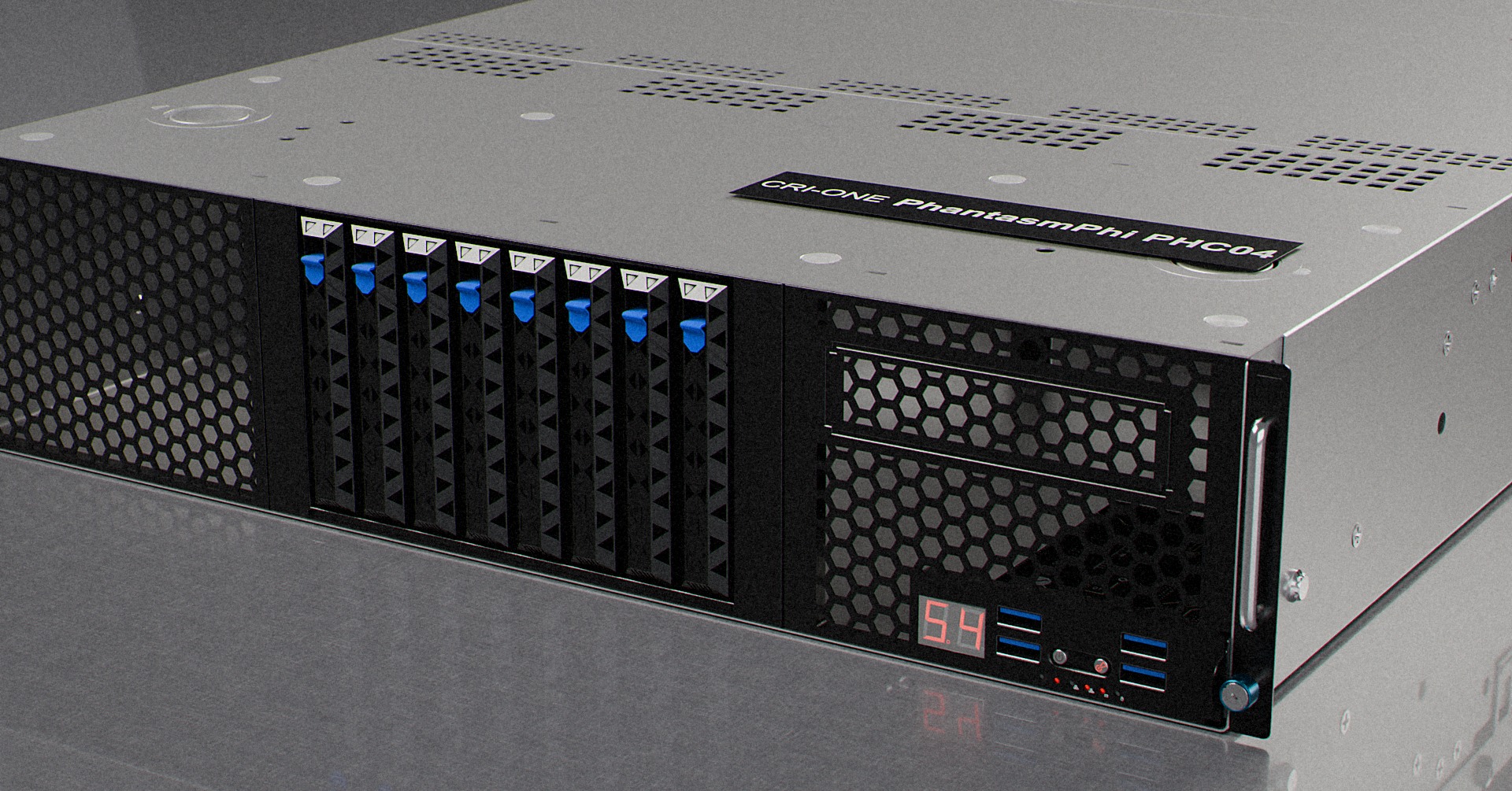
Think of a 4U blade chassis the way you think of one drawer in a filing cabinet: it slides into the rack, it has a fixed depth, and whatever goes in it has to earn that space. PHC04 is what CRI-ONE puts in that drawer. It is the PhantasmPhi PHC01 "PhantomCore" CPU IP laid out as a single 4U blade: 256 cores, each ticking at 1.5 GHz, drawn for the 10 nm node. The logic underneath is not a sketch. It is written out at the register level, run through simulation and proven there, and already mapped onto the SKY130 standard-cell library, so an engineer can open the files and follow the signals rather than take anyone's word for it.
This is the blade-sized step of the PhantomCore ladder, the unit that fits in one chassis and still behaves like a datacenter part. It is for the operator who wants one blade on the bench before committing to a rack, for the engineering buyer who needs to see the RTL before the conversation goes further, and for the licensee who wants the blueprint at a size their own team can read end to end. The full PhantasmPhi calculator lets you walk the numbers up and down from this point.
What you walk away with is the use of that blueprint only - the 256-core, 4U PHC04 layout and the proven logic behind it. The PhantomCore IP itself stays with its inventor, Christopher Gabriel Brown of CRI-ONE, and his name stays on the work.