
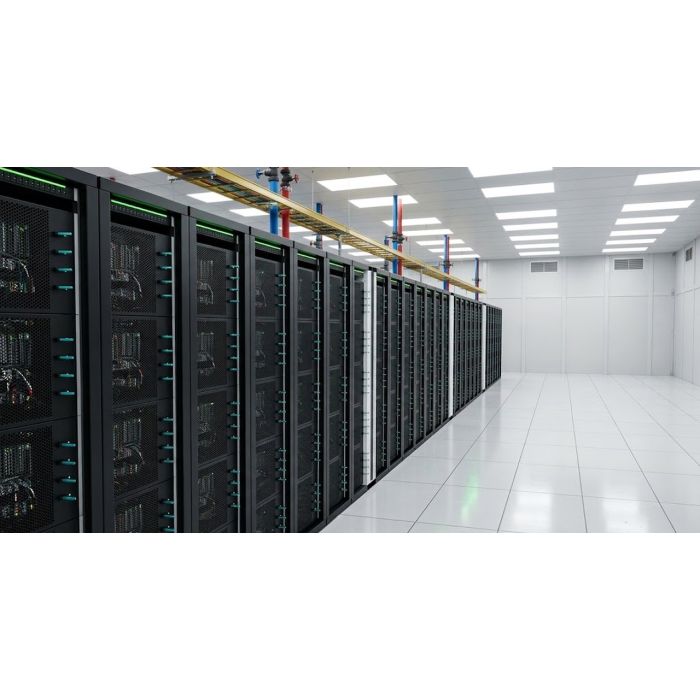
PhantasmPhi CPU Phase II - PHC14b - row block, 150 QIC parts - 162 Z-OPS (guaranteed 30 E-OPS)
Why you'd want it
A row block of 150 parts on a QBeam ring-of-stars layout, sized between a row and a pod.
- Who it's for: US operators planning a block of rack rows, 150 QIC-105 parts.
- The problem it solves: a ring-of-stars layout for 150 parts; listed 162 Z-OPS (guaranteed 30 E-OPS), 252 kW net.
- What you get: non-exclusive PHC14b licence to the chip design source files, sent after signed NDA and wire payment.
150 parts, QBeam ring-of-stars — 162 zetta probability-OPS, 5,384× the guaranteed 30 E-OPS floor; 3.78M logical qubits. 252 kW net.
Explore the store
- PhantasmPhi
- AutoPhi
- ICWritePhi
- PCBWritePhi
- PCBWrite
- WonderPhi
- QBeam
- Normal Resonance Status
- Quantum Battery
- Alchemy
- LAN Lifeline
- OFFICE-RAG
- ScopePhi
- WritePhi
- VerifyPhi
- UniPhi
- ExitPhi
- AeroPhi
- SellPhi
- Seed
- calculators
- PCIe
- BGA
- interposer
- chips
- satellites
- recycling
- microwave
- magnetic
- torque
- resonance
- stencils
- printers
- energy
- fabrication
- hobbyist
- wartime
- read-alongs
- blueprints
- quantum
- FDA
- AI
A chip should grow the way a good town grows: the same house repeated, and streets that join into a ring. PHC14b is a row block of 150 QIC-105 parts laid out as a QBeam ring-of-stars - stars of parts, and the stars joined in a ring. Every part is the same die: 858 square millimetres, full reticle, on 2 nm, an 18-chiplet stack of 1,500 CFET layers each, in a real 40 by 40 mm BGA-1536 package with QBeam send and receive on the package. Bytes move between parts by Bell measurement, two classical bits over the CoolBeam phased array, and an I, X, Y or Z correction on the receiving side. Counted in probability-OPS, the bronze unit, the credited chain across the 150 comes to 162 zetta, 5,384 times the guaranteed floor of 30 E-OPS, with 3.78 million logical qubits, at 252 kW net after LED power recycling. FLOPS figures beside those are gold framing, labeled. QBeam carries bytes, never compute, and its rates stay design targets until tape-out.
This is for the datacenter operator planning a row, not a rack, and for the engineering buyer who wants the credited chain in writing before the first part is placed. You walk away with a non-exclusive source license to the RTL and photonic HDL in one zip - the 17-section license, the licensed-IP schedule, the PHC01 SKY130 tape-out anchor evidence - delivered after a countersigned NDA and wire settlement, USA companies only. You buy the use of the blueprint; the blueprint stays with the inventor.
Valuation
Pre-production blueprint usage right, patent pending, non-exclusive. The analog this product is closest to in the market is flagship AI/HPC CPUs — Nvidia Grace Hopper, AMD MI300A, Fujitsu A64FX, with photonic-interposer analogs in Lightmatter.
Patent landscape
Flagship CPU IP is one of the densest filing spaces in silicon; however, novel quantum/photonic interposer configurations (QIC-105 class) remain patentable and defensible.
Market opportunity
- Data-center CPU market: $75B (2026) → $180B (2032).
- AI training/inference silicon: $120B+ (2026), hyperscaler-dominated.
Comparable transactions
- Nvidia → Mellanox (2019): $6.9B.
- AMD → Xilinx (2022): $49B.
- Intel → Habana Labs (2019): $2B for AI accelerator startup.
Estimated valuation range
Realistic clearing band for a non-exclusive blueprint usage right: $10M (research / single-buyer evaluation) → $150M (strategic non-exclusive with manufacturing / deployment rights).
Listed catalog price: $900,000,000,000 — public anchor for direct enquiry; actual clearing price negotiated inside the range above with the buyer, scope (non-exclusive, territory, field-of-use), and milestone structure.
Description
Phase II of PhantasmPhi CPU — PhantasmPhi CPU Phase II - PHC14b - multi-DC fleet - 30 EFLOPS. Non-exclusive source-licensed RTL + photonic-HDL zip (full 17-section LICENSE, Licensed-IP schedule, PHC01 SKY130 tape-out anchor evidence). Delivered after countersigned NDA + wire settlement. USA companies only, USD only, email + postal mail only.
150 parts, QBeam ring-of-stars — 162 zetta probability-OPS, 5,384× the guaranteed 30 E-OPS floor; 3.78M logical qubits. 252 kW net.
The part is QIC-105: an 858 mm² full-reticle die in the real 40×40 mm BGA-1536 die-side package, 18-chiplet stack × 1,500 CFET layers = 27,000 voxel-layers, with QBeam SEND and RECEIVE integrated on-package (ExitPhi, USPTO App 19/722,805): Bell-measure transmit → 2 classical bits over the CoolBeam phased array → I/X/Y/Z receive correction; 4-lane chain + PipeBeam ordering + 48-channel nanophotonic transceive. QBeam carries bytes, never compute OPS.
Credited chain (unchanged receipts): 0.004625 depositions/clock (iverilog-verified RTL) × 4.9 ops/deposition × 786.7 MHz measured at 7 nm / 2.75 GHz at 2 nm (#5 EM Cooling, Pat 1096-1098) × ×10 Color-ISA pin (#8) × ×3 photon/electron/atomic strands × 99.998% QEC gate (#4); power net of #1 LED Power Recycling (42%).
The decade/3× figure is the guaranteed floor; the delivered figure is the credited chain on the QIC-105 part. Native unit is probability-OPS (bronze); FLOPS-equivalents are GOLD framing, labeled. QBeam rates are design targets until tape-out and are quoted as interconnect only. Settles by wire or online check.
Footnotes
- Product number 10368.
- Family: phantasmphi.
- Purchase: When you buy, you buy the use of that blueprint only.
-
 PhantasmPhi CPU Phase II - PHC15b - pod cluster, 1,500 QIC parts - 1.62 Y-OPS (guaranteed 300 E-OPS)
A pod cluster: 1,500 parts on a QBeam torus.
Special Price $34,750,000,000.00 Regular Price $139,000,000,000.00 -
 PhantasmPhi CPU Phase II - PHC13b - three racks, 15 QIC parts - 16.2 Z-OPS (guaranteed 3 E-OPS)
Three racks, 15 parts, between one rack and a row.
Special Price $21,875,000,000.00 Regular Price $87,500,000,000.00 -
 PhantasmPhi CPU Phase II - PHC16b - hall trio, 15,000 QIC parts - 16.2 Y-OPS (guaranteed 3 Z-OPS)
Three datacenter halls, 15,000 parts, licensed together.
Special Price $42,500,000,000.00 Regular Price $170,000,000,000.00 -
 PhantasmPhi CPU Phase II - PHC12b - QBeam pair, 2 QIC parts - 2.15 Z-OPS (guaranteed 300 P-OPS)
Two QIC-105 parts linked point to point by QBeam.
Special Price $17,275,000,000.00 Regular Price $69,100,000,000.00
-
 Alchemy Calc
One offline file that turns CRI-ONE data into chemistry tools.
Special Price $48,500,000.00 Regular Price $194,000,000.00 -
 One Touch Pagers
One-button voice pagers for keeping families in touch.
Special Price $3,025,000.00 Regular Price $12,100,000.00