
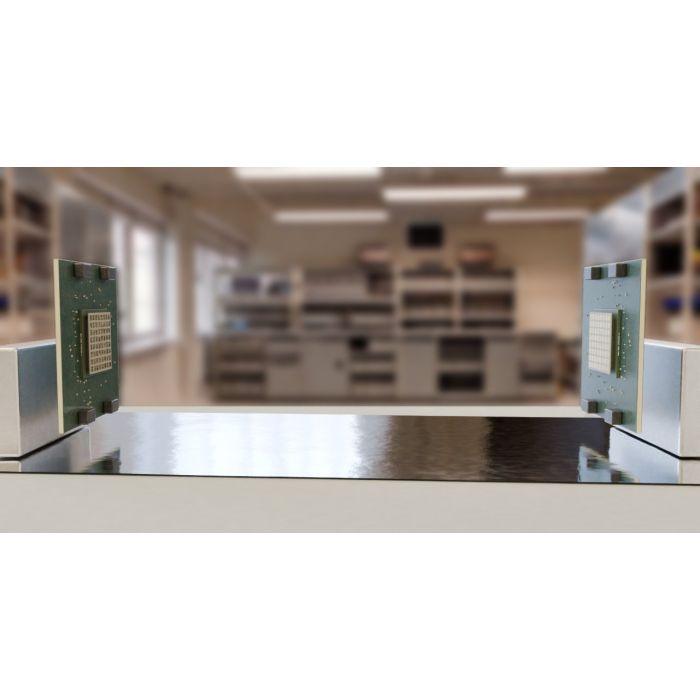
PhantasmPhi CPU Phase II - PHC12b - QBeam pair, 2 QIC parts - 2.15 Z-OPS (guaranteed 300 P-OPS)
Why you'd want it
Two QIC-105 parts linked point to point by QBeam; link rates stay design targets until tape-out.
- Who it's for: US teams that need the design for two parts sending data to each other.
- The problem it solves: covers a two-part QBeam send and receive pair; listed 2.15 Z-OPS (guaranteed 300 P-OPS).
- What you get: non-exclusive PHC12b chip design-source licence with Licensed-IP schedule, after signed NDA and wire payment.
Two QIC-105 parts, point-to-point QBeam send/receive — 2.15 zetta probability-OPS, 7,179× the guaranteed 300 P-OPS floor; 50,400 logical qubits. 3.4 kW net.
Explore the store
- PhantasmPhi
- AutoPhi
- ICWritePhi
- PCBWritePhi
- PCBWrite
- WonderPhi
- QBeam
- Normal Resonance Status
- Quantum Battery
- Alchemy
- LAN Lifeline
- OFFICE-RAG
- ScopePhi
- WritePhi
- VerifyPhi
- UniPhi
- ExitPhi
- AeroPhi
- SellPhi
- Seed
- calculators
- PCIe
- BGA
- interposer
- chips
- satellites
- recycling
- microwave
- magnetic
- torque
- resonance
- stencils
- printers
- energy
- fabrication
- hobbyist
- wartime
- read-alongs
- blueprints
- quantum
- FDA
- AI
Imagine two of the same die in two packages, and between them a link that needs no cable: one side takes a Bell measurement, two ordinary classical bits ride across the CoolBeam phased array, and the other side applies its I, X, Y or Z correction. That is a QBeam pair, and PHC12b is PhantasmPhi Phase II built on exactly that, point to point. Each part is a QIC-105: an 858-square-millimetre full-reticle die on 2 nm, an 18-chiplet stack of 1,500 CFET layers each, 27,000 voxel-layers in all, in a real 40 by 40 mm BGA-1536 package with QBeam send and receive on the package itself and 48 channels of nanophotonic transceive. Counted in the native bronze unit, probability-OPS, the credited chain on the pair comes to 2.15 zetta, 7,179 times the guaranteed floor of 300 P-OPS, with 50,400 logical qubits, at 3.4 kW net after LED power recycling. QBeam moves bytes between the two parts; it never counts as compute, and its rates stay design targets until tape-out.
This is for the datacenter operator or engineering buyer who wants to see two parts talk before committing to a rack of them. You walk away with a non-exclusive source license to the RTL and photonic HDL in one zip - the 17-section license, the licensed-IP schedule, the PHC01 SKY130 tape-out anchor evidence - delivered after a countersigned NDA and wire settlement, USA companies only. You buy the use of the blueprint; the inventor keeps the blueprint.
Valuation
Pre-production blueprint usage right, patent pending, non-exclusive. The analog this product is closest to in the market is flagship AI/HPC CPUs — Nvidia Grace Hopper, AMD MI300A, Fujitsu A64FX, with photonic-interposer analogs in Lightmatter.
Patent landscape
Flagship CPU IP is one of the densest filing spaces in silicon; however, novel quantum/photonic interposer configurations (QIC-105 class) remain patentable and defensible.
Market opportunity
- Data-center CPU market: $75B (2026) → $180B (2032).
- AI training/inference silicon: $120B+ (2026), hyperscaler-dominated.
Comparable transactions
- Nvidia → Mellanox (2019): $6.9B.
- AMD → Xilinx (2022): $49B.
- Intel → Habana Labs (2019): $2B for AI accelerator startup.
Estimated valuation range
Realistic clearing band for a non-exclusive blueprint usage right: $10M (research / single-buyer evaluation) → $150M (strategic non-exclusive with manufacturing / deployment rights).
Listed catalog price: $560,000,000,000 — public anchor for direct enquiry; actual clearing price negotiated inside the range above with the buyer, scope (non-exclusive, territory, field-of-use), and milestone structure.
Description
Phase II of PhantasmPhi CPU — PhantasmPhi CPU Phase II - PHC12b - multi-rack pod - 300 PFLOPS. Non-exclusive source-licensed RTL + photonic-HDL zip (full 17-section LICENSE, Licensed-IP schedule, PHC01 SKY130 tape-out anchor evidence). Delivered after countersigned NDA + wire settlement. USA companies only, USD only, email + postal mail only.
Two QIC-105 parts, point-to-point QBeam send/receive — 2.15 zetta probability-OPS, 7,179× the guaranteed 300 P-OPS floor; 50,400 logical qubits. 3.4 kW net.
The part is QIC-105: an 858 mm² full-reticle die in the real 40×40 mm BGA-1536 die-side package, 18-chiplet stack × 1,500 CFET layers = 27,000 voxel-layers, with QBeam SEND and RECEIVE integrated on-package (ExitPhi, USPTO App 19/722,805): Bell-measure transmit → 2 classical bits over the CoolBeam phased array → I/X/Y/Z receive correction; 4-lane chain + PipeBeam ordering + 48-channel nanophotonic transceive. QBeam carries bytes, never compute OPS.
Credited chain (unchanged receipts): 0.004625 depositions/clock (iverilog-verified RTL) × 4.9 ops/deposition × 786.7 MHz measured at 7 nm / 2.75 GHz at 2 nm (#5 EM Cooling, Pat 1096-1098) × ×10 Color-ISA pin (#8) × ×3 photon/electron/atomic strands × 99.998% QEC gate (#4); power net of #1 LED Power Recycling (42%).
The decade/3× figure is the guaranteed floor; the delivered figure is the credited chain on the QIC-105 part. Native unit is probability-OPS (bronze); FLOPS-equivalents are GOLD framing, labeled. QBeam rates are design targets until tape-out and are quoted as interconnect only. Settles by wire or online check.
Footnotes
- Product number 10366.
- Family: phantasmphi.
- Purchase: When you buy, you buy the use of that blueprint only.
-
 PhantasmPhi CPU Phase II - PHC13b - three racks, 15 QIC parts - 16.2 Z-OPS (guaranteed 3 E-OPS)
Three racks, 15 parts, between one rack and a row.
Special Price $21,875,000,000.00 Regular Price $87,500,000,000.00 -
 PhantasmPhi CPU Phase II - PHC11b - one 2 nm QIC die (single chiplet) - 59.8 E-OPS (guaranteed 30 P-OPS)
The single-chiplet die, moved to 2 nm from the start.
Special Price $13,875,000,000.00 Regular Price $55,500,000,000.00 -
 PhantasmPhi CPU Phase II - PHC14b - row block, 150 QIC parts - 162 Z-OPS (guaranteed 30 E-OPS)
A row block of 150 parts on a ring of stars.
Special Price $27,750,000,000.00 Regular Price $111,000,000,000.00 -
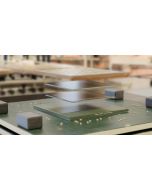 PhantasmPhi CPU Phase II - PHC10b - one 7 nm QIC part, 3-chiplet stack - 4.19 E-OPS (guaranteed 3 P-OPS)
One 7 nm socket, three chiplets stacked for more capacity.
Special Price $11,550,000,000.00 Regular Price $46,200,000,000.00
-
 Reflective Tunnel
Ring-built tunnels that hold and concentrate light and microwaves.
Special Price $60,500,000.00 Regular Price $242,000,000.00 -
 Cessation Database
A research database on how substance cessation works.
Special Price $90,750,000.00 Regular Price $363,000,000.00