
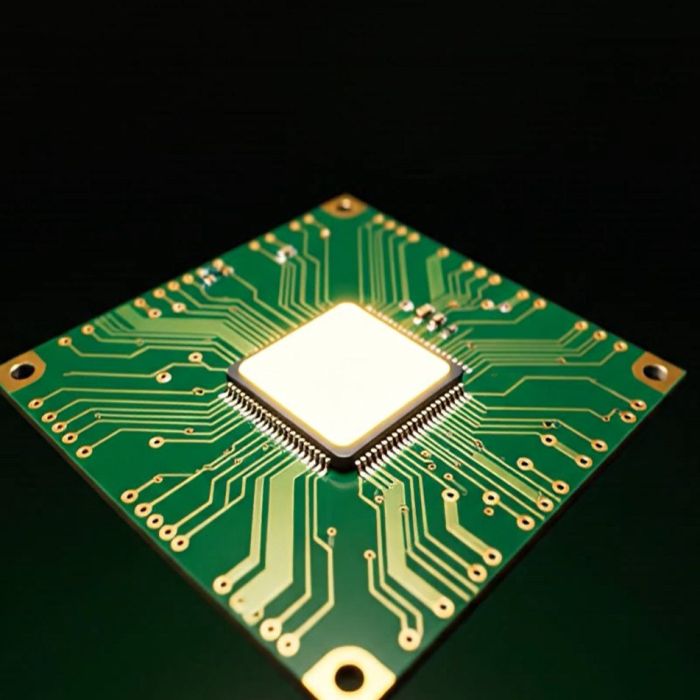
18-autophi-future
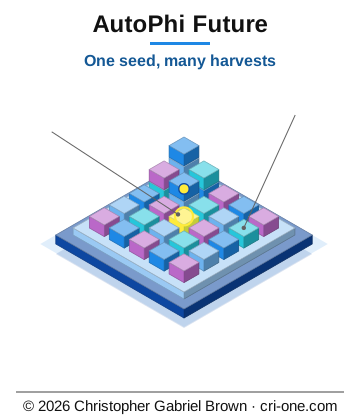
Asset valuation: $3,000,000,000. Master index of all projects: PROJECTSINDEX. 19-autophi-miracle. Re-engineered AutoPhi Future: voxel-as-cell, photon chromosomes, one seed many harvests, Blu-ray foundry packages. Same vision as 18; one project, one path, everything good that 18 could have been. The
Think of a tree made of metal that computes. No water, no leaves. It draws in light, turns it into electricity, and data flows through its trunk. That is AutoPhi Future - a structure, not a metaphor. The die is built from voxels the way a tree is built from cells: eight kinds that take in light, send, store, cool with no moving parts, or compute in light, charge and quantum state. Each voxel carries a chromosome written in light - wavelength is the instruction, polarisation the operand, path the address, intensity the magnitude - and one photon starts the cycle.
The product is not the chip. It is a ratio. You supply the envelope and the process node; the repository gives back calculation and performance per exchange - per watt, per area, per unit of cost. The formulas are in the open; the ability to grow seeds from the ratio is in the repository. One seed, many harvests: same seed, same inputs, same result, tiled and stacked across a chip series from entry part to datacenter peak to all-in-one at volume, for TSMC, Samsung, Intel, SkyWater and GlobalFoundries.
This is the roadmap vessel for the AutoPhi stack, Project 19 folded in: one number, one reality. It is for chip-design teams, foundry partners and datacenter buyers who want the next generation drawn before they fund it. Two USPTO applications are pending; the inventor, Christopher Gabriel Brown, keeps the IP, and the buyer walks away with the seed, the ratio and the repository grown from them.
Description
USPTO Application No. 18/370,908 — AutoPhi: Quantum battery integration & electromagnetic propulsion IC (filed 2023-09-21; pending)
USPTO Application No. 19/540,453 — Integrated Technology Portfolio (umbrella) (filed 2026-02-13; pending)
Additional patent lineage (from deposition catalog): Patents 3561, 2876, 1026, 3559 (LED recycle-powered system); Patents 1096, 1097, 1098 (electromagnetic cooling system); 1,752+ previously filed patents referenced across the portfolio; patent pending 2012–2025.
Overview
18-autophi-future is the Future concept and roadmap repository for the AutoPhi stack. It is one vessel : Project 19 (AutoPhi Miracle) has been merged into Project 18, so 18 is no longer only the original concept — 18 is the concept plus everything that 19 became. One number. One reality.
The mission is to find the right ratio in voxel-to-nm dimensions — how the voxel scales with process, how much function per area at each node. One seed, many harvests; down in scale, up in performance. The ratio is what is discovered, chosen, and sold.
The product is not the chip as object. The product is the ratio of instruction set (from size) to calculation and performance per exchange . You supply envelope and node (size); you get calculation (FLOPS) and performance per exchange (per dollar, per watt, per area). The formulas are in the open. The ability to build seeds from the ratio is in the repository.
AutoPhi Future extends the stack; it does not replace the present. It provides a consistent vocabulary, a single canonical shape, and a direction: another generation in which photons and electrons work together in a computational fashion.
The Metal Tree: Structure, Not Metaphor
AutoPhi Future posits a metal tree that computes . No water. No biological leaves. What flows through it is data — not oxygen. What it draws in is light ; what it turns that light into is electricity to function .
Tree Role (Metal) Function Chip Analogue (Voxel Role)
Intake / Roots Bring in light, anchor structure Energy intake — optical/power input; voxels that receive light and feed the rest
Trunk / Vascular Send flow SEND — data, control, quantum state, power along waveguides and wires
Light → Energy Capture light, make electricity ENERGY — voxels that convert light energy emission to electricity; no real leaves
Cool + Support Cool others, help both COOL_SUPPORT — EM cooling, thermal interface, decap, structure
Eight voxel types serve as the species of this tree:
- INTERCONNECT — data transport, routing
- LIGHT — waveguide, router, light-to-electricity conversion
- BLANK — decap, thermal fill, footprint placeholder
- HYBRID — combined light + quantum + classical compute
- QUANTUM — qubit-based quantum compute
- IO — power/light/signal input-output
- MEMORY — storage
- CROSS — cross-connect, diagonal routing
The Photon Chromosome and Three Strands
The voxel is the cell of the die. For efficiency it receives a DNA-style encoding: a compact, replicable chromosome that specifies how it calculates and processes. Three strands, one trigger:
The light trigger (single-photon computation initiation) is the start of the cell cycle: one photon initiates the process.
The Seed: One Definition, Many Harvests
The seed is the minimal, canonical specification from which every build is grown. It is not a single file; it is the canonical set :
Part of the Seed What It Defines File Reference
Tiers + COGS Chip series: Entry → Peak → Volume; CPU/GPU/DPU/all-in-one; COGS bands chip_series_cpu_gpu_dpu.yaml
Voxel Roles Tree roles: SEND, ENERGY, COOL_SUPPORT; voxel types VOXEL_PLANT_CHIP_LIGHT_FORM.md
Photon Chromosome Form in light: (λ, pol, path, I) = opcode, operand, address, magnitude VOXEL_CELL_DNA_AND_PHOTON_CHROMOSOMES.md
Nine Elements LED recycling, vertical threading, nanophotonic, QEC, cooling, battery, hybrid, neuromorphic NINE_TECHNOLOGIES (27/28)
Performance + COGS One-page metrics and decisive COGS (AES, $5K–$20K paths) PERFORMANCE_AND_COGS_SUMMARY.md
Reproducibility: Same seed, same inputs, same result. Version the seed; version the chips. The seed defines the unit; scaling is by repeating and tiling it — segment, stack, volume.
Supported foundries: TSMC, Samsung, Intel, SkyWater, GlobalFoundries.
1 LED Power Recycling 90% efficiency; 42% net power reduction; 85% energy recycling; zero net power; continuous operation
4 Nanophotonic Data Flow 1,400 TB/s; 2,800 optical channels; silicon photonic waveguides; sub-ns latency; 1,000× power efficiency
5 Quantum Error Correction 99.998% fidelity; 1,400 logical qubits; surface code implementation
6 Electromagnetic Cooling 97% efficiency; 32 thermal zones; zero-moving-parts; magnetic heat transfer; quantum coherence optimisation
9 Neuromorphic AI Engine Event-driven; 1M+ artificial neurons; spiking neural network (STDP); 1,000× power efficiency
Chip Series: Tiers and the Arc
The chip series describes an arc: low COGS rising to expensive, then returning. Every tier is modelled along four axes: CPU , GPU , DPU , and all-in-one . The cost is named AES (Latin aes = bronze) — actual, tangible, real price to function.
142 Synthesised IC Designs Complete portfolio; custom IP cores (no ARM); production netlists
Comparative Context (For Reference Only)
Dimension AutoPhi (System or Top Package) Best-in-Class Other (Single Part) Approximate Ratio
Note: System vs single chip comparison; different product classes. Provided for context only.
Cost optimisation levers (REV_H): Volume (1B–10B units → 10,000–100,000× cost collapse), process node (14 nm → 3 nm/1 nm → 8–24× die cost reduction), architecture (2,400 dies → 240 or 12 monolithic → 10–200× die count reduction), full/zero-touch automation ($0–$3K package and test), integration (cooling/power/PCB integrated or eliminated → $50M+ other costs to $0).
Seed Matrix: Formulas in the Open
The seed matrix provides a formula table to build seeds from the ratio.
scenario_id, node_nm, H_mm, W_mm, a_v_mm2, f_v_flops, power_w, aes_usd S_mm2, N_v (voxel count), C_flops (total calculation), rho_flops_per_mm2, P_per_dollar, P_per_watt
FLOPS per voxel (f_v) 1 × 10&sup9;
ρ (FLOPS/mm²) 3.225 × 10&sup9;
P_per_dollar 6.45 × 10&sup7;
P_per_watt 3.225 × 10&sup9;
Executable Seeds and OpenLANE2 Flow
The seed has a declarative part (YAML, docs, the canonical set) and an executable part. The executable seed is one or more voxels built through OpenLANE2 to GDSII and LEF.
Ports: light_trigger, light_wavelength[7:0], light_intensity[7:0], laser_red[7:0], laser_blue[7:0], laser_green[7:0], laser_yellow[7:0], qinst_opcode[7:0], qinst_qubit_mask[QUBITS-1:0], qinst_classical[CLASSICAL_BITS-1:0], color_result[7:0], operation_mode[1:0], light_computation_complete, quantum_state[QUBITS-1:0], quantum_fidelity[7:0], hybrid_computation_complete, total_operations[31:0], clk, rst_n.
OpenLANE2 Configuration
Seed run outputs: GDSII (.gds), LEF (.lef), netlist, DEF — stored in seeds/ and copied into every build as Seeds/ . Completed OpenLANE2 runs with GDS/LEF artefacts are present in the repository (run date 2026-02-07).
Blu-ray Harvest: 25 GB Distributable Build
Every build is written to a 25 GB Blu-ray single-layer disc. The build script ( build_bluray_foundry.bat / .py ) packages:
- Foundry handoff packages (from Project 24 — TSMC, Samsung, Intel, SkyWater, GlobalFoundries, or all-foundries)
- Performance and decisive COGS documentation
- Seeds/ folder (GDSII/LEF from OpenLANE2 seed runs, when present)
- MANIFEST.txt and DISC_README.txt
The disc is distributable and resellable under terms set by the inventor. The build also works with the whole 18 project folder ( 24_bluray_test ).
Quantum and How Chips Are Made
Quantum: The vision includes quantum (QUANTUM voxel type, whole-quantum options, hybrid, nine elements). The seed built today is classical : one cell, built with OpenLANE2 (synthesis + place-and-route). No qubits in that block. Quantum is the path available when the right voxel types and RTL are added (in Projects 27/28 and beyond).
How chips are made: RTL (from 27/24/28) → Synthesis (Yosys) → OpenLANE2 P&R (OpenROAD) → GDSII/LEF → Foundry or package. Project 18 provides the seed voxel build, the ratio and seed matrix, and the Blu-ray packaging. Projects 24/27/28 provide full RTL and build flows for bigger dies and systems.
Whole-quantum options (from VOXEL_PATHS_AND_WHOLE_QUANTUM_OPTIONS):
- Unified state representation (global state spanning all quantum voxels)
- Global Hamiltonian or circuit (one evolution over all qubits)
- Hierarchical / reduced model (effective qubit per voxel or cluster)
- Classical–quantum boundary interface (measurement, control, feed-forward)
- Single simulation/spec target (one executable spec loading voxel plan and paths)
02 (AutoPhi Modern) Product consolidation; 18 is the future vision informing voxel and path evolution. 02 holds the quantum-classical hybrid IC designs (39,756+ handoff files), REV_H 800× scaled design.
24 (AutoPhi Scale) Foundry packages; 18’s build script sources 24 by default for Blu-ray content. RTL, synthesis, and OpenLANE flows.
27 (Scale Ultimate) Voxel die building, hybrid/light/quantum cores, segment RTL. 18’s cell and chromosome concepts apply to 27’s voxel grid. Seed RTL (autophi_voxel_blank) comes from 27. Segment GDSII completed.
28 (Complete Unit) Single-chip, CPU–accelerator symmetry. 18’s whole-quantum and path options inform 28’s unified die specification.
1 96-333-fixed.csv CSV catalogue: ~1,759 rows of product/deposition entries (Magento-style); deposition titles, light trigger, semiconductor, patent references
2 Yesterday.txt AutoPhi $2.8475T portfolio: AQCHS, 142 IC designs, applications, markets, valuation
3 18 concept docs VOXEL_CELL_DNA, VOXEL_PATHS, VOXEL_PLANT_CHIP_LIGHT_FORM, NOTES_OVERCOME_*, and all other documentation
- AutoPhi Quantum OS — Operating system
- AutoPhi Quantum Runtime Environment
- AutoPhi Neural Framework — AI framework
- AutoPhi Quantum SDK — Development tools
- AutoPhi Application Suite — Complete applications
docs/ All written documentation (37+ files): product ratio, seed matrix, pitch, licensing, RAG, voxel/light-form concepts, processor comparison, chip series, deposition, valuation, miracle calculation, sell and distribute, quantum and how chips are made, engineering notes (overcome 02/24/25/26), needs and improvements (27/28), code name AES, and more
pitch/ HTML pitch pages (19 files) and images (8 PNG files): index.html, deep-dive.html, deep-dive-exhaustive.html, deposition.html, sales-pitch-complete.html, miracle-calculation.html, valuation.html, essay-19-into-18.html, deep-view-7t.html, logical-sales-pitch.html, sales-description.html, sales-description-embed.html, wordpress-seed-voxel-foundation.html/.md/.wxr
seeds/ Seed matrix template (CSV), example (JSON), SEED.yaml manifest, and OpenLANE2 GDSII/LEF outputs when present
rag/ Standalone RAG data: 96-333-fixed.csv, Yesterday.txt, 1 light trigger.txt, 18-docs/ (copy of key docs)
scripts/ Build and seed flow: build_bluray_foundry.bat/.py, run_seed_openlane_wsl.sh, apply_openlane2_nix_patch.sh, nix/ (openlane2-disable-doCheck.patch), openlane_seed_design/ (autophi_voxel_blank.v, config.json, runs/)
19-autophi-miracle/ Subproject: Re-engineered AutoPhi Future; docs, pitch, seeds, 24_bluray_test
20-autophi-future-three/ Subproject: Third version of the Future; docs, pitch, seeds, scripts with completed OpenLANE2 runs
PRODUCT_RATIO.md The product: the ratio of instruction set to calculation and performance per exchange
chip_series_cpu_gpu_dpu.yaml Structured YAML: series name, axes, six tiers with COGS/CPU/GPU/DPU/all-in-one
VOXEL_CELL_DNA_AND_PHOTON_CHROMOSOMES.md Voxel as cell; DNA-style encoding; photon chromosome
VOXEL_PATHS_AND_WHOLE_QUANTUM_OPTIONS.md Voxel arrangement plans and paths; whole-quantum calculation options
SEED_VOXEL_BIGGER_BETTER_MORE.md Traditional methods to incorporate or evade; foreseen results; all options
NOTES_OVERCOME_02_QUANTUM_PROCESSOR.md Engineering challenges overcome in 02-autophi-quantum-processor
- Source folder: 18-autophi-future
- Archive: 18-autophi-future.crione.zip
- 130 files at top level; 7,661 total files including all subprojects and OpenLANE2 run artefacts
- Archive size: 49.2 MB
- Principal file types at top level: .md: 64, .html: 19, .txt: 11, .png: 8
- Full file categories (MANIFEST.json): Data: 2,743; EDA flow output: 2,527; Documentation: 990; Other: 980; HDL (Verilog): 256; Chemistry/bio: 108; Web: 32; Source code: 11; Images: 8; Layout (GDSII): 6
- Top extensions across all subprojects: .json: 2,704; .rpt: 1,768; .txt: 728; .log: 504; .md: 262; .v (Verilog): 244; .def: 143; .sdc: 124; .sdf: 108; .lib: 76; .odb: 41; .html: 32
- Includes completed OpenLANE2 runs with GDSII, LEF, netlist, DEF, timing reports, DRC/LVS reports
- Key layout artefacts: autophi_voxel_blank.gds, autophi_voxel_blank.magic.gds, autophi_voxel_blank.klayout.gds (run 2026-02-07)
- Seed manifest: seeds/SEED.yaml (version 1)
- Seed matrix template: seeds/seed_matrix_template.csv
- Seed matrix example: seeds/seed_matrix_example.json
- Blu-ray build scripts: scripts/build_bluray_foundry.bat , scripts/build_bluray_foundry.py
- OpenLANE2 seed scripts: scripts/run_seed_openlane_wsl.sh , scripts/apply_openlane2_nix_patch.sh
- Nix patch: scripts/nix/openlane2-disable-doCheck.patch
- Executable seed RTL: scripts/openlane_seed_design/autophi_voxel_blank.v (39 lines of Verilog)
- OpenLANE2 config: scripts/openlane_seed_design/config.json
- RAG sources: rag/96-333-fixed.csv , rag/Yesterday.txt , rag/1 light trigger.txt , rag/18-docs/
- Pitch images: 18-future-autophi-hero.png, 18-future-tiers-arc.png, 18-future-one-seed-many-harvests.png, 18-future-photorealistic-chip.png, 18-future-patent-descriptive.png, autophi-future-photoreal-workspace-gds.png, autophi-future-photoreal-die-or-package.png
- WordPress import: wordpress-seed-voxel-foundation.wxr (categories and tags)
- Subproject 19-autophi-miracle: complete with docs, pitch, 24_bluray_test (Blu-ray test output)
- Subproject 20-autophi-future-three: third version with completed OpenLANE2 runs, docs, pitch, seeds
- MANIFEST.json, LICENSE, CITATION.cff, .gitattributes
How this is delivered
This package ships on a single Blu-ray disc, posted to the delivery address on your order. The archive on the disc is AES-256 encrypted; the passphrase is sent separately, by email, once the disc is despatched — so the disc alone is of no use to anyone who intercepts it.
Discs are despatched by tracked, signed-for post. Allow 5 business days for mastering and verification before despatch.
© 2026 Christopher Gabriel Brown. All rights reserved.
Disclaimer: All products on this store are fictional ICs and designs. They are conceptual, speculative, and intended for research, development, and educational purposes. No physical semiconductor is shipped. What is delivered is the intellectual property, documentation, RTL, EDA artefacts, and design data as described above.
Photo
Footnotes
- Product number 8465.
- Family: autophi on demand.
- Purchase: When you buy, you buy the use of that blueprint only.